Uneven Cooling? Air Ducts Could Be the Problem

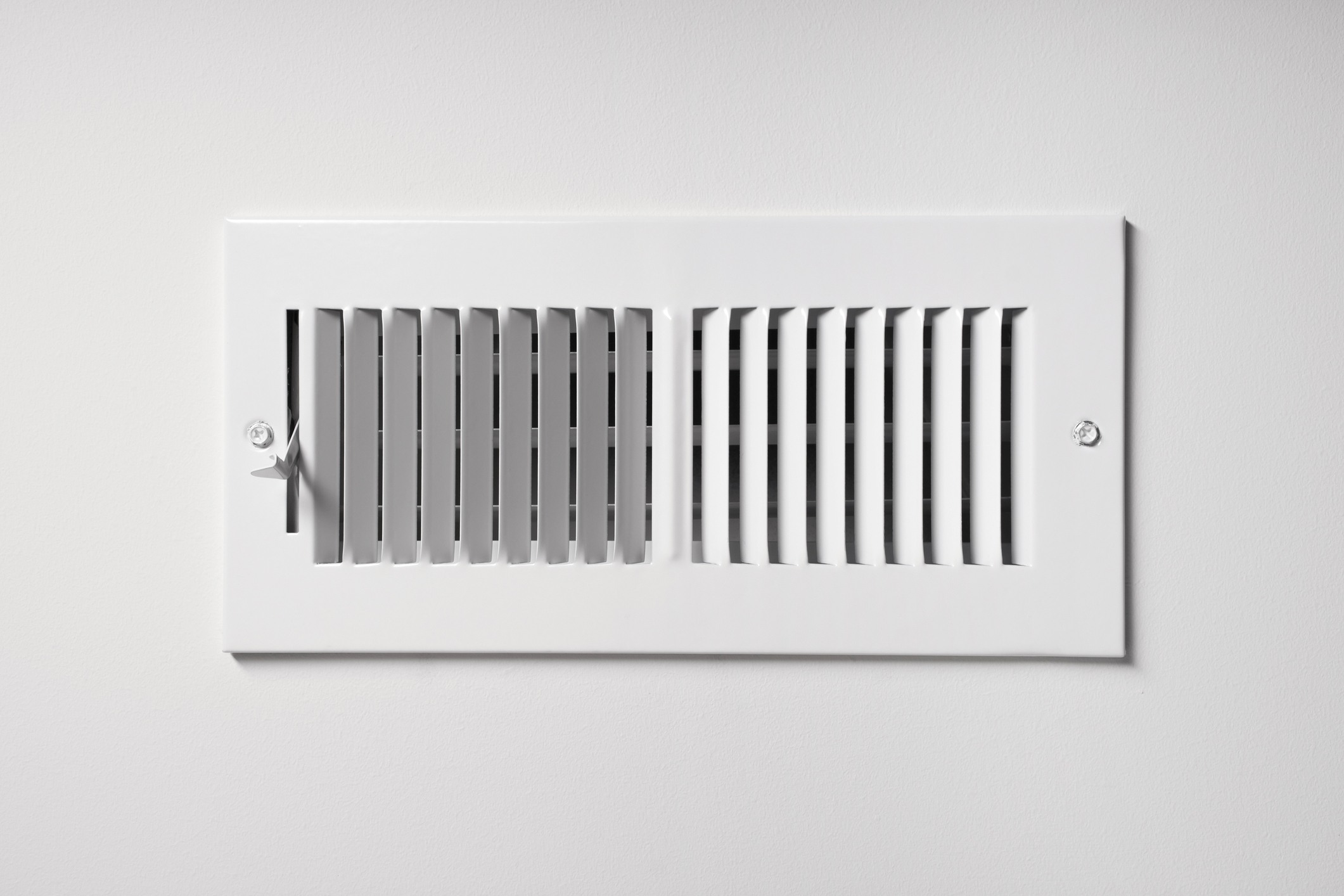
Heating/Cooling Vent

How To Fix Uneven Heating & Cooling in Your House

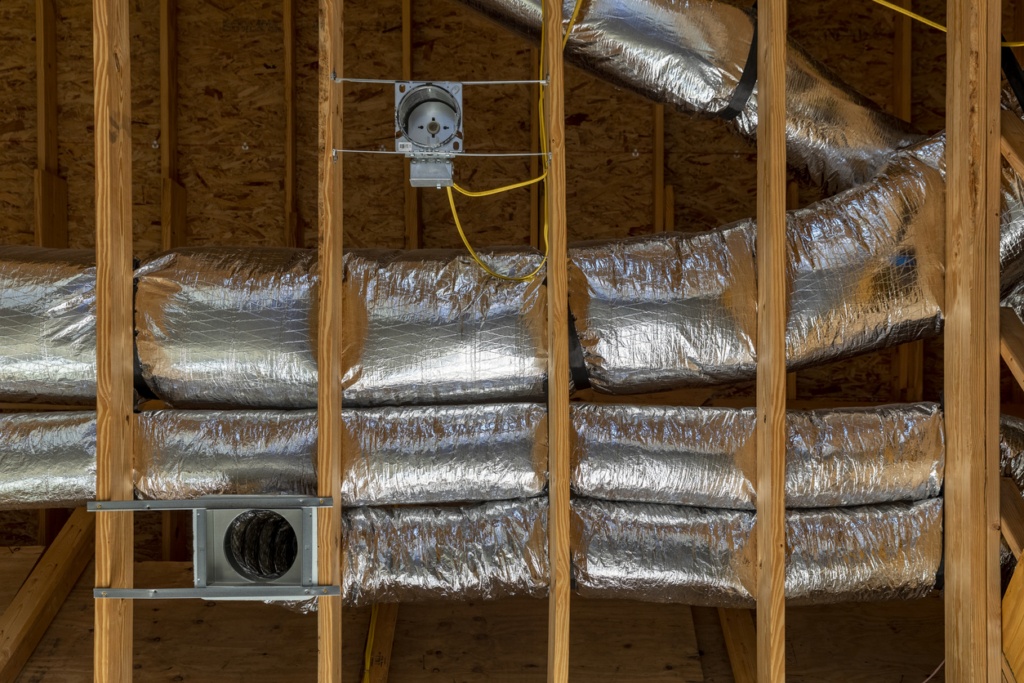
One way to look at your HVAC installation is as a very large air circulation system, with the ductwork forming a critical pathway for air traveling in and out of your home’s interior. The main unit heats or cools the air and sends the conditioned air into the supply ductwork toward rooms in your home. The air exits the supply ductwork and heats or cools the area, then is drawn back into the HVAC system by return air ducts. The expended air flows back to the main unit, where it’s filtered, reconditioned, and sent out again.

To function properly, your air conditioner, furnace, or heat pump needs adequate amounts of unobstructed airflow at all points in the system. Most homes have plenty of supply ducts to send heating or cooling into their indoor environment, but just as many lack enough return air ducts to bring air back to the HVAC unit to be reused. This can cause a reduction in indoor comfort, creating uneven levels of heating or cooling throughout your home.

[cta_buttons phone=”7046655998″ link_text=”704.665.5998″ link=”/contact/” button_text=”CONTACT US”]
ductwork

Ensure Your HVAC System Has Enough Return Air Ducts

The key step to solving the problem is to make sure there are enough return air ducts for your HVAC system. Your local trusted HVAC contractor can help you determine how many returns you need. Your technician may suggest a multiple-room system in which a return duct is installed in each room that also has a supply duct. These systems are very efficient, but they can be costly.

What Is a Central Return System?

An economical alternative is a central return system. Here, return air ducts are connected to return grilles in central areas of your house, such as hallways, stairwells, ceilings, or main rooms. Each room in the house also has a jumper duct or transfer grille connected to the central return duct. This configuration provides plenty of airflow between rooms and back into the system for recycling.

Get Your Uneven Air Flow Fixed in Charlotte With Acosta

Acosta Heating, Cooling & Electrical has been a trusted source of professional heating and air conditioning services to customers in Charlotte and surrounding areas for over 40 years. Contact us today for more information on return-air duct efficiency, to get an estimate on a return duct expansion, or to schedule a duct renovation appointment.

Ductless Cooling: An Innovative Option When Your Choices Are Limited

If you have a space in your home that’s a challenge to cool, or if you’re going to add space, consider ductless cooling. These HVAC systems don’t require ducts to distribute the air. They use technology that simply moves the heat from your space outdoors. These systems, also called ductless mini splits, present some major advantages compared to other types of air conditioning systems because they offer energy efficiency, easy installation and flexibility.

Energy efficiency

Ductless mini splits must meet the same energy efficiency standards that air conditioners and heat pumps do. The SEER (seasonal energy efficiency ratio) has to be 13 minimum. Since ductless cooling goes directly into the room, the systems can be as much as 30 percent more efficient than central systems where the air is delivered through ducts. Duct leaks and temperature loss may occur in systems with ducts.

Easy installation

Not having to extend or install ducts makes installation fast. The ductless systems have two primary components: A condenser sits outside and an air handler inside. A conduit connects the two and carries the refrigerant, drainpipe, electrical wiring. The air handler (fan section) can sit on the floor or hang from a wall or even hung from the ceiling.

If you’d like more information about ductless cooling, contact us at Acosta Heating, Cooling & Electrical. We’ve provided HVAC services for the Charlotte area for more than 40 years.

OK, Your Air Conditioner Does the Job – Now, Do You Know How It Works?

You may be perfectly content with your existing air conditioner, but learning how it works can benefit you. Understanding the refrigeration-cooling process will not only help you select the right unit when it comes time to upgrade, but it will also help you learn to value regular maintenance. Ultimately, in either case, you’ll be able to maximize your investment in your air conditioner just by taking the time to learn how it works.

The refrigerant looping through your air conditioner’s components is able to change forms throughout the cooling process, from a gas to a liquid and then back to a gas. But this chemical refrigerant is special because as it travels through the various cooling stages, it can absorb or expel heat, which is key to cooling a space.

Here’s how it works:

  • Beginning at the outdoor unit, the refrigerant starts at the compressor in a gas form, where it is cool and under low pressure. As the name suggests, the compressor begins to “compress” the gas, pushing all of its molecules together, increasing the energy and raising the temperature of the gas.
  • Then, the compressor sends the refrigerant, which is now very hot and at a much higher pressure, into the condenser. Here, the refrigerant is cooled by the condenser fan and changes back to a liquid form.
  • Once the liquid refrigerant arrives at the evaporator, the refrigerant’s pressure is released, and it is at this point that it changes back to a gas. During the change in form, the refrigerant is able to absorb heat from the surrounding air, thereby cooling the air.
  • The process begins again.

At any point during this process, if dirt exists on the condenser and or evaporator coils, for instance, the system’s efficiency will be compromised, making regular maintenance paramount. Additionally, it’s easy to see why advanced features, like enhanced coil design or a valve that meters refrigerant, are worth considering when upgrading.If you have questions about your air conditioner, or would like to talk to a home-comfort expert in greater Charlotte about upgrading, contact Acosta Heating, Cooling & Electrical today!

Your Energy Bills: Six Easy Ways to Take Charge and Stay Cool

With summer comes unavoidable increases in our home energy bills as we add the air conditioner to the assortment of electronics and appliances we already use every day. Here are a few ways you can save substantial amounts of money while still keeping your home at the temperature you prefer.

1. Cooling efficiency: Home cooling accounts for about half of what we spend each month on energy. You can get much better results and impressive savings by installing a high-efficiency cooling system with a Seasonal Energy Efficiency Ratio (SEER) of 15 or higher. Consider a solar assisted air conditioning unit.

2. Seal air and energy leaks: Locate and close up any holes, gaps or openings where conditioned air can escape your home. Line edges of doors and windows with weatherstripping and seal glass panes with silicone caulking. Check the ductwork in your air conditioning system; all segments should connect snugly together and be sealed with metal tape or mastic.

3. Shut off and unplug: Turn off energy-consuming devices when not in use, including lights, computers, televisions and appliances. Unplug computers and other electronics if you don’t expect to be using them soon. They will consume a small amount of electricity even if they’re not turned on.

4. Install a programmable thermostat: Use a programmable thermostat to control when and at what level your air conditioning system runs. For example, they let you set the air conditioner to run at a lower energy-saving level when everyone is out of the house during the day.

5. Install energy-efficient windows: Install Energy Star-certified windows with energy-saving features such as low-emittance (low-E) coatings and double-pane construction. These types of windows can reduce home energy bills by up to 25 percent.

6. Reduce hot water usage: Cut back on hot water consumption by using low-flow fixtures, cleaning only full loads of clothing or dishes and fixing hot-water leaks.

For 40 years, Acosta Heating, Cooling & Electrical has offered expert heating and air conditioning services to customers in Charlotte and surrounding areas. Contact us today for more information on reducing summer energy consumption while still keeping your home cool and comfortable.

Designing and Retrofitting Your Home for Passive Solar

Homeowners who take advantage of passive solar home design can boost energy savings by lowering the heating and cooling load of their homes. Passive solar design is most easily accomplished when building or remodeling a home, requiring a more manageable investment than investing in active solar equipment, like photovoltaic panels.
There are five basic concepts to using passive solar:

  • Solar collectors – Often called apertures or window expanses, solar collectors are used to access radiation from the sun, which is then used to heat the home. A large window should be positioned on the south-facing side of the home, unobstructed by shade from trees or buildings. This will allow your home to access heat in the winter season during peak sunlight hours between 9 a.m. and 3 p.m.
  • Absorbers – Inside the home, an absorber is positioned to collect heat from the sun. It is typically a hard surface, made from a dark material—to absorb maximum heat—and can be either a water container, masonry wall or floor.
  • Thermal masses – Also designed to function like an absorber, a thermal mass differs in that it is not an exposed surface area; instead, the thermal mass rests under or behind another surface material, like a wall or floor.
  • Solar distribution – Three natural processes — conduction, radiation and convection — are utilized in passive solar design to distribute, or circulate through the home, the solar heat that is collected or absorbed through other passive solar factors, like absorbers and thermal masses.
  • Controls – While passive solar maximizes heat gain during winter, it is necessary to limit heat gain during summer. You can position roof overhangs or awnings to increase shading, install a sensing thermostat that will run a fan to limit heat gain, and install dampers or vents that alternatively allow or inhibit the movement of heat. Window blinds are also an effective passive solar tool that will reduce heat gain in the summer.

If you’re interested in passive solar design, contact your local solar experts at Acosta Heating, Cooling & Electrical today! We’ve been serving the greater Charlotte area as a local, family-owned company since 1972.

The Ductless Mini Split: An Innovative Solution for a Unique Situation

A ductless mini split could be the solution to your home’s unique heating and cooling situation. One of its main advantages is that a mini split doesn’t require ductwork to operate, extending installation options beyond where ductwork is located and often minimizing costs, too.

There are several other distinct advantages to using a ductless mini split, including:

  • Flexible installation – You can install as many as four indoor air handlers, which gives you the ability to select four spaces to receive heating and cooling. A separate unit is installed outdoors, and a central conduit connects the indoor and outdoor units. The outdoor unit will need to accommodate drainage, but it can be located up to 50 feet away from the indoor units. To install the air handlers, your technician will need only to drill a small hole to run the conduit, requiring minimal adjustments and construction to your home.
  • Zoned heating and cooling – Each indoor air handler is controlled by its own thermostat, so you can effectively provide zoned heating and cooling to the spaces. With the ability to increase cooling, for instance, to a ductless mini split located in an enclosed porch, you can provide as much cooling as necessary to that space, without also increasing cooling to other spaces in your home—spaces that don’t need more cooling.
  • An efficient system – Heating and cooling systems that rely on forced air through ductwork are susceptible to high energy losses. Because ductless mini splits don’t rely on ductwork, you’ll get a more efficient heating and cooling process.
  • Lower installation costs – Extending and retrofitting ductwork is a costly endeavor, and mini splits bypass that cost. However, to ensure optimal results, you’ll want to hire an expert who’s familiar with mini splits, as their location and size will dictate efficiency and performance.

A ductless mini split is an efficient, flexible solution to your home heating and cooling needs. For more information, contact Acosta Heating, Cooling & Electrical, serving the Greater Charlotte area as a local, family-owned company since 1972.

Use Ceiling Fans During Winter to Drive Energy Savings

You’re probably well aware of how useful ceiling fans are in summertime, but many homeowners are surprised to learn that they can be just as effective in winter. Ceiling fans can help you feel warmer, and may actually reduce your heating costs.

Summer vs. winter

  • In summertime, ceiling fans should rotate counterclockwise. This creates a wind chill effect that doesn’t actually change the temperature in your house, but does help you feel considerably cooler without using your air conditioner.
  • In winter, you can reverse the spin of your ceiling fan to have the opposite effect. Running a ceiling fan in a clockwise direction (be sure to use the slowest speed setting) creating a gentle updraft, which helps move warm air near your ceiling down into your living space. As in summer, the fan doesn’t actually change the temperature, but does make you feel warmer.

Energy savings

Using your fan in winter helps reduce your energy bills because it allows you to set your thermostat a few degrees lower without sacrificing comfort. The fan itself uses a fairly negligible amount of electricity (the average ceiling fan uses no more energy than a light bulb) so the savings can really add up over the course of the winter.

Usage tips and considerations

  • A ceiling fan is only effective in the room it’s located in; it doesn’t effect your whole house. Since it doesn’t actually raise the temperature, but only allows you to feel warmer, there’s no reason to leave ceiling fans running in an unoccupied room.
  • Generally, ceiling fans work best in winter at a low setting. The exception to this is in a room with a very high ceiling, in which case you might have to set your fan to medium.

Fans with longer blades are better suited to larger rooms, and they work more effectively at a slower speed than smaller fans.If you’d like to learn more about how you can benefit from a ceiling fan year round, contact Acosta Heating, Cooling & Electrical. We’ve been providing expert service in the Charlotte area since 1972.

The Ductless Mini-Split: A Heating and Cooling System That Does a Mighty Big Job

Ductless mini-split heating and cooling systems offer homeowners a space-saving alternative to larger conventional furnaces, air conditioners and heat pumps. When properly sized for your home, mini splits are just as powerful and effective as larger units that rely on a bulky network of ducts to distribute conditioned air around your home.

The main controller of a ductless mini-split system is the central outdoor unit. As many as four smaller air-handling units are attached to this unit through a conduit in your wall. When choosing where to put these units, you are not restricted by ductwork arrangements. You can focus heating or cooling in rooms or areas that are used more frequently, leaving rooms that are used less often unheated or uncooled. Each of the four air-handling units can be operated separately, which reduces overall energy use.

Mini-split systems are very energy efficient, reducing the energy loss that often occurs with ducted systems. Mini splits also help improve indoor air quality. With no air being circulated through ducts, there are fewer airborne particles and contaminants in your home’s air, which cuts down on respiratory issues and the aggravation of allergies or asthma.

The smaller mini-split units give you many options for room arrangement and design. They can be placed almost anywhere you want them. They can easily be incorporated into your room arrangements or simply tucked out of sight.

The initial purchase of a ductless mini-split system can be as much as 30 percent more expensive than central heating and cooling systems, and twice as much as traditional window air conditioners. However, the convenience and advantages of a mini-split system can easily justify a higher initial investment.

For 40 years, Acosta Heating, Cooling & Electrical has been providing professional heating and air conditioning services to customers in Charlotte and surrounding areas. Contact us today for more information on ductless mini-split heating and cooling systems and why one may be the best choice for your home comfort needs.

Heat Pump Anatomy: How All Those Parts Work Together to Deliver Efficient Cooling and Heating

If you’re looking to upgrade your existing home comfort systems, a heat pump makes good economic sense. Heat pumps provide both heating and cooling and do so very efficiently. They do not burn combustible fuel to produce heat, but use electrical power during both heating and cooling operations. According to the U.S. Department of Energy, heat pumps can produce three to four times as much heat energy as the electrical energy they consume, making them very efficient choices.

Heat pumps move heat from one place to another, bringing in heat from the outside during the winter and dispersing excess heat to the outdoors in the summer. Air-source heat pumps use a refrigeration system consisting of a compressor and two sets of copper coils, one inside the house and the other outside. The coils have a set of aluminum fins around them to improve heat transfer.

When the system provides heating, liquid refrigerant in the outdoor coils extracts heat from the external air. This causes the refrigerant to turn into a gas. The compressor moves the gaseous refrigerant through the coils and into your house. The gas condenses back into liquid, releasing its heat.

In the summer, this process works in the opposite direction for cooling. A reversing valve in the refrigerant line changes the direction of refrigerant flow. Indoor heat is captured by the gaseous refrigerant and is released into the air outside as the refrigerant becomes liquid again.

Heat pumps lose efficiency when temperatures fall much below 40 degrees. They contain an additional component, a set of electric resistance coils or a gas furnace that provide heat when temperatures get too cold for the heat pump to function efficiently.

For 40 years, Acosta Heating, Cooling & Electrical has been providing professional services to customers in Charlotte and surrounding areas. Contact us today for expert help with choosing a heat pump, to get a quote, or to schedule an installation.