A Homeowner’s Guide to Autumn HVAC Maintenance Services

A Homeowner's Guide to Autumn HVAC Maintenance Services

As the leaves begin to change color and the cool breeze starts to set in, autumn is the ideal time to prepare your heating system for the long winter ahead. There are several key tasks you should complete to ensure your system gets the care it needs to last for years to come.

Schedule Professional Maintenance Service

The first step in preparing your heating system is to schedule professional maintenance. This service is essential for keeping your system’s warranty active and ensuring it runs efficiently. Professional maintenance can identify potential problems before they become major issues, giving you peace of mind that your heating system is ready for the colder months.

Change Air Filters

Fall is the perfect time to change your HVAC air filter. Dirty filters can restrict airflow, causing your system to work harder and wear out more quickly. It’s best to check your filters monthly and replace them every 1-3 months, depending on usage and the type of filter. Keeping spare filters on hand will ensure you’re always ready to replace them when needed.

Order Fuel

If your heating system runs on propane or heating oil, now is the time to fill your storage tank. Consider signing up for automatic fuel delivery so you don’t have to worry about running out on a cold winter day.

Check Smoke Detectors and Carbon Monoxide Detectors

If your heating system uses combustion to generate heat, it’s crucial to ensure your smoke and carbon monoxide detectors are working properly. Test the batteries in each detector and press the test button to confirm they’re operational. It’s a good idea to have detectors on every level of your home, especially near bedrooms. Replace any detectors over 10 years old, and install a fire extinguisher near your furnace for added safety.

Clear Space Around Your Furnace

Clear at least a 5-foot radius around your furnace before turning it on for the season. This will help your system function properly and reduce fire hazards. Keep in mind that specific clearance requirements can vary depending on your furnace model and local building codes.

Test Run and Program Your Thermostat

Run a test of your heating system before the cold weather hits. Set the temperature at least 5 degrees higher than the current room temperature to ensure your unit kicks on. Pay attention to any unusual noises or odors, noting that a burning smell is normal as dust burns off internal components.

Now is also a good time to program your thermostat. Consider upgrading to a smart thermostat for greater control over your home’s temperature and energy usage from your smartphone.

Ensure Vents Are Open

To ensure optimal performance, make sure all your vents are fully open. When running your heating system, check each supply vent for warm air and ensure both supply and return vents are unobstructed. Contrary to popular belief, closing vents in unused rooms can actually reduce system efficiency by disrupting airflow.

Close Up Your Outdoor AC Unit

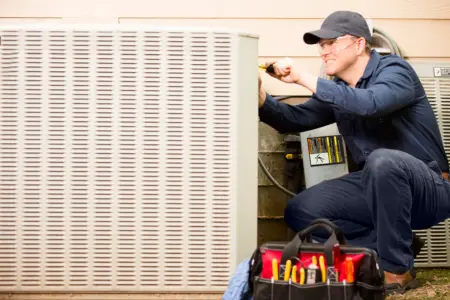
Prepare your outdoor AC unit for winter by clearing away debris like leaves. Cover the top of the unit to prevent snow and debris from entering, but avoid using airtight materials that could trap moisture and cause damage.

Switch Ceiling Fan Directions

Ceiling fans can help circulate warm air throughout your home. Set your fans to spin clockwise during the winter to push warm air down from the ceiling, making your heating system more efficient.

Seal Off Unwanted Air Leaks

Check for air leaks around doors, windows, receptacles, and light switches, and seal any gaps with caulking, weather stripping, or foam inserts to keep drafts out and improve energy efficiency.

Trustworthy Heating Maintenance Service

Acosta Heating, Cooling & Electrical offers reliable maintenance services and plans to residents of Charlotte, NC, and surrounding areas. Our experienced comfort consultants are here to help with all your heating, cooling, and electrical needs.

Call our friendly team today to schedule your next service appointment!

March Is the Perfect Time for an HVAC System Inspection

Winter is winding down, yet summer is still a bit of a ways away yet, so that means we’re getting close to that wonderful time of year when your HVAC system is able to enjoy a bit of a break. In Spring, you often do not need heat or air conditioning, at least during the day. This makes it the perfect time to think about having an HVAC system inspection performed.

This is a relatively slow season for those in the HVAC industry in terms of needing to do repairs, so you likely won’t have trouble finding someone available right away. Also, new construction for the season has not yet kicked into high gear. Catching HVAC professionals during the slow time saves time and could even be cheaper than dealing with an emergency repair later.

Another reason to take care of an HVAC system inspection is to ready the unit for the upcoming summer season. It is better to have any repairs done while it is still comfortable than to sit in a sweltering home while repairs are underway. Keep in mind that an HVAC system inspection generally does more than just make sure your system works. It also fine-tunes it, so it runs as efficiently as possible. This can help you avoid that first summer shocker of a utility bill.

HVAC System Inspection in Charlotte, NC

At Acosta Heating, Cooling & Electrical, we are in the unique position of being able to not only perform an HVAC system inspection for you, but also take care of any maintenance or repairs that may be needed. In addition, we can assess your current system to tell you how much you could save with a newer, more efficient unit. Give us a call today to schedule your HVAC system inspection.

Heating Your Home for Winter: Safety Is Important

Chestnuts roasting on an open fire… During the time when Jack Frost is nipping at your nose, it feels great to be warm. But before you light an open fire in your house or turn up the thermostat you should take a few safety precautions to avoid hazards.

A good start is to make sure that you have fresh batteries in your fire alarms. Fire alarms, as simple as they might be, can mean life or death when you are heating your home. Here are some other places you should look before heating up the house in the winter:

Furnace

  • Make sure it is inspected annually before heating your home.
  • Make sure all gauges are working properly.
  • Check and replace filters.
  • Move any items away from the furnace.
  • Place a carbon monoxide detector on each level and/or living area of your home.

Fireplace

  • Make sure that your chimney is clean. This should be done annually.
  • Remember to open the flue; otherwise smoke will fill your house quickly.
  • Make sure to clear all items from your roof.

Radiator

  • Make sure there is no furniture around the radiator.
  • Make sure that children are kept away from the radiator to prevent burns.
  • Check the insulation around the pipe that connects to your radiator. If it is becoming worn, it needs to be replaced.

Using these safety tips, your whole family can have a warm winter season without concern for dangers or accidentally starting a fire while heating your home.

How to Avoid Needing Furnace Repair

Furnace repair can be very expensive and cause quite a headache for homeowners. It is very important for the longevity and efficiency of your furnace that you keep the system maintained properly to avoid a big breakdown at the worst time.

So how do you prevent running into issues with your furnace and needing furnace repair? The best way is to schedule annual furnace tune-up with a heating and air conditioning professional. Although this may have some cost associated with it, you save 5-10% in energy costs each year by ensuring your furnace is operating at maximum efficiency, and your furnace technician will be able to catch small problems before they become big ones.

Another small step to assist in the avoidance of furnace repair is to change the furnace’s air filter regularly and clean it once every month. Many furnace repair technicians have reported that as many as half of their furnace repair calls are caused by dirty motors. Keeping a clean and fresh filter can prevent these breakdowns and save you money.

If you choose to do your furnace maintenance on your own, remember to proceed with caution. Remember that you are working with an appliance that runs on flammable materials and has the potential to be very dangerous. Generally speaking, you shouldn’t perform any maintenance on your own furnace that is more involved than changing the filter.

If you do happen to run into issues that may need furnace repair, before you call for assistance, make sure to check these simple fixes to avoid an unnecessary service:

  • Check to make sure the thermostat is set at the right temperature.
  • Check to make sure all registers in the house are open and not blocked by furniture.
  • Check to see if the pilot light is on. If it is not, follow the instructions on the furnace to get it going again, but take the safety precautions VERY seriously. This can be dangerous if not done correctly. If your pilot light goes out often, you may have a larger problem that needs to be addressed by a technician.
  • Check to make sure the circuit breaker is on.

“Prevention Is Better Than Cure” Certainly Holds True for Air Conditioning Repair

Indeed it’s true that an ounce of prevention is worth a pound of cure. This holds true if you want to prevent identity or auto theft, and it’s also true if you want to reduce the amount of air conditioning repair that your unit needs. By regularly cleaning your air conditioner, you will minimize the need for future repairs.

Here are some cleaning tips to avoid air conditioning repair:

  • Before cleaning it, turn the unit off: This is critical to prevent a shocking experience – literally. Switch off the circuit breaker that powers the air conditioning unit.
  • The coils: With an ordinary garden hose, wet the coils. Then spray with a commercial air conditioner product. Leave the cleaner on the coils for the time indicated on the instructions. Next, rinse off the cleaner. If you have a wall air conditioning unit, you can use the soft brush attachment on your vacuum cleaner to clean the coil fins. Keeping the coils clean is an essential step in preventing air conditioning repair.
  • Replace the filter: In the height of summer when the air conditioner is being used often, the filter should be replaced once a month, or at least every other month, depending on how high usage is. Although the filter is the most basic part of an air conditioning unit, it’s the first line of defense in preventing a buildup of dirt and, ultimately, reducing unnecessary air conditioning repair.IMPORTANT: You can take these simple steps to keep your air conditioner clean, but it is equally important to have a trained professional perform preventative maintenance once or twice a year.

Do Some Simple Checks Before Calling Your Furnace Repair Technician

While most furnace repair work should be performed by a professional, there are some simple fixes that you may be able to do yourself. For example, if your furnace is not getting enough heat, check that the main breaker is open and the furnace switch is on. But if the breaker or fuse trips after you have reset it, call a professional furnace technician.

Here are some other minor checks that you can do:

  • Check the filter. If it’s dirty, you can clean it or replace it, and if it’s damaged, you can replace it.
  • Check if the blower belt is broken or loose. If it’s loose, a simple adjustment may do the trick, and if it’s broken, you can replace it.
  • If the ducts are clogged, clean out the blower assembly. This too is a simple furnace repair job.

The Furnace Doesn’t Run At All

A possible cause is no power. If so, you’ll need to check for any blown fuses or tripped circuit breakers on the main entrance panel. Check the separate entrance panel also, and in or on the furnace. A motor overload could be another reason why your furnace doesn’t run. Wait for about 30 minutes, and then press the reset button.

The Blower Won’t Stop Running

If the blower control is incorrectly set, reset the thermostat from the “on” position to the “auto” position. If you discover that the relays are not working properly while checking the blower, this problem must be attended to by an experienced furnace repair technician.

Air Conditioning Repair and Maintenance: Have You Heard About Our MSA Program?

Our MSA (Money Saving Agreement) is a preventative maintenance initiative for heating and cooling systems. Our highly skilled technicians will inspect, clean and tune up your system to ensure it’s in good working condition for the upcoming season. You’ll find that the MSA will pay for itself many times in the reduction of heating and air conditioning repair costs, while extending the life of your system.

The cost depends on the type of equipment you have. If you have both heating and air conditioning, we suggest two annual service calls. If you have a heating system only, one annual service call will suffice.

As a member, you will receive preferential scheduling plus a 15 percent discount on heating or air conditioning repair work that goes beyond regular maintenance. You also accumulate $50 a year of consecutive coverage which goes toward equipment replacement.

Some Benefits of our MSA Program

  • You can save as much as 20 percent on heating and cooling bills.
  • As a member, you’ll be making a positive impact on the environment by conserving energy because routine maintenance ensures the highest level of energy efficiency.
  • Minor heating and air conditioning repair work and adjustments can prevent catastrophic failures and major repairs that could result in premature replacement of your system.
  • For warranty protection and better equipment management, we keep accurate service records. In order for a manufacturer’s warranty to remain valid, most of the major brands require a licensed contractor to perform annual maintenance.

Visit our Money Saving Agreement page to read more about our MSA program.

Common Culprits That Call for Furnace Repair

Of course there are any number of things that necessitate furnace repair, certain problems occur much more commonly than others, as well as range from minor to potentially dangerous. Knowing what to look for can be helpful both in deciding how to proceed with the furnace repair process and also to help you communicate more effectively with your furnace repair technician.

One of the first things to check when your furnace fails to start is the thermostat. A faulty thermostat will not allow the furnace to recognize the need to start heating. The good news is a broken thermostat is also one of the more simple problems to have repaired.

If the furnace turns on, but one or two of the rooms of the house are not receiving air, the problem is likely to be in the air ducts themselves. Perhaps one or more of them are broken or have become blocked. This problem can become more difficult when the air ducts are in places difficult to reach.

If your furnace is lit, but none of the rooms are receiving air at, the problem could be the blower or the circulating fan. This problem will definitely call for a furnace repair. The blower takes the air from the cold rooms, runs them through the heat exchanger, warming the air, and then sends the warm air back into the house. A disruption in the flow of air can also cause overheating in the furnace itself.

Clogged, dirty, or blocked air filters can also cause problems and lead to furnace repair. It is essential to have clean and clear filters through which the air may move freely. Restricting the flow of air can cause unnecessary strain on the system and increase energy consumption. However, this problem is more an issue of maintenance. Make sure to clean your filters at a very minimum of once every three months during the use of the furnace; more often would be even better. Caring for and getting routine maintenance for your heating system will help prevent the need for furnace repair in the first place.

What to Know Before Furnace Repair

Updated: October 2023

If you have a furnace, chances are one day you will find yourself in need of furnace repair. When that day comes, it will be a good idea to know a few basics about the furnace you are using at home. This way, you will be able to communicate more easily with any technician who will be helping you in your furnace repair.

First thing’s first: you need to know what type of furnace you have. Modern furnaces are usually referred to by their efficiency of heat use, and whether they use propane (less common) or natural gas (more common). You may also have an oil heating system. Most older furnaces have an efficiency of 50-60%, while newer furnaces can range anywhere from 80-100% efficiency. When speaking of efficiency, we are saying how much of the generated heat will go into the actual heating of the house, and how much will be vented away to the outside without having been used. When looking at furnace repair, you may hear some discussion about the efficiency of your furnace.

It’s also helpful to have a basic knowledge of the parts and setup of your furnace. As you will most likely not be doing the actual furnace repair (a certified technician should absolutely be called), a simple familiarity with some of the major terms will be sufficient:

  • Gas line – Where the gas enters the furnace from an outside source.
  • Shut off valve – Stops the supply of gas to the furnace.
  • Pilot light – Small burning flame which stays lit and serves to light the burners.
  • Electronic igniter – Electric alternative to a pilot light. Does not stay lit, lights the burners much as a spark plug.
  • Burner – Where the gas is ignited in order to provide heat for the household.
  • Heat exchanger – Area inside the furnace which the burners heat up. Air moves through the heat exchanger in order to become warm.
  • Blower and circulating fan – Takes cooler air out of the house, moves it through the heat exchanger (where it becomes warm), and pushes back into the house.
  • Ducts – The ventilation through which the air travels around the house and back to the furnace.
  • Filter – Screen designed to take dust and small particles out of the air circulation, helping both to improve air quality and to keep the furnace clean.
  • Flue pipe – Removes to the outside of the house carbon monoxide and any other exhaust produced from burning gas. Older furnaces often vent through the chimney; newer, more efficient furnaces do not produce as much exhaust and, therefore, may vent through a small, independent pipe.

Avoiding the Inevitable: Air Conditioning Repair

Air conditioning repair is an unfortunate possibility for most of us living anywhere south of, let’s say, the taiga. But this harrowing experience may be avoided, if the air conditioning unit is given proper care and maintenance. Of course, not all of us are certified, experienced air conditioning repair technicians; while it’s always a good idea to have one regularly inspect your air conditioning system before each change of season, there are still minor details to which a homeowner can attend.

The first and easiest step in the maintenance of your air conditioning is to clean or replace the filters regularly. The filters will collect dust quickly when the air conditioning is in constant and regular use, so change them frequently. Check them minimally every two months; more frequent cleanings are recommended if you are using your air conditioning constantly or in dusty conditions.

The condenser coils are another part of the air conditioning unit to maintain. The condenser coils are located on the outdoor unit, and have metal fins through which the hot air is dispersed. You will want to make sure these metal fins are clear of debris, in order to let the air pass unrestricted and efficiently. Simply wipe any large debris away, and then clean with water and a brush. Our certified technicians have chemical cleaning agents to do a more thorough cleaning of the outdoor condensing coils. An efficient flow of air will let the unit function properly as well as help to prevent the need for air conditioning repair.