Do Some Simple Checks Before Calling Your Furnace Repair Technician

While most furnace repair work should be performed by a professional, there are some simple fixes that you may be able to do yourself. For example, if your furnace is not getting enough heat, check that the main breaker is open and the furnace switch is on. But if the breaker or fuse trips after you have reset it, call a professional furnace technician.

Here are some other minor checks that you can do:

  • Check the filter. If it’s dirty, you can clean it or replace it, and if it’s damaged, you can replace it.
  • Check if the blower belt is broken or loose. If it’s loose, a simple adjustment may do the trick, and if it’s broken, you can replace it.
  • If the ducts are clogged, clean out the blower assembly. This too is a simple furnace repair job.

The Furnace Doesn’t Run At All

A possible cause is no power. If so, you’ll need to check for any blown fuses or tripped circuit breakers on the main entrance panel. Check the separate entrance panel also, and in or on the furnace. A motor overload could be another reason why your furnace doesn’t run. Wait for about 30 minutes, and then press the reset button.

The Blower Won’t Stop Running

If the blower control is incorrectly set, reset the thermostat from the “on” position to the “auto” position. If you discover that the relays are not working properly while checking the blower, this problem must be attended to by an experienced furnace repair technician.
Common Culprits That Call for Furnace Repair

Of course there are any number of things that necessitate furnace repair, certain problems occur much more commonly than others, as well as range from minor to potentially dangerous. Knowing what to look for can be helpful both in deciding how to proceed with the furnace repair process and also to help you communicate more effectively with your furnace repair technician.

One of the first things to check when your furnace fails to start is the thermostat. A faulty thermostat will not allow the furnace to recognize the need to start heating. The good news is a broken thermostat is also one of the more simple problems to have repaired.

If the furnace turns on, but one or two of the rooms of the house are not receiving air, the problem is likely to be in the air ducts themselves. Perhaps one or more of them are broken or have become blocked. This problem can become more difficult when the air ducts are in places difficult to reach.

If your furnace is lit, but none of the rooms are receiving air at, the problem could be the blower or the circulating fan. This problem will definitely call for a furnace repair. The blower takes the air from the cold rooms, runs them through the heat exchanger, warming the air, and then sends the warm air back into the house. A disruption in the flow of air can also cause overheating in the furnace itself.

Clogged, dirty, or blocked air filters can also cause problems and lead to furnace repair. It is essential to have clean and clear filters through which the air may move freely. Restricting the flow of air can cause unnecessary strain on the system and increase energy consumption. However, this problem is more an issue of maintenance. Make sure to clean your filters at a very minimum of once every three months during the use of the furnace; more often would be even better. Caring for and getting routine maintenance for your heating system will help prevent the need for furnace repair in the first place.

What to Know Before Furnace Repair

Updated: October 2023

If you have a furnace, chances are one day you will find yourself in need of furnace repair. When that day comes, it will be a good idea to know a few basics about the furnace you are using at home. This way, you will be able to communicate more easily with any technician who will be helping you in your furnace repair.

First thing’s first: you need to know what type of furnace you have. Modern furnaces are usually referred to by their efficiency of heat use, and whether they use propane (less common) or natural gas (more common). You may also have an oil heating system. Most older furnaces have an efficiency of 50-60%, while newer furnaces can range anywhere from 80-100% efficiency. When speaking of efficiency, we are saying how much of the generated heat will go into the actual heating of the house, and how much will be vented away to the outside without having been used. When looking at furnace repair, you may hear some discussion about the efficiency of your furnace.

It’s also helpful to have a basic knowledge of the parts and setup of your furnace. As you will most likely not be doing the actual furnace repair (a certified technician should absolutely be called), a simple familiarity with some of the major terms will be sufficient:

  • Gas line – Where the gas enters the furnace from an outside source.
  • Shut off valve – Stops the supply of gas to the furnace.
  • Pilot light – Small burning flame which stays lit and serves to light the burners.
  • Electronic igniter – Electric alternative to a pilot light. Does not stay lit, lights the burners much as a spark plug.
  • Burner – Where the gas is ignited in order to provide heat for the household.
  • Heat exchanger – Area inside the furnace which the burners heat up. Air moves through the heat exchanger in order to become warm.
  • Blower and circulating fan – Takes cooler air out of the house, moves it through the heat exchanger (where it becomes warm), and pushes back into the house.
  • Ducts – The ventilation through which the air travels around the house and back to the furnace.
  • Filter – Screen designed to take dust and small particles out of the air circulation, helping both to improve air quality and to keep the furnace clean.
  • Flue pipe – Removes to the outside of the house carbon monoxide and any other exhaust produced from burning gas. Older furnaces often vent through the chimney; newer, more efficient furnaces do not produce as much exhaust and, therefore, may vent through a small, independent pipe.

Uneven Cooling? Air Ducts Could Be the Problem

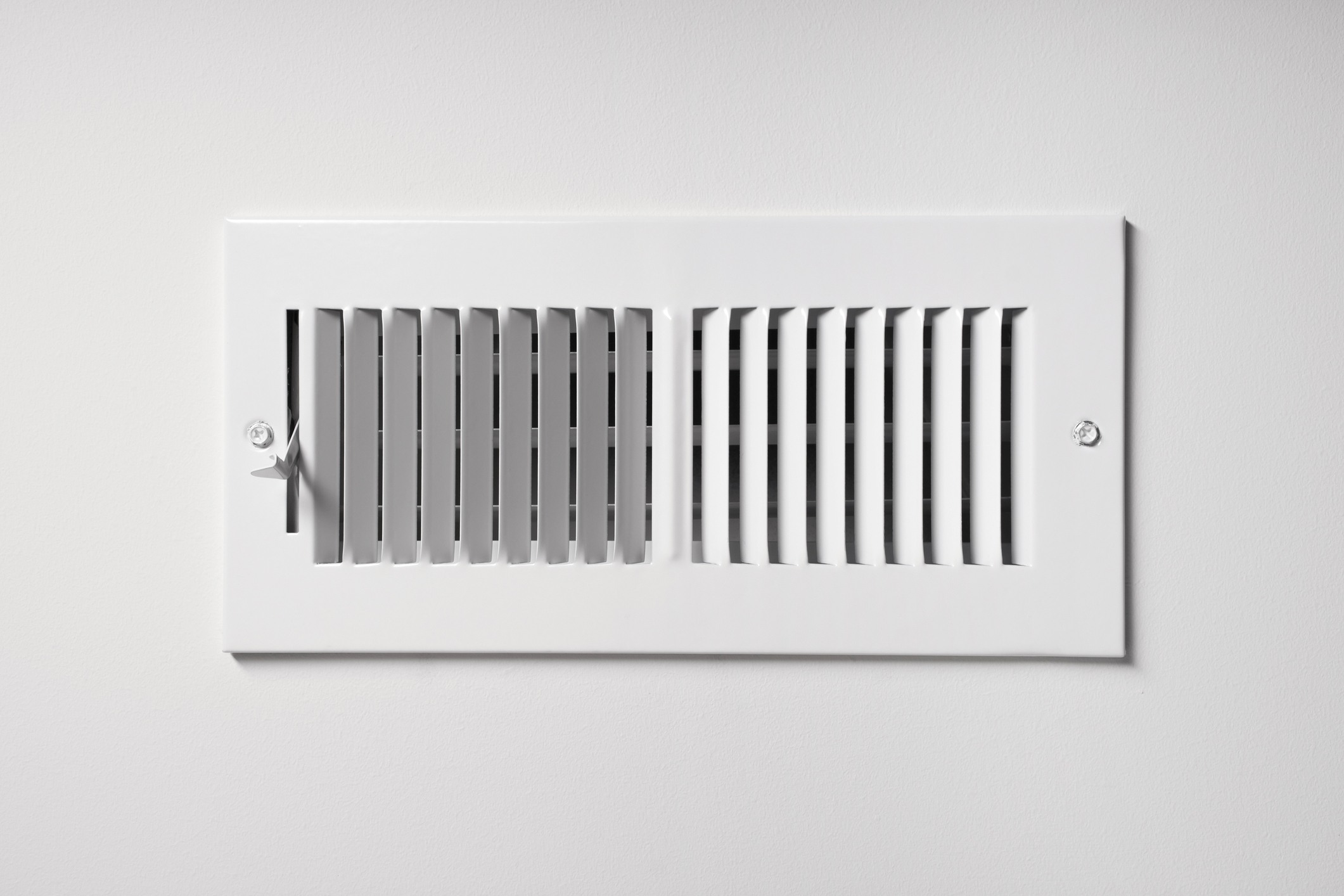
Air vent cover on a white wall, illustrating HVAC air circulation system related to heat pump maintenance and indoor climate control.

How To Fix Uneven Heating & Cooling in Your House

One way to look at your HVAC installation is as a very large air circulation system, with the ductwork forming a critical pathway for air traveling in and out of your home’s interior. The main unit heats or cools the air and sends the conditioned air into the supply ductwork toward rooms in your home. The air exits the supply ductwork and heats or cools the area, then is drawn back into the HVAC system by return air ducts. The expended air flows back to the main unit, where it’s filtered, reconditioned, and sent out again.

To function properly, your air conditioner, furnace, or heat pump needs adequate amounts of unobstructed airflow at all points in the system. Most homes have plenty of supply ducts to send heating or cooling into their indoor environment, but just as many lack enough return air ducts to bring air back to the HVAC unit to be reused. This can cause a reduction in indoor comfort, creating uneven levels of heating or cooling throughout your home.

[cta_buttons phone=”7046655998″ link_text=”704.665.5998″ link=”/contact/” button_text=”CONTACT US”]

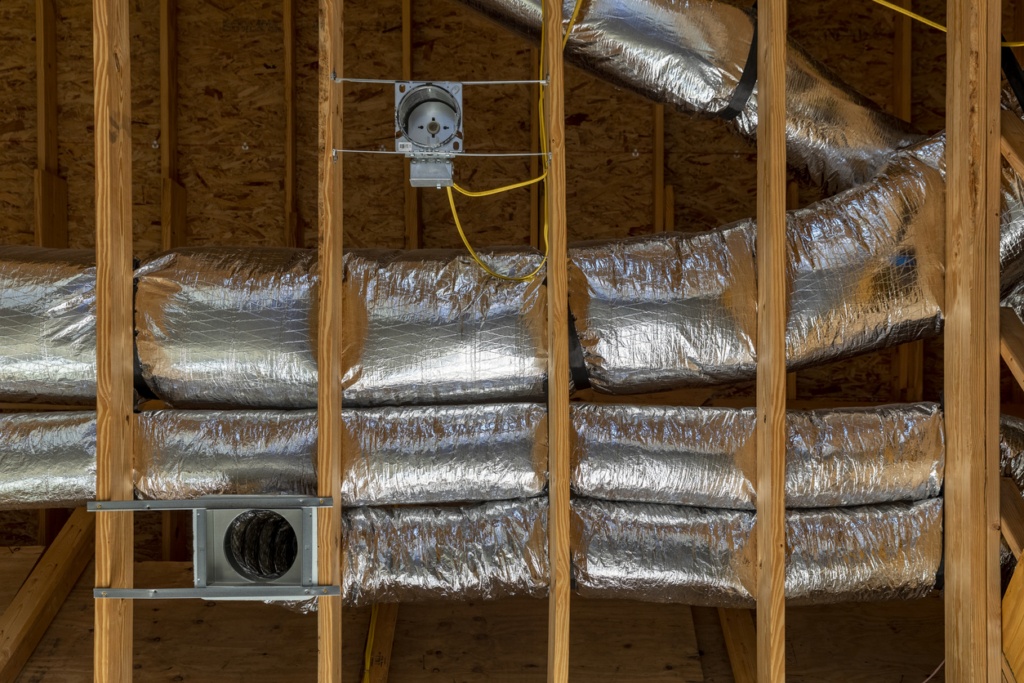
Ductwork installation in new construction, showcasing insulated silver ducts and framing, essential for HVAC air circulation and efficiency.

Ensure Your HVAC System Has Enough Return Air Ducts

The key step to solving the problem is to make sure there are enough return air ducts for your HVAC system. Your local trusted HVAC contractor can help you determine how many returns you need. Your technician may suggest a multiple-room system in which a return duct is installed in each room that also has a supply duct. These systems are very efficient, but they can be costly.

What Is a Central Return System?

An economical alternative is a central return system. Here, return air ducts are connected to return grilles in central areas of your house, such as hallways, stairwells, ceilings, or main rooms. Each room in the house also has a jumper duct or transfer grille connected to the central return duct. This configuration provides plenty of airflow between rooms and back into the system for recycling.

Get Your Uneven Air Flow Fixed in Charlotte With Acosta

Acosta Heating, Cooling & Electrical has been a trusted source of professional heating and air conditioning services to customers in Charlotte and surrounding areas for over 40 years. Contact us today for more information on return-air duct efficiency, to get an estimate on a return duct expansion, or to schedule a duct renovation appointment.

Ductless Cooling: An Innovative Option When Your Choices Are Limited

If you have a space in your home that’s a challenge to cool, or if you’re going to add space, consider ductless cooling. These HVAC systems don’t require ducts to distribute the air. They use technology that simply moves the heat from your space outdoors. These systems, also called ductless mini splits, present some major advantages compared to other types of air conditioning systems because they offer energy efficiency, easy installation and flexibility.

Energy efficiency

Ductless mini splits must meet the same energy efficiency standards that air conditioners and heat pumps do. The SEER (seasonal energy efficiency ratio) has to be 13 minimum. Since ductless cooling goes directly into the room, the systems can be as much as 30 percent more efficient than central systems where the air is delivered through ducts. Duct leaks and temperature loss may occur in systems with ducts.

Easy installation

Not having to extend or install ducts makes installation fast. The ductless systems have two primary components: A condenser sits outside and an air handler inside. A conduit connects the two and carries the refrigerant, drainpipe, electrical wiring. The air handler (fan section) can sit on the floor or hang from a wall or even hung from the ceiling.

If you’d like more information about ductless cooling, contact us at Acosta Heating, Cooling & Electrical. We’ve provided HVAC services for the Charlotte area for more than 40 years.

Elements of a Well-Designed Duct System

As a homeowner, you’re likely to think that your duct system is not as important as your heating and cooling equipment. But it is. That’s because a well-designed duct system can boost the efficiency and comfort potential of your HVAC equipment—significantly.

You see, your HVAC equipment relies heavily on your ductwork to deliver the heated and cooled air that it generates. If your duct system’s design is under par, your comfort and efficiency can be greatly hindered—no matter how efficient your system is.

To develop a well-designed duct system that will efficiently deliver conditioned air and boost your home comfort, it should:

  • Meet the heating and cooling load of individual rooms, which is calculated using the Manual J method
  • Be properly sized, using Manual D
  • Minimize air leaks with a tightly-sealed system that keeps conditioned air inside of the ductwork
  • Balance the return-air and supply-air portions of the duct system, so that the home remains at a neutral pressure
  • Reduce temperature gains and minimize temperature losses as the air moves through the supply and return ducts.
  • Install registers where they are not blocked by room furnishings
  • Supply outlets located away from return outlets so air will not short cycle
  • Utilize a return grille on each floor of a two-story home
  • Plan for a return duct in rooms with doors

Provide adequate insulation for ductwork that runs thru unconditioned spacesWith these design principles in mind, your duct system can optimize heating and cooling equipment operations, boosting efficiency to expected levels and ensuring a comfortable home while minimizing hot and cold zones.Enlist the help of an expert to design your duct system for optimal results. Proudly serving homeowners in the greater Charlotte area for over 40 years, Acosta Heating, Cooling & Electrical is happy to help you design a new system, or retrofit your existing one. Just give us a call today! With our expertise and expert training, you can rest assured that we’ll get the job done right the first time.

Are Ductwork Leaks Costing You Money and Comfort? Five Signs to Look For

Ductwork is the network of large pipes, that distribute heated or cooled air throughout your house. Ductwork leaks can cause even the best furnace, heat pump or air conditioner to function poorly and inefficiently.

Since the ductwork carries all of the air that keeps your home comfortable in each season, loose connections, unsealed gaps or other ductwork leaks can cause substantial air and energy loss. Up to 20 percent of the air in the ductwork can be wasted because of these leaks, which quickly adds up to a lot of money spent conditioning air that never gets used. In some cases, leaky ductwork can cause a danger to you and your family if harmful gases such as carbon monoxide are not properly vented to the outdoors.

Watch carefully for any of the following five signs of leaky, damaged or inefficient ductwork:

1. Abnormally high heating or cooling expenses or spikes in your bills that do not correspond to increased usage or outdoor temperatures

2. Problems heating or cooling particular rooms or areas appropriately

3. Noticeable air escaping around the side or edges of the fan section and or ductwork in attics or crawlspaces

4. Noticeable damage to sections of ductwork

5. Ducts installed in unconditioned or poorly conditioned locations, such as garages, unfinished or uninsulated basements or attics, or crawl spaces

By finding and sealing any leaks in your ductwork, you’ll see immediate savings on your monthly heating and cooling expenses. Contact your local trusted HVAC contractor for a professional duct sealing. HVAC experts can mechanically attach ductwork sections to each other for a better seal. They can also test for proper airflow and the presence of any harmful gases or fumes.

Acosta Heating, Cooling & Electrical has been a trusted provider of professional heating and air conditioning services to customers in Charlotte and surrounding areas for 40 years. Contact us today for more information on reducing ductwork leaks and improving indoor comfort through proper sealing.

Is an A/C Tune-Up on Your Spring To-Do List?

An A/C Tune-Up should be at the top of your spring to-do list. The largest consumer of energy in your home is your heating and cooling system. Keeping your HVAC equipment running efficiently will help control energy costs.

Having a spring A/C Tune-Up will get your A/C unit ready to operate safely and efficiently throughout the summer cooling season. You’ll also avoid the panic of having to repair a malfunctioning unit in the middle of the hot summer months to come.

When you schedule an A/C Tune-Up, your technician will:

  • Conduct a thorough inspection of the entire system and its related components
  • Test the A/C’s refrigerant. An incorrectly-charged system will waste energy and not cool properly.
  • Test the system for refrigerant leaks
  • Safely capture refrigerant that must be removed, according to industry standards
  • Check the ductwork portion of your HVAC equipment, ensuring that it doesn’t leak and allows for proper airflow
  • Assess the A/C’s airflow over the evaporator coil, and clean it. Improper airflow over the coil will lead to decreased cooling capacity
  • Test the thermostat, ensuring that its controls will deactivate the heating system when you set the thermostat to cooling mode, and making sure that it will meet temperature settings
  • Inspect all electrical elements, lubricating and tightening connections as necessary
    Test the motor, checking that belts are tight, warding off wear and tear, and lubricating the motor, too

As a homeowner, you can participate in maintaining the air conditioner by:

  • Changing the air filter before you start up the A/C
  • Checking the air filter monthly once you begin to use the air conditioner regularly, ensuring that the filter is not dirty, which will restrict airflow and lead to dirt buildup
  • Assessing the conditions around the outdoor unit, cleaning up debris that has accumulated throughout the winter, as well as vegetation that can block the unit and potentially restrict airflow and reduce efficiency
  • Inspecting the registers and grilles throughout your home to ensure that airflow is optimized

Contact the home-comfort experts at Acosta Heating, Cooling & Electrical to schedule an A/C tune-up appointment, or ask about our annual maintenance plans. We’ve served the Greater Charlotte area as a local, family-owned company since 1972.

Air Filters Don’t Get a Break – Change Them All Year Long

A clean air filter is vital to the performance of your home’s heating and cooling system. As air flows to and from your system, the air filter traps dust, dust mites, pollen, pet dander and other particles, removing them from your air. Over time, these particles build up on the filter, reducing its effectiveness.

Check the filter monthly. If it appears dirty, change it. At a minimum, the filter should be changed every three months.

Dirty air filters:

  • Affect the air quality in your home.
  • Restrict the air flow into your system, making the fan motor work harder, consuming more energy and costing you more money to stay comfortable.
  • Forcing the motor to work harder will shorten the life of the motor again costing you more money to have the motor replaced prematurely.
  • Reduced air flow across your furnace will cause the temperature of the furnace to rise which will put more stress on the metal heat exchanger and could cause it to crack and even leak dangerous Carbon Monoxide into your home.

There are many types of air filters available. Using the correct size and type of filter for your system will provide optimum results. The most efficient filters may not be the best option for your system. Today’s highly-efficient filters cause an increase in the level of airflow resistance, which can restrict airflow and cause damage to older heating and cooling systems. Consult your system’s operating manual for recommended filters.Here at Acosta Heating, Cooling & Electrical, we’re happy to answer your questions about air filters, or to offer expert advice regarding your heating and cooling needs. For more information, contact us today!

Duct Sealing Helps Manage Unruly Energy Bills

Furnaces, central air conditioners and heat pumps use a series of ductwork to transport heated and cooled air to every room of your home. In most homes, as much as 15 to 20 percent of this air is lost through leaks in the ductwork. You can prevent these leaks by having professional duct sealing completed.

Here’s a look at four benefits of duct sealing.

1. Lower energy bills:

When conditioned air escapes into the attic or garage through which your ductwork is traveling, your energy bills go up. Therefore, by sealing these gaps, you enjoy more of the air that you paid to heat or cool. You might even be able to downsize your heating and cooling equipment to a unit that is smaller and less expensive to operate, saving you even more on your energy bills.

2. Improved comfort:

Many homes have comfort issues that involve some rooms being too hot in the summer or too cold in the winter. The problem is most likely that leaky ducts are wasting air on the way to these rooms. Sealing ductwork ensures that every room is kept at a more constant, comfortable temperature.

3. Better indoor air quality:

Air can certainly escape through gaps in ductwork, but air from unconditioned spaces can also be picked up. This brings dusty air, particles from insulation, fumes and odors into your home. Seal these leaks and prevent your air quality from deteriorating.

4. Environmental responsibility:

The production of electricity is a huge contributor to global warming. You can do your part by having duct sealing done and conserving energy as a result. This is certainly a step in the right direction.

For more information about duct sealing, please contact Acosta Heating, Cooling & Electrical. We’re happy to answer your heating and cooling questions, and offer to our expert advice and services to Charlotte-area residents.