Cool Teachers, Warm Hearts: Acosta, Lennox, and 104.7 FM Surprise Rock Hill Educator with a Complete New HVAC System

At Acosta Heating, Cooling & Electrical, we believe that the people who make our community strong deserve to be celebrated — especially our teachers. That’s why this summer, we launched our Cool Teachers Giveaway, honoring educators who go above and beyond for their students every single day.

In partnership with 104.7 FM, we invited the greater Charlotte community to nominate their favorite teachers for the chance to win a brand-new air conditioning system from Acosta Heating, Cooling & Electrical. The radio team helped promote the contest and even joined us in reviewing nominations to select a truly deserving winner. The stories that came in were heartfelt, inspiring, and a reminder of the incredible dedication our local teachers show every day.

Celebrating Our Winner: Kelly Watson

This year’s winner, Kelly Watson, teaches at Cherry Park Elementary in Rock Hill, South Carolina, and is known for her extraordinary commitment as a UP3 special-needs teacher. Kelly pours her heart into her work, creating inclusive, engaging lessons and ensuring every child she teaches feels valued and capable of success. Her compassion and energy brighten her classroom and the community around her.

To make this moment even more special, we learned that Kelly’s husband proudly serves as a police officer — two public servants, one family, both dedicating their lives to helping others in our Charlotte metro community.

A Complete System Upgrade, Courtesy of Lennox

Originally, the Cool Teachers Giveaway included a new air conditioning unit. But when our team discovered that the Watsons’ home used a packaged system, our partners at Lennox stepped up in a big way — upgrading the prize to a complete new Lennox HVAC system, providing both heating and cooling for total year-round comfort.

We’re grateful to Lennox for their generosity and to 104.7 FM for helping us spread the word, gather nominations, and celebrate this incredible community event.

Thank You, Teachers

From all of us at Acosta Heating, Cooling & Electrical, Lennox, and 104.7 FM, congratulations to Kelly Watson— and thank you to every teacher who continues to make our community brighter, stronger, and cooler (literally!).

Your dedication inspires us, and we’re honored to keep the Charlotte metro area comfortable — one classroom, one home, and one family at a time.

The Big, Beautiful Bill Has Both Positives and Negatives for the HVAC Industry

U.S. Capitol building under clear blue sky, symbolizing legislative changes impacting the HVAC industry.

The landscape of the HVAC industry is poised for significant changes with the recent passage of the “Big Beautiful Bill.” It’s crucial to understand both the promising opportunities and potential challenges this legislation introduces for the HVAC sector.

Positives

One positive aspect of the bill for the HVAC industry is that families can now use 529 education savings plans to pay for career certifications, apprenticeships, and licensing programs, which include HVAC training. Previously, 529 plans were used for college tuition only.

Another positive for the HVAC industry is that the qualified business income deduction, Section 199A, becomes permanent and with enhanced advantages, affecting HVAC contractors operating as S corporations, partnerships, and sole proprietorships. Meaning HVAC contractors can continue to deduct up to 20% of their qualified business income.

The enhanced advantage is that it includes a higher income threshold, so the phase-out begins at $75,000 for individuals and $150,000 for married couples that file jointly. Previously, the limits were $50,000 for individuals and $100,000 for married couples, meaning that more HVAC contractors can claim the deduction before reaching the income limit.

Negatives

Now on to the negative aspects of the bill for the HVAC industry. Section 25C and 25D tax incentives will be repealed for projects beginning after Dec. 31, 2025. These residential tax incentives were made to encourage homeowners to invest in installing energy-efficient and clean energy improvements, driving more business to HVAC contractors.

Section 25C, which was the energy efficiency home improvement credit, was worth up to $3,200 annually for qualifying efficient home upgrades and became a key driver of energy-efficient HVAC equipment, and Section 25D, which was the residential clean energy credit, included a 30% federal tax credit for the installation of geothermal heat pumps.

Another negative aspect of the bill concerns commercial tax incentives. Commercial HVAC tax incentives are also being phased out. However, it’s on a different timeline than the residential incentives. Sections 45L and 179D are set to end for upgrades and projects that begin after June 30, 2026.

Section 45L provides tax credits to homebuilders and developers who construct or substantially reconstruct energy-efficient residential homes. Section 179D, which was enacted in 2005 and made permanent in 2020, allows commercial building owners to claim deductions for investments in high-efficiency lighting, HVAC systems, and building envelopes. This provision has been said to help drive job growth and spur innovation across engineering, manufacturing, and construction.

About Acosta Heating, Cooling & Electrical

Acosta Heating, Cooling & Electrical has been serving the Charlotte Metro Area since 1972. They are family-owned and operated, offering same-day service and financing options. Call them for heating and air conditioning services in Charlotte, NC.

12 Ways To Prepare Your Home for Fall Comfort

Autumn landscape with a ground covered in vibrant orange and yellow leaves, symbolizing seasonal change and preparation for home heating in fall.

As fall approaches, it’s time to start thinking about how you’ll keep your home warm and comfortable. While you’re still enjoying the last days of summer, now is the perfect time to prepare your heating system for the cooler months ahead. Here are 12 essential steps to ensure your home is ready for comfort this fall and throughout the winter.

1. Change or Clean Your Air Filters
Start your HVAC preparation by checking your furnace filters to ensure they allow air to flow effectively. For central systems, ensure you have clean filters in place and replace them regularly. Most homes use 1- or 2-inch filters, which typically need changing every 30 to 90 days, depending on air quality and filter type. Ideally, check your filter every month. For ductless mini-split systems with washable filters, check them monthly and clean them every two weeks or more frequently if needed to prevent airflow restrictions.

2. Perform a Fall Cleaning
While spring cleaning is popular, fall is also an excellent time to deep clean your home. During summer, pollen and dust can accumulate, impacting indoor air quality. As you prepare to close up your home for winter, focus on deep cleaning floors and dusting to remove airborne contaminants that could cause issues during the colder months.

3. Inspect and Update Outlets and Switches
Take time to have your outdoor and indoor outlets and switches inspected and updated. Replace outdated outlets, especially in kitchens, bathrooms, and outdoor areas, with GFCI outlets for added safety. An electrician can test and replace broken outlets and switches or install a charging station for your new electric vehicle. Consider adding smart outlets and switches with voice activation and professionally installing outdoor outlets for heaters to extend the use of your backyard during cooler months.

4. Check Your Insulation
Your home’s climate zone dictates the recommended insulation levels, measured by R-value. The greater Charlotte area falls between zones 3 and 4, where attic insulation should be between R49 and R60. Inspect your insulation annually for signs of damage from water or rodents, even if it was previously sufficient.

5. Open and Clear HVAC Vents
To ensure your HVAC system effectively circulates air, keep all supply vents open and unobstructed. Maintain at least 6 inches of clearance around each supply vent. During your next maintenance visit, consult with your HVAC technician to determine proper clearances for both supply and return vents. Blocking vents can cause pressure imbalances, leading to reduced efficiency and comfort.

6. Schedule Fall HVAC Maintenance
Routine maintenance is essential to keep your HVAC system running efficiently. This includes cleaning the system, tightening electrical connections, and testing all components. Schedule maintenance with a qualified technician to avoid voiding your system’s warranty.

7. Prepare Your Outdoor Heat Pump Unit
Heat pumps require proper clearance around the outdoor unit to function effectively. Maintain 24 inches of clearance around the unit and 5 feet above it for top-vented units. Regularly clear away weeds, grass, leaves, and any other obstructions.

8. Get Your Ceiling Fans Ready
Ceiling fans are crucial for maintaining comfort during cooler months. Clean the blades and set the fan to spin clockwise on a low setting to circulate warm air throughout the room, enhancing your heating system’s effectiveness.

9. Adjust Your Thermostat Settings
Optimize comfort and efficiency by adjusting your thermostat settings for the changing seasons. Use programmable thermostat settings to lower the temperature while you’re away from home, reducing the strain on your system.

10. Change Your Thermostat Batteries
Replace thermostat batteries once or twice a year to retain your settings during power outages and ensure proper function. A good habit is to change them when switching between heating and cooling seasons.

11. Replace an Aging Unit
As heating systems age, their efficiency gradually declines. Regular maintenance can extend their lifespan, but replacement becomes inevitable as efficiency decreases. Replacing an aging unit before it breaks down can save money and prevent mid-season breakdowns.

12. Fix Known Problems Early
Regular maintenance helps identify components that may not be functioning optimally. Address potential problems early to prevent more extensive issues and ensure your system remains reliable throughout the season.

Acosta Heating, Cooling & Electrical Technicians and Electricians Can Help
People in Charlotte have trusted Acosta Heating, Cooling & Electrical since 1972 to keep their homes comfortable. Our experienced team provides heating and AC maintenance, repair, and installation, including heat pumps, ductless mini-splits, and more. Call to schedule a fall maintenance or heating repair appointment with one of our expert technicians.

8 Vital Electrical Safety Tips for Halloween

Halloween is meant to be fun and spooky, but it also needs to be safe. Unfortunately, some holiday decorations can be hazardous. Many households use a combination of colored lights, sound systems, and other electrical devices to create an eerie display. While they look fantastic, they can also pose fire risks, especially if not set up properly.

You can enjoy Halloween gadgets and decorations responsibly by taking a few steps to minimize the risks. A little extra effort will ensure a safe and spooky Halloween for everyone.

1. Examine Every Cord

Damaged power cords are one of the most dangerous elements of a Halloween setup. They are more likely to start fires than intact cords, and they increase the risk of electrocution. It’s essential to inspect all cords before setting up your decorations. Look for fraying, damaged insulation, warping, discoloration, or signs of burns. Replace any cords that look suspicious.

To minimize damage, avoid running cords through doorways or using nails or staples to secure them. Halloween can be hard on cords, especially outdoors, so take extra precautions.

2. Use Several Outlets

Halloween displays often require significant power, and using too many devices on one circuit can cause overloads, leading to overheating and potential fires. While your home’s circuit breaker can provide some protection, it’s not foolproof.

Plug your decorations into multiple circuits by using different outlets. If a circuit breaker trips, rearrange your cords to distribute the load evenly.

3. Be Careful With Power Strips

Power strips can help if you lack enough outlets, but they need to be used carefully. Always inspect the strip’s cord before use and keep them indoors unless designed for outdoor use. Ensure the total wattage of your decorations does not exceed the power strip’s capacity. Avoid plugging multiple strips together or using extension cords to prevent overloads.

4. Protect Yourself From Moisture

Bad weather can lead to electrical problems, such as short circuits when rain enters an outlet. Moisture increases the risk of electrocution and can even cause fires. Use weatherproof outlets for all outdoor decorations and GFCI outlets in moist areas, which shut down automatically if a ground fault is detected. Consider unplugging your system during bad weather for maximum safety.

5. Create Clear Pathways

Cords are tripping hazards, especially during Halloween when guests may walk around your property in the dark. Arrange cords to create clear, well-lit paths between your driveway and front door and avoid placing cords near pathways to reduce the risk of accidents.

6. Rely on Batteries

Using batteries for as many devices as possible reduces reliance on outlets and cords, which are common electrical hazards. Consider switching to LED systems that use less energy and can operate on batteries. This approach minimizes the risk of electrical accidents.

7. Unplug Your Decorations

It’s safer to unplug your Halloween decorations when you’re not home or going to bed. Leaving them plugged in for too long can cause overheating, which could melt other decorations or even start a fire. Allow your decorations to cool down periodically to reduce risk.

8. Watch for Warning Signs

Keep an eye on your electrical equipment for signs of trouble. Dim or flickering lights could indicate a loose or overloaded cord, while shocks and sparks signal more serious issues. If you smell smoke or melting plastic, there’s likely an overheating cord. Address any problems immediately and consider seeking professional help for more serious concerns.

Call Our Comfort Consultants

At Acosta Heating, Cooling & Electrical, we have been helping our community enjoy safe Halloweens since 1972. We proudly provide heating, cooling, and electrical services to Charlotte, NC, and support local charities and events. Our technicians are committed to delivering high-quality work without cutting corners. Count on us to prepare your home’s wiring for any Halloween display.

If you need help with your home’s wiring for Halloween, contact Acosta Heating, Cooling & Electrical to schedule an appointment.

A Homeowner’s Guide to Autumn HVAC Maintenance Services

Technician performing maintenance on electrical equipment with tools nearby, emphasizing professional electrical services for home safety and efficiency.

As the leaves begin to change color and the cool breeze starts to set in, autumn is the ideal time to prepare your heating system for the long winter ahead. There are several key tasks you should complete to ensure your system gets the care it needs to last for years to come.

Schedule Professional Maintenance Service

The first step in preparing your heating system is to schedule professional maintenance. This service is essential for keeping your system’s warranty active and ensuring it runs efficiently. Professional maintenance can identify potential problems before they become major issues, giving you peace of mind that your heating system is ready for the colder months.

Change Air Filters

Fall is the perfect time to change your HVAC air filter. Dirty filters can restrict airflow, causing your system to work harder and wear out more quickly. It’s best to check your filters monthly and replace them every 1-3 months, depending on usage and the type of filter. Keeping spare filters on hand will ensure you’re always ready to replace them when needed.

Order Fuel

If your heating system runs on propane or heating oil, now is the time to fill your storage tank. Consider signing up for automatic fuel delivery so you don’t have to worry about running out on a cold winter day.

Check Smoke Detectors and Carbon Monoxide Detectors

If your heating system uses combustion to generate heat, it’s crucial to ensure your smoke and carbon monoxide detectors are working properly. Test the batteries in each detector and press the test button to confirm they’re operational. It’s a good idea to have detectors on every level of your home, especially near bedrooms. Replace any detectors over 10 years old, and install a fire extinguisher near your furnace for added safety.

Clear Space Around Your Furnace

Clear at least a 5-foot radius around your furnace before turning it on for the season. This will help your system function properly and reduce fire hazards. Keep in mind that specific clearance requirements can vary depending on your furnace model and local building codes.

Test Run and Program Your Thermostat

Run a test of your heating system before the cold weather hits. Set the temperature at least 5 degrees higher than the current room temperature to ensure your unit kicks on. Pay attention to any unusual noises or odors, noting that a burning smell is normal as dust burns off internal components.

Now is also a good time to program your thermostat. Consider upgrading to a smart thermostat for greater control over your home’s temperature and energy usage from your smartphone.

Ensure Vents Are Open

To ensure optimal performance, make sure all your vents are fully open. When running your heating system, check each supply vent for warm air and ensure both supply and return vents are unobstructed. Contrary to popular belief, closing vents in unused rooms can actually reduce system efficiency by disrupting airflow.

Close Up Your Outdoor AC Unit

Prepare your outdoor AC unit for winter by clearing away debris like leaves. Cover the top of the unit to prevent snow and debris from entering, but avoid using airtight materials that could trap moisture and cause damage.

Switch Ceiling Fan Directions

Ceiling fans can help circulate warm air throughout your home. Set your fans to spin clockwise during the winter to push warm air down from the ceiling, making your heating system more efficient.

Seal Off Unwanted Air Leaks

Check for air leaks around doors, windows, receptacles, and light switches, and seal any gaps with caulking, weather stripping, or foam inserts to keep drafts out and improve energy efficiency.

Trustworthy Heating Maintenance Service

Acosta Heating, Cooling & Electrical offers reliable maintenance services and plans to residents of Charlotte, NC, and surrounding areas. Our experienced comfort consultants are here to help with all your heating, cooling, and electrical needs.

Call our friendly team today to schedule your next service appointment!

Preparing Your Home and HVAC for Back-to-School Season

Smart thermostat being adjusted to 72 degrees Fahrenheit, highlighting energy efficiency and home comfort in HVAC systems.

Are you prepared for back-to-school season? You might have gone school shopping, gotten new lunch boxes, figured out the carpool schedule, and had your calendar already scheduled with after-school and weekend activities, but that’s not the back-to-school season we’re talking about. At Acosta Heating, Cooling & Electrical, we’re talking about getting your HVAC system ready for the seasonal transition from summer to fall.

The end of summer is the perfect time to give your HVAC system the TLC it needs. With the heating system being unused for several months, you want to make sure it’s ready to do its job when you use it more frequently as the weather cools. Read on to learn more about how you can prepare your HVAC system for high-usage months.

Install a Smart Thermostat

As cooler winter temperatures settle over the region, you want to use your HVAC efficiently. One way to lower your home’s energy consumption and optimize your heating and cooling is by using a smart thermostat or programmable thermostat.

When the kids are in school and fewer bodies are home, why heat the home needlessly? Smart and programmable thermostats let you set the indoor temperature to coincide with your family’s schedule. You can keep the home cooler when empty and start heating it right before everyone gets home for the evening. Smart thermostats even learn your household patterns, making it even easier to achieve optimal indoor comfort without you having to lift a finger.

Although many home improvement stores sell smart and programmable thermostats, skip the DIY installation and go the professional route. Hiring a qualified service technician to install modern thermostats ensures they’re calibrated correctly, and you get all the energy-saving benefits.

Schedule a Professional HVAC Tune-Up

As you prepare for back to school, scheduling doctor appointments and making sure everyone has their immunizations, don’t forget to schedule a checkup for your HVAC system, too. Seasonal tune-ups for your HVAC system make a world of difference in performance and efficiency.

During a professional HVAC tune-up, you can expect the technician to clean the unit, replace the filter, and inspect the system for mechanical defects. If the technician finds mechanical problems, they’ll recommend repairs. Most technicians drive fully stocked vehicles and can make repairs on the spot. No need to schedule another service call. Ask your HVAC specialist about maintenance plans for exceptional savings!

Put Filter Changes on Your Calendar

Your HVAC air filter is responsible for trapping allergens, pet dander, and other airborne contaminants and keeping them from circulating through the home. During the cooler months, when people spend more time indoors, it’s important to keep the air clean to boost indoor air quality. Changing the HVAC filter every 30-60 days helps you achieve this goal. Put checking your filter on your end-of-summer to-do list.

Install a Whole-home Purification System

When the kids go back to school, they bring home more than homework and lunch boxes with uneaten apples inside. They also bring home germs and viruses. Installing a home purification system can help you manage airborne viruses and bacteria in your home.

Professional whole-house purification systems, like electronic filters, ultraviolet filters, and HEPA filters, work with your HVAC system and remove nearly 99.9% of the airborne contaminants in the home — and you don’t have to install a new HVAC system. Most whole-house purification systems are compatible with existing heating and cooling systems. An HVAC specialist can help you choose the right system for your home and budget.

Clean Your Ductwork

With the kids home all summer, chances are your home’s ductwork and registers have their fair share of dust buildup. Yes, even if you have an immaculately clean home, you likely have dirty ductwork. It happens because everyone tracks dirt, dust, and other substances into the house. Air filters do a good job of filtering much of the airborne pollutants, but some still get through and can build up inside the ductwork.

Dirty ductwork does more than contribute to poor indoor air quality. Filthy ducts also cause your HVAC to work harder. Anytime your HVAC system overexerts itself, this can cause mechanical problems and shorten the system’s lifespan. Schedule ductwork cleaning to enjoy better HVAC performance and reduce the risk of emergency breakdowns.

Schedule Repairs

Did you have issues with your heating system last winter? Did you put off getting repairs because it was the end of the season, and you didn’t want to deal with the inconvenience or cost? You’re not alone. Many homeowners do the same, but then they forget about the issue. They turn their heating system on, and the first time it has to work overtime, guess what happens? That’s right. The system doesn’t run well or fails to run at all.

Before winter gets in full swing and things get busy, get those repairs made. The problems you had last winter won’t fix themselves magically. Instead, they often come back bigger. When you schedule repairs before the heating season begins, you don’t have to worry about being without heat while you wait for emergency repairs. You have peace of mind that your system’s primed and ready to handle whatever winter throws at it. You also save money because you won’t pay emergency service rates.

Upgrade Your HVAC System

If a new HVAC system has been on your to-do list for some time, there’s no better time to install one than the back-to-school season. One, the kids are out of the house, and you don’t have to worry about getting in the installer’s way or being inconvenienced if the AC is running or the electricity is turned off during the installation.

Two, you have more time to shop around for deals and find a system that fits your budget without feeling rushed. If your heating and cooling system is nearing the end of its lifespan, replacing it before it breaks down completely is more convenient and less stressful.

Contact Charlotte’s Top HVAC Experts

At Acosta Heating, Cooling & Electrical, we know the back-to-school season can get hectic. You have a lot on your plate, and it’s hard to get back into the swing of things. That’s why we want to make it easy to schedule repairs, maintenance services, and other heating and cooling tasks on your to-do list with our online scheduling services.

When you choose to work with our team of experts, you can feel confident knowing your comfort is our top priority. Since 1972, we’ve offered a wide range of home services, including air conditioning, heating, and electrical repair services. We go above and beyond to help our customers get the services they need without breaking the bank, offering specials and financing offers. We back our industry-leading services and solutions with our customer satisfaction guarantee and our passion for getting things done right the first time.

For exceptional HVAC services in Charlotte and surrounding areas, call Acosta Heating, Cooling & Electrical today!

Helpful Tips In The Search For A Trustworthy Electrician

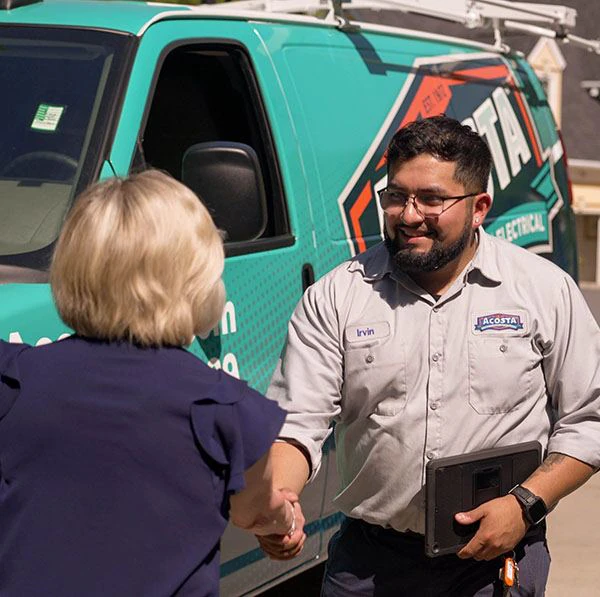
Technician from Acosta Heating, Cooling & Electrical shaking hands with a customer in front of a branded service van, emphasizing personalized HVAC service and customer satisfaction.

Whether you need outdoor outlets installed or you’re looking to get your entire house rewired, finding a quality electrician is a must. However, when you first start looking, it can be quite overwhelming to see all the options. By implementing the useful tips we will discuss below, you can set yourself up to find the perfect electrician to meet your needs.

Experience

One of the best ways to find a quality electrician is to look for one with a plethora of experience. When given the option of hiring a professional who has been in the business for 35 years compared to one who just started five years ago, it only makes sense to go with the more experienced electrician. This experience shows a long track record of quality service and can help ensure that they’re capable of handling a wide variety of scenarios that your home may require.

Offer a Variety of Services

Since the process of finding a great electrician can take some time, it only makes sense to ensure you’re hiring one that offers all of the services you’re going to need now and in the foreseeable future. While most electricians will offer basic services, such as exterior outlet and ceiling fan installation, not all will offer more complex services, like EV charging stations and whole-home backup generators.

Get Referrals

Probably one of the most effective ways to find a quality electrician that you can trust is by asking family, friends, and even co-workers for a referral. Those who have a reliable electrician will be more than happy to share their information with you. Even those who have had bad experiences with a particular electrician in the past can give you their insight so you can steer clear. Getting this first-hand word-of-mouth recommendation can provide more weight than simply searching on Google and reading reviews online.

Check for Licensing

It’s important to note that each state has its own requirements for electrician licensing. Some states will even allow local municipalities to determine the requirements for their area. It’s a good idea to check with your local code office to determine what licensing a prospective electrician must have to operate in your area. This way, you can ensure whoever you choose to hire is properly licensed.

Verify Insurance Coverage

Even the best electricians can make mistakes or experience accidents on the job. Having contractor insurance helps to cover the financial repercussions of those mistakes and accidents. You should always verify that any electrician you work with has insurance coverage for an adequate amount, dependent on the job that they’re doing for you.

No Subcontracting

While you can do everything right to find the perfect electrician, none of that matters if they subcontract their work. You can’t verify the quality of work of a potential subcontractor that you don’t know. It’s a good idea to check with any potential electrician to verify if they subcontract their work or not. If they do, steer clear.

Regularly Work in the Residential Sector

Electricians are needed in many different environments ranging from residential settings all the way to industrial settings. When you’re looking for an electrician, you want to opt for one that regularly works in the residential sector. This ensures that they get hands-on experience dealing with home electrical systems, which typically means they’ll be more proficient and swift with their services than an electrician who regularly works in an industrial setting.

Check Online Reviews

In the digital world that we live in, there’s always access to review sites where you can check on what other people are saying about a prospective electrician. You can find these reviews on sites like Google, Yelp, Angi’s List, and so much more. Be mindful when reading through reviews as there are always going to be some outliers. However, if you notice a plethora of negative reviews sharing the same woes with a particular electrician, then it’s highly advisable not to hire that particular professional.

They Offer Free Quotes

When you have a big electrical job, like rewiring your older home, you want to ensure you’re able to get a quote for the job. Most electricians will provide you with a quote for prospective jobs. If you take a look at a potential electrician’s website, they may even state that they provide free estimates.

You should opt for getting quotes from a few different electricians to get an idea of what type of pricing they offer. You want to choose a company that is both affordable and competitive. You don’t want to be stuck with an extremely expensive bill for something that other electricians would’ve done for much less. We offer system quotes online!

They Have Office Staff

One particularly frustrating issue you don’t want to find yourself in is needing electrical services and having an electrician who won’t answer the phone. You want to verify that the electrician you settle on has an office staff who will be available to answer your phone calls and schedule service appointments. This way, you don’t have to waste your time chasing down your electrician to get the services that you need.

Warranty Coverage

Most new electrical products will come with a manufacturer’s warranty to help protect your financial well-being in the event that there is a defective product. However, you want to ensure that your new electrician will offer a warranty on their workmanship. Most electricians will offer a one-year or more warranty on their work to give you peace of mind, learn more about our peace of mind guarantee.

Great Communication

One surefire way to get a feel for how a potential business operates is to give them a call. If their staff is friendly and will thoroughly answer your questions, you know that you can rely on them for great service. However, if a company isn’t friendly, speeds through answering your questions, and makes you feel rushed, it’s an indication that you likely don’t want to hire them. Since you’re going to need an electrician for the life of your home, it only makes sense to hire someone who you feel comfortable being able to ask anything and get a quality answer.

BBB-Accredited Business

The Better Business Bureau (BBB) offers accreditation to fully vetted companies that offer ethical practices. As a consumer, when you see a BBB-accredited logo, you know that the company has undergone rigorous standards and has been proven to be a fair and quality company. The BBB only offers accreditation to companies that have shown integrity, honesty, ethical advertising practices, responsiveness, and protection of the privacy of their customers.

Online Scheduling

With our busy schedules, it can be challenging to find time during the daytime to schedule an appointment. Fortunately, many electrician services offer online appointment scheduling. This will allow you to easily schedule the service to install your outdoor outlets in the evening when the business is closed. Look at our homepage; we have online scheduling options!

Trustworthy Electrician Service

Acosta Heating Cooling & Electrical offers trustworthy electrician services for the entire Charlotte, NC community. Our helpful staff can also assist with all of your heating, cooling, ductless, zoned HVAC, indoor air quality, commercial, heat pump, EV charging, and generator needs. Give us a call today to schedule your next service consultation.

How to Safely Install Outdoor Electrical Outlets

Outdoor electrical outlet with a protective cover and plugged-in device, relevant to home improvement and electrical safety in Charlotte, NC.

One of the best things about owning a home here in Charlotte, NC, is that you can modify it to suit your lifestyle. For example, if you’re a lover of the outdoors, you can transform your yard into a personal oasis. The trouble is, almost every leisure activity you can think of requires electricity. You need lights to use your outdoor spaces after dark. And you need outlets to power or recharge your devices as you use them. Fortunately, most homes come with some sort of exterior lighting installed. However, many don’t have outdoor outlets or they have them in inconvenient places. That drives plenty of homeowners to try and figure out if they can install an outdoor outlet themselves. Here’s the answer to that question and some tips on what to consider when you need a new outdoor outlet.

Can You DIY an Outdoor Outlet Installation?

In Charlotte, it’s legal for homeowners to perform electrical wiring and electrical system modifications themselves. However, some rules exist to govern the process. One is that you can’t do any DIY electrical work if you’re planning to rent out your home. You also can’t do any DIY electrical work if you plan to sell your home within a year.

You should also know that any DIY electrical work you perform still requires permitting and professional inspections. As a result, it’s often better to leave the installation of an outdoor outlet to a licensed electrician. They’ll know how to navigate the permitting process and ensure that you get a safe, code-compliant new outlet.

Things to Consider Before Adding a New Outdoor Outlet

There are multiple things you should consider before adding one or more outdoor outlets to your home. This is true whether you plan to install a new outlet yourself or have an electrician do it. Proper preplanning will help minimize your costs and ensure your new outlet or outlets meet your needs. Here’s what to consider.

Consider How You Plan to Use Your New Outlet

The first thing to consider before adding an outlet to your home’s exterior is how you plan to use the outlet. For example, are you only going to plug in a string of outdoor lights and a USB charger? Or do you need to plug in power tools? That can determine whether you need a 15-amp or a 20-amp outlet outside your home. That, in turn, will determine how hard or easy the job of installing your new outlet will be.

Consider Where You Need the Outlet Installed

The next thing to consider is exactly where you need your new outlet installed. If you need an outlet installed along an exterior wall of your home, its installation should be relatively simple. However, if you want an outlet installed in the middle of your yard, that’s a different matter altogether. Generally speaking, installing an outlet on an exterior wall is something a skilled DIY enthusiast might tackle. Installing an outlet that requires buried cable or conduit isn’t.

Consider if Your Home Needs an Electrical Service Upgrade

Finally, you will need to consider whether your home’s electrical system can accommodate your new outlet. If yours is an older home, you may already be reaching the limits of its electrical service already. In that case, you could need an electrical service upgrade before you can add any additional outlets. This is especially true if you plan to use your new outlet to power high-wattage devices. Unfortunately, this isn’t something you can likely determine on your own. Unless you’ve already had a service upgrade and know where you stand, you’ll need an electrician to tell you. In that case, you should just leave the whole job to the electrician.

How an Electrician Would Install an Exterior Wall Outlet

The most common type of exterior outlet you can have installed is a 15-amp outlet on an exterior wall. To do it, the simplest way is to install the new outdoor outlet directly behind an existing indoor outlet. This minimizes the modifications required to your home’s wiring. It also keeps the number and type of tools needed to a minimum. To give you a rough idea of what the process looks like, here are the steps involved.

Identify the Installation Location

The first step in the process is choosing the installation location for your new outlet. The electrician should plan to install it within approximately 14 inches of an existing interior outlet. This will ensure that they’ll be working within the same stud cavity as the existing outlet. You should know, however, that you can only do this with certain existing outlets. You cannot attach a new outdoor outlet to an existing kitchen, bathroom, or laundry room outlet. You also can’t attach an outlet to any outlet dedicated to powering a large appliance. So, that excludes the outlets powering your refrigerator, washer, dishwasher, microwave, or other large appliances.

Turn Off the Power

Next, the electrician will find and turn off the circuit breaker powering the existing outlet they’ll be working with. They will use a voltage tester to test the outlet to make sure they’ve turned off the right circuit. Once that’s confirmed, they’ll unscrew the existing outlet and disconnect its wires.

Replace the Outlet Box if Necessary

Next, the electrician will assess the outlet box that held your existing outlet. If it’s too small to accommodate additional wiring, they’ll replace it. They will also determine which side of the box is attached to a stud in your wall. This will let them know where to drill through to pass the wiring needed for your new outlet.

Drill Through to Exterior Installation Location

Next, the electrician will use a long drill bit to drill a hole from the location of the existing outlet to the outside. For a recessed exterior outlet, they will also cut a sufficiently sized hole for the new electrical box.

Run Connecting Wires

Next, the electrician will run the connecting wires for your new outlet. They will use appropriate wires for the amperage of the outlet’s circuit. When they’re done, they’ll connect the new wires to the existing wires inside your home. They’ll also create a short pigtail to reconnect the existing outlet.

Install New Outlet and Reinstall Existing Outlet

Finally, the electrician will attach a GFCI outlet to the wires outside your home and install it in its box. They will then reattach the wires to your existing outlet and reinstall it in its box. With the wiring completed, they’ll turn the power back on and test both outlets. If everything checks out, they’ll install appropriate switch plates or coverings for both outlets.

Your Outdoor Outlet Installation Team

If you need a new outdoor outlet installed at your Charlotte home, choose Acosta Heating, Cooling & Electrical. We’ve served local homeowners since 1972, and our team of licensed electricians is the best in the business. We can handle all of your outdoor outlet installation needs, no matter where you need a new outlet. Plus, we also offer HVAC services and complete home electrical services, too. Plus, we’re Better Business Bureau accredited with an A+ rating. That means you can trust us to do a great job at a fair price. So, for all of your outdoor outlet installation needs in Charlotte, call Acosta Heating, Cooling & Electrical today!

The Importance of Surge Protectors for Home Electronics

Lightning striking during a storm over a suburban landscape, illustrating the importance of surge protection for home electronics.

Protect Your Home Electronics with Surge Protectors

The mechanics behind the electrification of homes can be incredibly complex and often taken for granted. All people do is flip a switch, and voila, lights, televisions, computers, and other appliances are powered on. However, you should know that electric current is not constantly flowing as smoothly as it seems. Power fluctuates. At one moment, it can be stable, and the next, a sudden surge could occur, potentially damaging your home electronics. This is where surge protectors come into play.

Understanding Surges

A surge, also known as a voltage spike or transient voltage, is an increase in electrical current that lasts for a brief period of time. They occur due to the following reasons:

Lightning Strikes

When lightning strikes near a power line, it can send an overwhelming amount of electricity into homes. Even if your house isn’t directly hit, a nearby strike can still cause a surge and potentially damage your electronics.

Electrical Overloads

When too many devices are plugged into a single circuit, it can cause a power overload. This can also happen when large appliances like air conditioners or refrigerators turn on and off (particularly if they’re short-cycling), creating a sudden demand for more electricity. As a result, the voltage will increase beyond its normal level and cause a surge.

Faulty Wiring

Loose or exposed wires in your home can create an unstable electrical environment that will surely cause problems. Water, metallic objects, people, or even pests can interfere with the flow of electricity, causing fluctuations and surges.

Power Outages

Comfort consultants often recommend that you unplug your appliances during a power outage. This is because when the power comes back on, the sudden restoration of electricity can create an influx of power into your home that could potentially cause a surge.

The Potential Damage to Electronics

When a power surge occurs, the first thing that happens is the burning out of delicate components inside your gadgets. Your TVs, home theaters, and gaming consoles all have circuit boards and microchips that are sensitive to high voltage. And once these components fail, your electronics will not work properly again.

If, by any chance, you were using your computer or external hard drive at the time of a surge, it could lead to data loss. Sudden power disruptions can cause files to become corrupted or lost, leaving you with no way of retrieving them.

Even if your items were lucky enough to escape immediate destruction, power surges can still cause long-term damage. They are known to reduce the lifespan of your electronics, cause them to run slower or less efficiently, and increase the risk of future failures.

The Benefits of Using Surge Protectors

Protection Against Surges

The primary benefit of surge protectors is, of course, protecting your electronics from power surges. They work by diverting the excess electricity away from your devices, ensuring they receive a stable and safe amount of power.

Preventing Downtime

If you work from home or rely heavily on electronic devices, downtime due to damaged gadgets can be a significant inconvenience. Surge protectors help prevent this downtime by keeping your electronics safe and operational.

Cost Savings

Replacing damaged electronics can be expensive. By investing in surge protectors, you can avoid the high costs associated with repairing or replacing fried devices. It’s a small investment that can save you a lot of money in the long run.

Prevents Devastating Fires

A surge can cause appliances to overheat and catch fire. When an electrical system can’t keep up with the demand for power, the wires become hot. If left unchecked, they can eventually ignite a fire. By using surge protectors, you can prevent this potential hazard and keep your home safe.

Gives You Access to Multiple Plugs

Most surge protectors include power strips, which allow you to safely plug in multiple devices simultaneously. Still, you need to monitor the type of devices you plug into your power strip to prevent overloading.

Types of Surge Protectors

1. Basic Power Strip Surge Protectors

Basic power strip surge protectors are simple devices with multiple outlets and an on-and-off switch to control the flow of electricity. They work by diverting excess energy into a grounding wire, protecting your electronics from surges. They are commonly used in homes and offices.

2. Whole-House Surge Protectors

Whole-house surge protectors are installed at the electrical panel to protect all devices and appliances in the home from power irregularities. They cost more than the basic surge protectors and require professional installation, but they offer a higher level of protection. In fact, if you have a central HVAC system, a whole-house surge protector is highly recommended.

3. UPS (Uninterruptible Power Supply) Surge Protectors

UPS systems come with a built-in battery that provides backup power to your electronics in the event of a power outage. They protect against surges and power fluctuations without needing to switch to a battery backup. They are commonly used for computers, servers, medical equipment, and other critical devices because they ensure uninterrupted power. If you work from home and want a simple solution for power surges, then a UPS surge protector is an ideal choice.

4. Point-of-Use Surge Protectors

Point-of-use surge protectors are installed directly at the device they protect. They are usually built into power cords, wall outlets, or plug adapters. These protectors are commonly used for small electronic devices such as laptops, TVs, refrigerators, and gaming consoles.

How to Choose the Right Surge Protector

Consider the Device Type

Determine what you need to safeguard (e.g., the entire house, electronics, or your gardening power tools) and the level of protection required. This will help you choose the appropriate surge protector for your needs.

Joule Rating

The joule rating measures how much energy a surge protector can absorb before failing. The higher the joule rating, the more protection it can provide to your devices. A good rule of thumb is to look for a surge protector with a rating of at least 600 joules.

Clamping Voltage

The clamping voltage determines the amount of voltage that triggers the surge protection mechanism. For instance, if a surge protector has a clamping voltage of 400V, it will activate its protection when the voltage exceeds 400V. A lower clamping voltage is better, as it offers more protection to your devices.

Number of Outlets

Consider how many outlets you need to accommodate your devices. Remember that it’s always better to have extra outlets than not enough.

Warranty and Equipment Coverage

When selecting surge protectors, prioritize those that include a warranty and provide equipment coverage against damage. This precaution can save you from incurring the expense of replacing your surge protector shortly after purchase.

Additional Features

Look for features such as USB ports, network protection, and indicator lights. These features can enhance the functionality and convenience of your surge protector, ensuring you get the most out of your investment.

What to Expect During the Installation Process

When a comfort consultant comes to your home, they will first inspect your home’s electrical system. This helps them determine the best placement for the surge protector.

Next, they will install the surge protector at the main panel or near specific devices, depending on which type of protector you choose. They will then test it to ensure it is functioning properly and provide instructions on how to maintain and monitor it in the future.

The general time it takes to install a surge protector varies depending on the type and size of your home, as well as any specific installation requirements. In most cases, it can be done within a few hours.

Call Us Today for Expert Help

If you live in Charlotte, NC, call Acosta Heating, Cooling & Electrical today for expert installation, maintenance, and repair services for your surge protectors. Our team of experienced electricians will help you select the right type of surge protector and ensure it is installed properly to safeguard your home and electronics. Moreover, we have you covered if you need other services like HVAC and indoor air quality solutions.

Ask us about our electrical solutions today!

How to Safely Install Outdoor Electrical Outlets

White electrical outlet installed on a light gray wall, illustrating safe electrical installation relevant to surge protection and outdoor electrical solutions.

Exterior outlets offer a convenient solution for powering garden tools, lighting backyards, and running various outdoor appliances. These outlets provide an effective way to eliminate extension cords and improve electrical safety outside. Installing an exterior outlet can, likewise, address your concerns about overloading circuits and damaging critical power sources. Access to outdoor power will also free up your indoor outlets to run your various home appliances and devices.

While installing an exterior outlet alone might be manageable for homeowners experienced with home wiring, the safest and most reliable route is to work with a licensed electrician. Here at Acosta Heating, Cooling & Electrical, we’re always available to provide expert assistance. Here’s how our team approaches exterior outlet installations.

Evaluating Your Power Requirements and Outlet Options

Before installing your outdoor electrical outlets, we’ll assess your power needs. There are a few different power outlet types to consider, including standard 15-amp and 20-amp ground fault circuit interrupter (CFGI) outlets, each serving a distinct purpose.

Standard outlets are ideal for basic lighting solutions and running small appliances. The 20-amp GFCIs are more suitable for powering heavy equipment like air compressors and electric saws.

These GFCI outlets work great as an exterior solution because they incorporate a safety feature that cuts your power during a ground fault. When we wire the outlets, we ensure they adhere to the National Electrical Code (NEC) standards to deliver the safest installation. We also review your local regulations, especially since outdoor outlets must be waterproof and properly grounded to prevent electrical hazards.

All our wiring solutions are appropriately rated for exterior use and installed in grounded, weather-resistant boxes. Since the outlets include a shut-off feature that detects changes in current, they’re safe to operate outdoors. If a GFCI-rated solution does come into contact with water, unlike an indoor electrical outlet, its power cuts off to prevent electrocution.

For anyone who needs to increase the versatility of their outdoor space while enhancing safety, introducing an exterior GFCI outlet is a reliable way to accomplish this. Whether it’s for running outdoor seasonal holiday decorations or electric lawn equipment, you’ll find an exterior outlet installation to be a valuable property upgrade.

The Required Tools for Installing an Outdoor Outlet

Our licensed electricians use several tools to complete an outdoor outlet installation. We deploy a voltage tester to confirm an inactive circuit. We also use wire strippers to prep your wire connect and a power drill for placing holes in your exterior wall. Other tools we bring to the site include a screwdriver set, fish tape for guiding wires through tighter spaces, and needle-nose pliers to handle delicate wiring.

The installation also requires several essential materials and components. As mentioned, we use a waterproof electrical box that’s safe to use outside. We’ll also bring the GFCI outlet and a waterproof cover plate to protect it from moisture. Our professional installers utilize electrical conduit to safeguard the new wiring along with electrical tape and wire nuts to secure the solution’s various connections.

We also use safety gear like insulated gloves to prevent shock. This type of glove is essential whenever installing, repairing, or maintaining any aspect of your household power supply. Our electricians also wear safety glasses to protect against foreign debris and, potentially, a dust mask, depending on the amount of drilling involved. Our team members will bring a ladder to your home to reach higher installation points, and we always wear safety footwear with nonslip soles to optimize balance.

Preparation and Selecting the Outlet’s Location

Before installing your outlet, we’ll inquire about where you typically use your outdoor devices and equipment. We’ll also consult with you on where you plan to install future patios, outdoor kitchens, and lighting solutions. This approach helps ensure the most accessibility and keeps the outlet out of high foot traffic areas where power cables can get in the way.

After identifying the ideal location for your new outlet, we’ll inspect your existing wiring system and utilities. Our professionals use stud finders with inbuilt voltage detectors to identify hidden wires and plumbing system pipes behind your walls. These measures prevent accidental punctures that could damage your home or create hazards during the installation.

If we’re digging or laying wire during this process, our electrician will check with your local utility provider to ask about any below-ground utilities. Depending on your municipality and its local building codes, we may have to pull permits to install an exterior outlet. To ensure your home remains code-compliant, we’ll correspond with your local building department and advise of any specific requirements.

Once we’re ready to install the outlet, we’ll use a pencil to mark the selected area with several installation points, verifying they’re at least 6 inches above the soil to avoid moisture exposure. The main takeaway here is to choose the outlet location carefully. We also suggest that you keep in mind any improvement plans you’re considering for your outdoor living environment when selecting the installation site.

Installing the Exterior Outlet

When installing an electrical outlet, safety is always a top priority. As such, in the first installation step, we cut your main power supply at the circuit breaker to eliminate the risk of shock. Since we’ve already measured and marked your preferred installation site, we’ll double-check our work for accurate placement before drilling holes as required.

At this stage, our electrician will start securing the weatherproof box, usually on a wall or exterior post. We’ll ensure that there’s a firm fitment, the new box will hold up against the outdoor elements, and it protects your outlet’s electrical components from moisture.

Our installer will then begin laying out the wiring from the main power source to the new installation site. As we establish the wiring route, we’ll make sure everything is out of sight and well-secured. At this stage, we can connect the wires to your main power supply and electrical box before installing the outlet.

In the final steps, our electrician will attach the GFCI outlet to the electrical box, confirming that all wiring connections are secure and the box is watertight enough to prevent moisture ingress. Finally, we’ll switch your power back on at the circuit and test the new outlet.

The Importance of Working With a Licensed Professional

As you can see, while installing an outlet might seem simple at first glance, the task can get complex rather quickly. This is especially true if the job entails multiple installation sites and complicated wiring solutions. Depending on the scope of the installation, a new exterior outlet could require specialized knowledge and tools to ensure compliance with your local building codes. Partnering with our licensed electricians ensures a safe outlet that minimizes the risk of electrical hazards and faults.

For your next electrical installation, trust our experts at Acosta Heating, Cooling & Electrical. In addition to outlet and switch installation, we help Charlotte, NC, homeowners with electrical repair services, generator installation and repairs, and a comprehensive range of heating and cooling solutions.

To schedule a service or learn more about how a new exterior outlet can enhance convenience and safety at your home, contact us at Acosta Heating, Cooling & Electrical today!