How to Save Energy During the Shortest Month

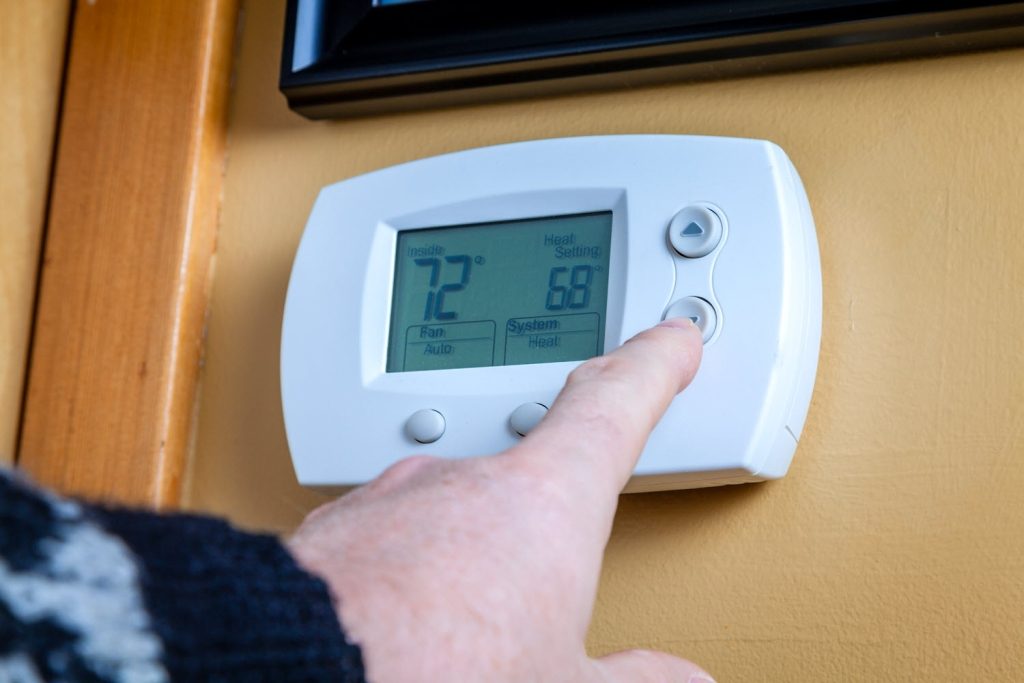
Man adjusting a thermostat, highlighting HVAC maintenance for homes by Acosta Heating, Cooling & Electrical.

Winter is officially upon us, which means we must deal with high heating costs and high energy bills. The impact of inflation means that money is tighter than ever for many families. As a result, many homeowners are constantly searching for any ways that they can keep their energy costs lower, and this article will show you some of the most effective options for achieving this goal.

Make Sure Windows and Exterior Doors Aren’t Leaking

Exterior doors and windows are the primary sources of wintertime heat loss in most homes. Poorly sealed or poorly insulated windows and doors can decrease the energy efficiency of a home by more than 20%. This is because they will allow significant amounts of heat to escape.Re-caulking any cracks or gaps around the frames of your windows and doors can make a major difference. If you can feel cold air coming in at the bottom of any window or door, it’s a sign that the weather-stripping needs to be replaced. However, you can also limit the amount of cold air that leaks by stuffing a towel at the bottom of the window or door, but this is obviously only a temporary fix. If you have single-pane windows, you can also minimize this heat loss by sealing them with plastic. Taking these basic steps will improve the energy efficiency in your home by helping it stay warmer and reducing how much your heating system must run.

Check the Air Filter in Your HVAC System

HVAC air filters should be replaced every three months at the very minimum. However, you’ll often need to replace yours more often in times when your heating system gets much more use. This is why experts recommend checking the filter monthly. If the filter looks dark colored or is black, you should replace it as soon as possible. Running your heating system with a dirty filter greatly reduces its effectiveness and leads to much higher energy usage. Even if the filter is only partially dirty, replacing it can make a significant difference and is a straightforward way to save some money.

Keep Curtains, Blinds and Drapes Open During the Day

Although windows can be a major source of heat loss, they can also be a big contributor to heat gain during the day when the sun is shining. If you keep your curtains, blinds and drapes closed during the day, you’re missing out on lots of free heat. When you leave your window coverings open when the sun is out, the sunlight will help to keep your home warmer. This means your heating system won’t need to run as much during the day and your energy bills will be a bit lower. However, it is also a good idea to close your window coverings once the sun goes down to help block out some of the cold. This is especially effective if you have heavy or insulated curtains or drapes.

Adjust or Program Your Thermostat

The temperature that you have your thermostat set to is one of the biggest determining factors in how high your heating costs are. If you typically set your thermostat to 70 degrees, switching it to 68 degrees will typically lower your heating costs by 2-6%,

depending on the size and energy efficiency of your heating system. One of the easiest ways to save energy is to program your thermostat so that the temperature automatically turns down when you go to sleep and leave for work. Statistics show that if you lower the temperature between 7 and 10 degrees for just eight hours every day, your energy costs will be at least 10% lower on average. If you did this for eight hours during the day and again for eight hours at night, you could easily end up saving several hundred dollars a year. This energy savings is one reason we’d definitely recommend installing a new smart thermostat if you don’t already have one. Smart thermostats are much more intuitive and easier to program than standard programmable thermostats. If you opt for a smart learning thermostat, you won’t even need to worry about programming it. That’s because this type of smart thermostat quickly learns from your behavior patterns and will turn the temperature up and down at various times based on your typical daily routines.

Keep Interior Doors and Heating Vents Open

One major mistake many people make is thinking that they can make their heating more effective and save energy by closing the doors to unused rooms and/or shutting the heating vents in those rooms. The fact is that central heating works most effectively when all the interior doors and supply vents are open. If too many doors in the home are closed, it obstructs the airflow in the house. Having proper airflow is one of the most crucial factors in how effective a heating system works and how much energy it uses. Closing more than a few supply vents will also greatly decrease the effectiveness and efficiency of your heating system. When vents are closed, it creates more air resistance inside the ducts. This resistance makes it much more difficult for the blower to move the heated air around the home and causes it to use more energy. If air can’t circulate through the system properly, it will heat much more slowly and use more energy.

Leave Any Ceiling Fans in Your Home Running

Most homes have forced-air heating systems that run on either a furnace or heat pump. One of the biggest issues with forced-air heating is that all the warm air it produces rises and settles on the ceilings. This means that the air down lower in every room stays a bit cooler and quickly cools down even further when the system shuts off. As a result, the heating system needs to run more often to maintain the proper temperature. This is where having ceiling fans can be a huge help. When a ceiling fan spins in the reverse clockwise direction, it creates an updraft. This forces the hotter air up near the ceiling downward, which helps to make the room feel warmer. If you have ceiling fans in your living room or the rooms you occupy most, this warming effect enables you to turn your heating down by a few degrees without any noticeable difference in temperature or comfort.

Switch to LED Light Bulbs

Lighting typically accounts for approximately 15% of a home’s total electricity usage. Although the US completely banned the sale of traditional incandescent light bulbs in August 2023, they are still used in many homes. Many homes also use compact fluorescent light bulbs (CFLs). Switching from incandescent or CFL light bulbs to LEDs can make a major difference in your energy bills. LED light bulbs use between 75% and 90% less electricity than incandescent bulbs and around 50% less energy than comparable CFL bulbs. According to the US Department of Energy, switching all the lights in your home to LEDs will save you just over $200 a year on average. If you have a larger home with lots of additional lighting, you’ll obviously end up saving even more.

Since 1972, [company_name] has been the most trusted source in Charlotte for residential heating, cooling and electrical services. If you’ve noticed your heating costs are suddenly higher or your heating system isn’t working effectively, our comfort consultants can quickly find the underlying cause of the problem. We offer professional maintenance and repairs for all makes and models of heating systems, and we can also help if you need any electrical installation or repair services. For more information on the ways we can help improve the energy efficiency of your home to save you money, contact us today.
The Variable-Speed Blower Motor: An Impressive Component of Furnace Efficiency

Your heating system includes a blower as one of its primary components. If you’re considering an upgrade, it’s worth exploring how a variable-speed blower motor can increase your home comfort and savings.

To learn more about variable-speed blower motors for your home’s heating system, call the Acosta Heating, Cooling & Electrical team at [phone] or contact us online!

What Is a Variable-Speed Blower Motor?

Variable-speed blower motors are a revolutionary step forward in air-circulating technology. These powerful motors vary the speed and output depending on the environment’s temperature, ultimately providing the most energy-efficient means of controlling airflow throughout a space.

A variable-speed blower motor is an energy-efficient alternative to traditional single-speed motors. Single-speed motors run at one fixed speed, regardless of the temperature outside or the workload of your HVAC system. Contrastingly, variable-speed models can adjust their speed depending on conditions to conserve energy while providing optimal comfort in your home.

Variable-speed blower motors offer more significant energy savings, even heating and cooling, better humidity control, and quieter operation than traditional air blowers. With variable-speed blower motors, you can be sure that your space is comfortable no matter what season it is or what time of day!

Variable-Speed Blower Motors Enhance Home Comfort

When a furnace blower can function at a variety of speeds and do so continuously, it enables you to benefit by:

  • Upgrading home comfort: Variable-speed technology allows the furnace blower to cycle at a lower speed, whereas single-speed systems can provide just one speed: high. But the weather doesn’t always require high speeds, with the furnace blower blasting hot air throughout the home. Milder winter weather in the Charlotte area often demands minimal heat, and variable-speed systems can respond to those needs with precise heat delivery. Adjusted speeds also provide even more heat throughout the day, helping you avoid alternating hot and cold zones that conventional blowers generally deliver.
  • Boosting energy savings: By distributing exact amounts of heat daily, you’ll save energy because you’re not wasting energy with a system that’s always on high speed.
  • Increasing indoor air quality: With a variable-speed blower, you can run your fan continuously to circulate air through your system’s filter more often and improve your home’s indoor air quality.

[cta_special_button url=”https://www.acostainc.com/contact/” text=”Schedule Service Now”]

Variable-Speed Blower Motors Drive Savings

The motor boosts energy savings, and variable-speed technology uses a more efficient motor that consumes less electricity to operate. If you want to use your furnace blower to enhance indoor air quality by allowing it to run all day long, you’ll need a high-efficiency motor, like an electronically commutated motor, to accomplish this task without breaking the bank on energy consumption.

You can gain considerable advantages, namely comfort and savings, by upgrading to a heating system with a variable-speed furnace blower motor. For more information or to ask our experts a question, contact Acosta Heating, Cooling & Electrical today! We’ve been serving the Greater Charlotte Area as a local family-owned company since 1972.

Why Choose Acosta Heating, Cooling & Electrical?

Acosta is the team to call if you’re looking for a reliable and experienced heating, cooling, and electrical company in Charlotte, NC. We have been serving the community since 1972, and our family-run business has a long-standing reputation for quality workmanship and customer service. Our technicians are background-checked and drug-screened, so you can rest assured knowing your family is safe when they come into your home. We service all brands of equipment, and our highly trained professionals are courteous, on time, efficient with their time, and receive ongoing training to stay up to date on the latest technologies.

If you want peace of mind with your next heating or cooling project — big or small — contact Acosta Heating, Cooling & Electricaltoday at [phone]!

Inflation Reduction Act: Energy-Efficient Rebates for NC Residents

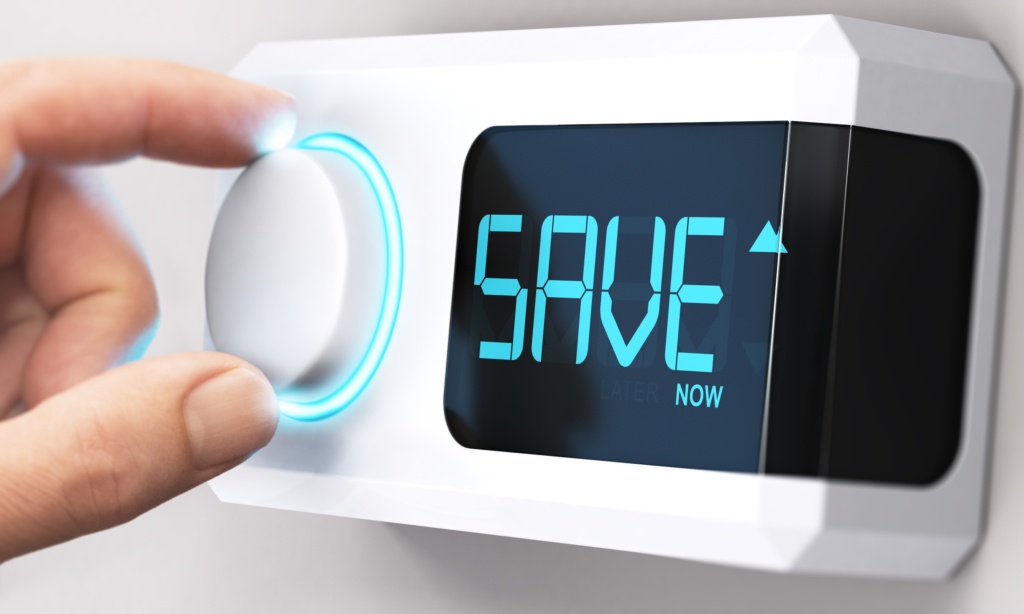
Hand adjusting a modern thermostat displaying "SAVE" to promote energy efficiency in heating and cooling systems.

The Inflation Reduction Act is designed to tackle climate change head-on, helping people reduce their carbon footprint and save money. It offers up to $14,000 in tax credits and rebates for homeowners to make their properties more energy-efficient.

What Is the Inflation Reduction Act?

The IRA, signed into law in August 2022, addresses taxes, healthcare, and climate initiatives. The law includes a non-business energy property credit to help North Carolina homeowners make energy-efficient home improvements, including plumbing, heating, cooling, and electrical upgrades.

How Will This Affect Me?

The savings provided by the Inflation Reduction Act will reach communities across North Carolina, lowering expenses for families through:

  • Reduced energy costs and rebates from purchasing energy-efficient appliances, including heat pumps, water heaters, clothes dryers, and more.
  • Rebates on repairs and improvements to increase energy efficiency.
  • Tax credits cover 30% of the costs of installing solar panels.
  • Reduced energy costs and rebates from purchasing energy-efficient appliances, including heat pumps, water heaters, clothes dryers, and more.

The act also provides affordable housing unit improvements like clean energy and electrification.

What Are the Available Rebates?

There are two distinct rebate programs. The HOMES rebate program helps residents make their entire homes more energy-efficient. The High-Efficiency Electric Home Rebate Program, or HEEHRP, offers rebates for low and middle-income families to electrify their homes.

Through tax credits and rebates, North Carolina residents can receive significant savings:

  • Up to $8,000 for an ENERGY STAR® qualified heat pump
  • Up to $1,600 for air sealing, ventilation, and insulation
  • Up to $2,500 for improving electrical wiring
  • Up to $600 each, with an annual cap of $1,200, for a qualifying air conditioner or gas furnace
  • Up to $2,000 with a qualified heat pump or boiler

There is a $14,000 maximum benefit per home and an additional $500 for qualified contractor incentives. Some of these federal incentives are available immediately, while others don’t kick in until January 1, 2023. Still, more will be rolled out over the next 12 to 24 months.

Qualification & Eligibility Is Based on Household Income

States are administering this act individually, so availability and eligibility may vary. Because of this, it is recommended that you speak with a tax professional to ensure that you meet the rebate’s requirements. Your eligibility and the rebate amount you will receive depend on your household income:

  • 100% of the system purchase price qualifies for the rebate if your household’s income falls below 80% of your area’s median income
  • 50% of the system purchase price qualifies for the rebate if your household’s income falls within 80% to 150% of your area’s median income
  • If your household income is above 150% of your area’s median income, your home does not qualify for the rebate

What Changes Can I Make To Get the Rebate?

There has never been a better time to make energy-efficient improvements to your North Carolina home. Here are just some of the upgrades enabled by the act.

  • Installation of ENERGY STAR® windows, doors, and skylights
  • Purchase and installation of highest efficiency tier central air conditioners and other qualified electric, gas, and propane HVAC systems
  • Electrical upgrades that promote energy efficiency, including panel upgrades
  • Home energy audits
  • Installation of an electric heat pump and heat pump water heater

Unsure where to begin? Ask your power company or a professional heating, cooling, and electrical company like Acosta Heating, Cooling & Electrical to help upgrade your heating or cooling system or electrical system to one that meets the new standards and would make you eligible for the tax credit. You can also consult the government’s Clean Energy webpage for more information.

Moving Toward Greater Energy Efficiency With the IRA

The Inflation Reduction Act is the country’s most significant clean energy investment ever made. Its crucial incentives will make the transition to clean energy and a low-carbon life easy and financially savvy for all North Carolina residents.

While some incentives are available for DIYers, others require you to work with a professional installer. Backed by over 50 years of service, Acosta Heating, Cooling & Electrical delivers high-quality home improvement services to residents throughout the greater Charlotte, NC, area.

Contact us onlineor at [phone] today to learn more about the IRA or schedule services.

Should I Keep My AC on “Auto” or “On”?

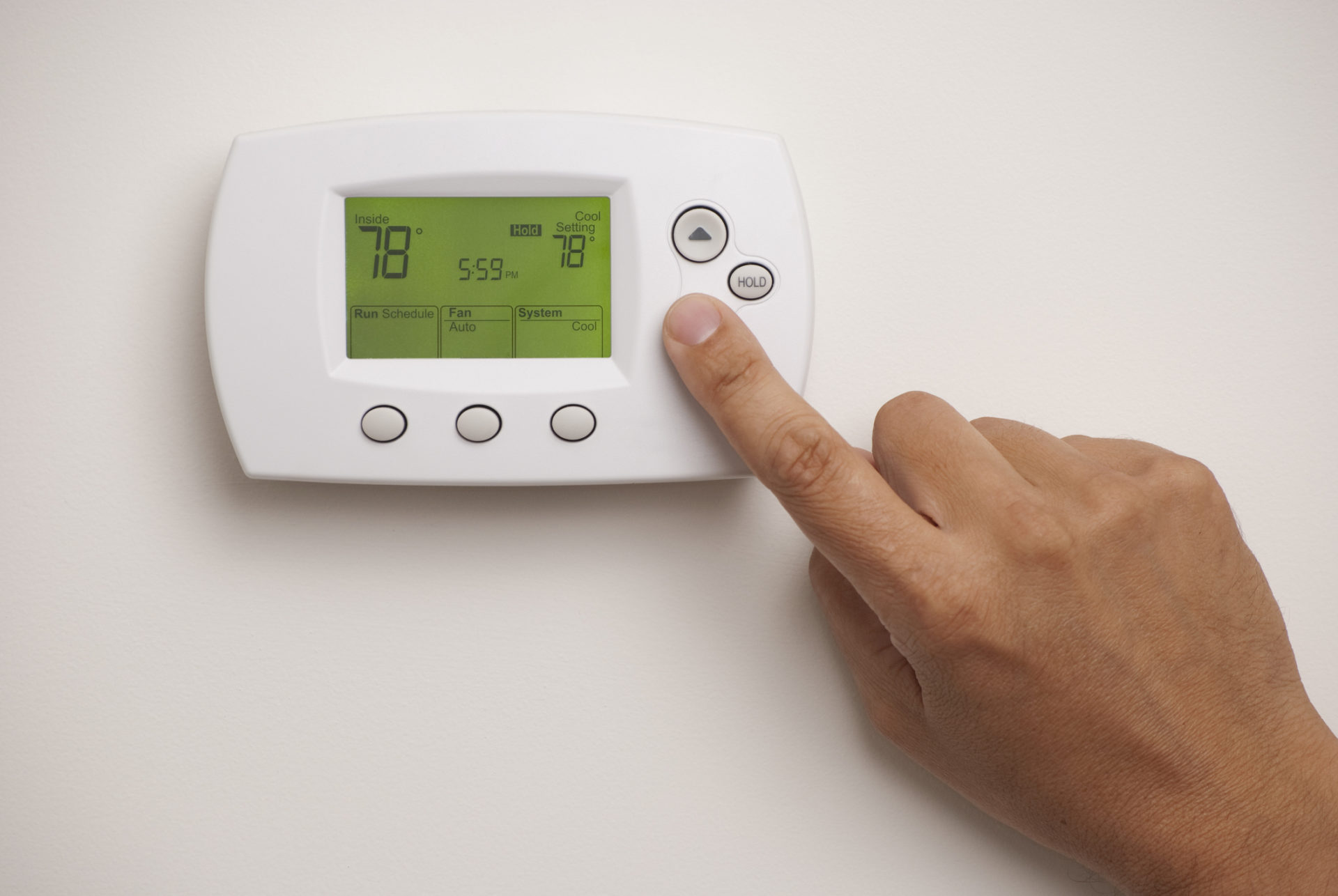
Hand adjusting a digital thermostat displaying indoor and cooling temperatures, relevant to HVAC system settings and energy efficiency discussions.

Hand adjusting a digital thermostat displaying 72°F inside temperature and 68°F heat setting, relevant to HVAC system settings and energy efficiency.

In the battle for how you should set up the air conditioning in your Charlotte-area home, a new twist comes into play. With newer models of residential air conditioning systems, thermostats have become more advanced. Now, there are many different features you can have for your air conditioner, and they’re all programmed from your thermostat.

While some features may rely on personal preference, setting your thermostat to “auto” or “on” can be more structured. Read on to understand which option is suitable for your home — and why!

What’s the Difference Between “Auto” and “On”?

Before deciding if you should set your air conditioner to “auto” or “on,” it’s essential to understand the difference between the two settings. Both settings control the air conditioner fan but differ in when the fan operates.

When you set your air conditioner to “auto,” you restrict the fan to only run at certain times. The air conditioner thermostat evaluates the temperature in your home. When the temperature goes above the set temperature, the air conditioner starts a cooling cycle, and the fan automatically turns on, so it can help cool your home. Once your home reaches the desired temperature, the fan and the cycle stop.

On the other hand, when you set your air conditioner to “on,” you are telling your air conditioner always to run the fan, even when your air conditioner is not working to cool your home.

What Are the Benefits of “Auto” and “On”?

There are benefits to having your air conditioner set to “auto” and “on.” The benefits of the “auto” setting include higher efficiency, lower energy bills, better humidity control, less wear and tear on some components, and quieter running.

The “on” setting includes more even cooling, better air circulation and filtration, and less wear and tear from stopping and starting.

While there are many advantages to both “auto” and “on” settings, they also have disadvantages.

What Are the Disadvantages of “Auto” and “On”?

Sometimes, the disadvantages can give you a more straightforward choice between choosing the “auto” or “on” setting on your air conditioner. The drawbacks to the “auto” setting include hot and cool spots in your home, less air filtration, and the blower motor may wear out from the regular stopping and starting.

The disadvantages to the “on” setting include increased cooling costs, filter replacements needed more frequently, and may blow more regularly during summer to cool the air in ducts near attics or warmer areas.

Understanding if you should choose the “auto” setting or the “on” setting for your air conditioner comes down to the Charlotte climate.

The Setting You Should Choose

When choosing between setting your air conditioner to “auto” or “on,” our warm, humid climate should be the determining factor. The evaporator coils are what create the cool air in your home. They cool the air around them, and the fan blows that cool air through your ducts and into your home.

The high levels of moisture in our air can cause condensation to build up on the evaporator coils. Then, when the fan blows air across the coils and into your home, that condensation also blows into your home. This adds humidity to your home.

In a climate that is as humid as Charlotte, the added humidity can make your home more uncomfortable.

When you set your air conditioner to the “auto” setting, you reduce the amount of moisture your system blows back into your home. You’ll have a lower humidity level in your home, which will make your home feel cooler and more comfortable.

So, in the Charlotte area, choose the “auto” setting for your air conditioner to reduce the humidity and make your home as comfortable as possible during our hot summers!

Why Choosing a Programmable or Smart Thermostat Is a Good Idea

A programmable thermostat or smart thermostat gives you the flexibility you need to customize your air conditioning system and make your home comfortable for you. Since you’re setting your thermostat to “auto” to eliminate as much humidity from your home as possible, using a programmable thermostat or smart thermostat simply takes your air conditioner to the next level.

Programmable thermostats allow you to set your air conditioner based on time of day, day of the week, year’s season, and so much more. By customizing when your air conditioner will run, you can keep your home at a more consistent temperature.

Smart thermostatsalso let you change your air conditioner settings with your phone or other devices from anywhere in the world.

Now you can have precisely the settings you want on your air conditioner with the touch of a button!

[cta_buttons phone=”7046655998″ link_text=”704.665.5998″ link=”/contact/” button_text=”CONTACT-US”]


Choose Acosta Heating, Cooling & Electrical

If you want to upgrade to a smart thermostat or have other air conditioning system needs, choose Acosta Heating, Cooling & Electrical. We have over 45 years of professional experience helping Charlotte-area homeowners stay cool and comfortable all year long.

For the best air conditioning installation, repair, and maintenance services, trust your home to Acosta’s team of experts. Our friendly and courteous professionals will do the job quickly and efficiently, delivering superior customer service.

Call 704.665.5998 or contact us online to schedule your HVAC appointment in Mecklenburg or Union County today!

More Air Conditioning & HVAC Resources

Is It Okay Run Your Air Conditioner All the Time?

Why You Should Schedule Routine AC Maintenance

The Possible Reason Your Home Has Uneven Cooling

Steps to Keep Your Air Conditioning Working Efficiently

So often we don’t think about our air conditioning equipment until it stops working, but by then, the service call and repairs can really be costly. The wiser plan is to take the necessary steps to assure your air conditioning system is working efficiently, thereby extending its life and avoiding costly repairs. Cooling costs make up the largest part of most household’s utility costs, so attention to reducing air conditioning costs is imperative.

Your air conditioner working at its best efficiency not only saves you repair woes, but will also save you money each and every month. Just a few steps during the year are all that is needed.

First, take steps to allow your air conditioning system to work more easily. These steps include:

  • Change the filter regularly – at least once a month during the summer, but more often if you have pets or other dusty conditions.
  • Make sure your home is as insulated as possible. Replace any seals that are worn out and are letting cool air escape.
  • Reduce heat sources as much as possible during summer months. Opt to cook out on the grill instead of run the oven. Use light bulbs that do not put off heat. Shut off lights that are not needed as they produce heat.
  • Plant trees and shrubbery around your home, keeping in mind that the more you can curtail that hot sun, the less your air conditioning has to work to keep your home cool in the summer.
  • Use ceiling fans – there is debate on whether these just make you feel cooler or actually do cool a room, but if using them means you feel cool enough to set the thermostat a degree or two higher, that will save your air conditioner from working as hard.

Second, maintain your air conditioning equipment to keep it running efficiently:

  • An annual service visit from an air conditioning expert will refresh your system and alert you to any issues it may be experiencing. They will check the unit, the thermostat, and your duct work to be sure everything works optimally. They may also be helpful in advising you when to consider a newer system that is rated higher for efficiency.
  • Have an air conditioning company install a programmable thermostat so you can set it to higher temperatures when you don’t need it as cool, like when you are at work.

The ideal time to have your air conditioner serviced is before the summer season begins. This way, any issues can be addressed before you find yourself sweltering in the heat and hoping they can squeeze you in as soon as possible. Air conditioning companies are really kept hopping during the summer, so it can take longer to get to you and also to get parts. A service call is generally higher during peak times as well. Repairs are always more costly than preventative maintenance, so having your unit serviced at least annually will save you money down the road.

To schedule routine maintenance of your system call Acosta at [phone] or click here to schedule online.

“Fiscal Cliff” Averted; HVAC and Water Heating Tax Credits Extended

Good news for tax payers in Charlotte, North Carolina!

Aimed at averting the “fiscal cliff,” the American Taxpayer Relief Act of 2012 (ATRA) has extended numerous energy-efficiency and renewable energy deductions and credits for another year—and that means more savings for you! Energy tax credits from 2011 that expired on January 1, 2012 have been extended to December 31, 2013. Because these tax credits were reinstated retroactively, they can be used on any qualifying equipment installed after December 31, 2011. Any eligible taxpayer (homeowner) can claim a tax credit of up to $500 in qualifying HVAC and water heating equipment. Of course, there are a few limitations. Here are some of the details:

Water Heaters (Tax Credit: $300)

Electric heat pump, propane, natural gas, and oil water heaters may qualify.     Minimum standards apply on the energy factor and the thermal efficiency of the water heater.

Furnaces (Tax Credit: $150)

Propane, natural gas, or oil furnaces may qualify.     Minimum standards apply on the AFUE (annual fuel utilization efficiency) of the furnace.

Boilers (Tax Credit: $150)

Propane, natural gas, or oil boilers may qualify.     Minimum standards apply on the AFUE (annual fuel utilization efficiency) of the boiler.

Air Conditioners and Heat Pumps (Tax Credit: $300)

Split-system central air conditioners, packaged central air conditioners, split-system electric heat pumps, and packaged electric heat pumps may qualify.     Minimum standards apply on the SEER (seasonal energy efficiency ratio), EER (energy efficiency ratio), and HSPF (heating seasonal performance factor) of the air conditioner or heat pump.

Advanced Main Air Circulating Fans (Tax Credit: $50)

Propane, natural gas, or oil furnace fans may qualify as long as they have a maximum annual electricity use of 2% of the total energy of the furnace.

Details about qualifying equipment can be found in Section 25C of the IRC (Internal Revenue Code). If you already have some of the above-mentioned equipment in your home, don’t forget to claim your tax credits! Consult your tax advisor for additional details and instructions about the 25C tax credit extension.

On the other hand, if you haven’t upgraded your air conditioning and heating system yet, now is the time to do so. If you would like to take advantage of both the energy savings and the $500 tax credit, contact a qualified HVAC company to learn more about product eligibility. Residents of Charlotte, North Carolina can call Acosta Heating, Cooling & Electrical at [phone]for more information.

Saving Money On Heating With Programmable Thermostats

Heating your home is a constant game. It is hard to save money, remain comfortable and be responsible to the environment at the same time. With rising energy costs and a green movement that is bringing everyone more in touch with their footprint on the Earth, homeowners are looking for reasonable solutions in heating and air conditioning their home.

Most heating options that are environmentally friendly are very costly to homeowners and can take weeks to install. One improvement you can make that is fairly cheap and very quick to install is programmable thermostats.

Programmable thermostats only range from $50 to $200, which is hardly anything considering the costs of replacing furnaces, installing new windows, or buying more efficient appliances. This small cost yields big savings, savings of about 15% a year.

Other than significantly lowering your energy bills, programmable thermostats are much more convenient to have in your home, and can save energy without you even remembering to turn the thermostat down. Most programmable thermostats can save more than six temperature settings for every single day, and you can override them without messing up the daily or weekly program that the thermostat is set to.

This can do wonders to save you money on heating during cold winter months. For example, your house can be a nippy 60 degrees while you are at work, and then–while you are in traffic on your commute back home–it can automatically move up to a toasty 68 degrees or 70 degrees. When you step in the door, the temperature is right where you want it.

Signs of Needing Furnace Repair

Furnace repair can be a very expensive part of life. It is important to catch the signs early, so you avoid a catastrophe and an even more expensive mess. Here are 7 signs that can help you realize whether you need furnace repair or not:

  • The prices of your gas and electric bill are going up. Furnaces lose efficiency with age, and this can increase exponentially if the furnace has not been properly maintained. This causes your furnace to work harder for the same amount of output while using more energy and eventually causing your gas or electric bills to rise. The money you pay the gas and electric company every month could be used to pay for new furnace.
  • Your furnace is multiple decades old. The life expectancy of a furnace is between 16 and 20 years. Any longer than this and your furnace is probably close to its end.
  • No matter what the thermostat says, you are still uncomfortable. Your furnace may lack the ability to properly distribute the air in your home, making some rooms warmer than others. Also your thermostat may need replacing.The furnace is making strange noises. Furnaces tend to make strange and loud noises near the end of their life. This could be a sign that the furnace is about to give.
  • Members of your household getting sick. As furnaces get older, they run the risk of getting damaged and cracked. This can cause carbon monoxide to leak into your home undetected and cause harm to your family. Symptoms include disorientation, nausea, and flu-like symptoms. It is highly recommended that everyone have a carbon monoxide detector installed in each living area of your home. If you suspect carbon monoxide poisoning, or if your carbon monoxide detector goes off, get out of the house immediately and do not go back in until the area has been inspected by professionals and proven to be safe
  • Yellow burner flame instead of a blue burner flame. A yellow burner flame might be a sign that your furnace is producing carbon monoxide. This is very dangerous to the members of your household.
  • Dirty or dusty home. Old furnaces cannot properly moisturize and clean the air inside of your home.

If you see any of these signs, you should consult with a professional to see about furnace repair or replacing your furnace.

In need of furnace services in the Charlotte metro area? Call Acosta Heating, Cooling & Electrical today at 704.665.5998 or contact us online!

Breakthroughs With Heat Pumps

What if you were told that there was an energy source that could heat and cool your home without any costs to you? You wouldn’t have to pay for gas or propane to maintain the temperature of your home. It is completely renewable, natural, and will not run out. Would you be interested?

Heat pumps can either tap the constant temperature of the earth to provide efficient heating and cooling or use heat from the air for heating and cooling. Heat energy can be extracted from the earth or air in the winter, and added to the building. During the summer months the same process is turned around. Unnecessary heat is taken from the house or building and put into the earth to be cooled down.

To see an in-depth explanation on exactly how this new technology works check out this video:

There are many different types of heat pumps that can be customized to better suit your home, and since the heat and cool comes from natural sources, there are no added costs. There is also no need for boilers or cooling towers. Heat pumps can also be used in conjunction with traditional heating and cooling systems for increased heating and cooling ability.

Other advantages to the heat pumps are a long life expectancy and low environmental impact. It’s like coming up with a permanent solution to heating and cooling your home. Heat pumps are becoming more and more popular, so you should find out more about this cost-effective and environmentally friendly solution as soon as you can.

Can Solar Power Panels Save You Money?

Homeowners who are thinking about installing solar panels on their roofs are not just considering the advantages that this can have on the environment, but probably the advantages that this can have on their wallets as well. On top of saving you money on your power bill, there are numerous state rebates and tax incentives that come with using solar power panels. Check out the Database of State Incentives for Renewables & Efficiency website for more information.

As natural resources dwindle, the prices of traditionally produced power can only go up, which is why so many people are now considering micro-generation in their own homes.

Solar power panels can be fitted to the roof of a building and connected to the electricity supply within a matter of days, after which time, a considerable proportion of the property’s energy needs will be drawn from the biggest free resource we have – the sun.

Although using solar power panels is an investment, the rewards can be huge and save you a lot of money, especially as the cost to power the average home has grown exponentially over the last decade. Solar panels can also greatly increase the value of your home, which could be very critical in the current housing crisis. It could be the difference between selling your home or being stuck with that second mortgage.

For more information on solar power panels and how they work, check out this interactive diagram from PBS.