How to Save Energy During the Shortest Month

Man adjusting a thermostat, highlighting HVAC maintenance for homes by Acosta Heating, Cooling & Electrical.

Winter is officially upon us, which means we must deal with high heating costs and high energy bills. The impact of inflation means that money is tighter than ever for many families. As a result, many homeowners are constantly searching for any ways that they can keep their energy costs lower, and this article will show you some of the most effective options for achieving this goal.

Make Sure Windows and Exterior Doors Aren’t Leaking

Exterior doors and windows are the primary sources of wintertime heat loss in most homes. Poorly sealed or poorly insulated windows and doors can decrease the energy efficiency of a home by more than 20%. This is because they will allow significant amounts of heat to escape.Re-caulking any cracks or gaps around the frames of your windows and doors can make a major difference. If you can feel cold air coming in at the bottom of any window or door, it’s a sign that the weather-stripping needs to be replaced. However, you can also limit the amount of cold air that leaks by stuffing a towel at the bottom of the window or door, but this is obviously only a temporary fix. If you have single-pane windows, you can also minimize this heat loss by sealing them with plastic. Taking these basic steps will improve the energy efficiency in your home by helping it stay warmer and reducing how much your heating system must run.

Check the Air Filter in Your HVAC System

HVAC air filters should be replaced every three months at the very minimum. However, you’ll often need to replace yours more often in times when your heating system gets much more use. This is why experts recommend checking the filter monthly. If the filter looks dark colored or is black, you should replace it as soon as possible. Running your heating system with a dirty filter greatly reduces its effectiveness and leads to much higher energy usage. Even if the filter is only partially dirty, replacing it can make a significant difference and is a straightforward way to save some money.

Keep Curtains, Blinds and Drapes Open During the Day

Although windows can be a major source of heat loss, they can also be a big contributor to heat gain during the day when the sun is shining. If you keep your curtains, blinds and drapes closed during the day, you’re missing out on lots of free heat. When you leave your window coverings open when the sun is out, the sunlight will help to keep your home warmer. This means your heating system won’t need to run as much during the day and your energy bills will be a bit lower. However, it is also a good idea to close your window coverings once the sun goes down to help block out some of the cold. This is especially effective if you have heavy or insulated curtains or drapes.

Adjust or Program Your Thermostat

The temperature that you have your thermostat set to is one of the biggest determining factors in how high your heating costs are. If you typically set your thermostat to 70 degrees, switching it to 68 degrees will typically lower your heating costs by 2-6%,

depending on the size and energy efficiency of your heating system. One of the easiest ways to save energy is to program your thermostat so that the temperature automatically turns down when you go to sleep and leave for work. Statistics show that if you lower the temperature between 7 and 10 degrees for just eight hours every day, your energy costs will be at least 10% lower on average. If you did this for eight hours during the day and again for eight hours at night, you could easily end up saving several hundred dollars a year. This energy savings is one reason we’d definitely recommend installing a new smart thermostat if you don’t already have one. Smart thermostats are much more intuitive and easier to program than standard programmable thermostats. If you opt for a smart learning thermostat, you won’t even need to worry about programming it. That’s because this type of smart thermostat quickly learns from your behavior patterns and will turn the temperature up and down at various times based on your typical daily routines.

Keep Interior Doors and Heating Vents Open

One major mistake many people make is thinking that they can make their heating more effective and save energy by closing the doors to unused rooms and/or shutting the heating vents in those rooms. The fact is that central heating works most effectively when all the interior doors and supply vents are open. If too many doors in the home are closed, it obstructs the airflow in the house. Having proper airflow is one of the most crucial factors in how effective a heating system works and how much energy it uses. Closing more than a few supply vents will also greatly decrease the effectiveness and efficiency of your heating system. When vents are closed, it creates more air resistance inside the ducts. This resistance makes it much more difficult for the blower to move the heated air around the home and causes it to use more energy. If air can’t circulate through the system properly, it will heat much more slowly and use more energy.

Leave Any Ceiling Fans in Your Home Running

Most homes have forced-air heating systems that run on either a furnace or heat pump. One of the biggest issues with forced-air heating is that all the warm air it produces rises and settles on the ceilings. This means that the air down lower in every room stays a bit cooler and quickly cools down even further when the system shuts off. As a result, the heating system needs to run more often to maintain the proper temperature. This is where having ceiling fans can be a huge help. When a ceiling fan spins in the reverse clockwise direction, it creates an updraft. This forces the hotter air up near the ceiling downward, which helps to make the room feel warmer. If you have ceiling fans in your living room or the rooms you occupy most, this warming effect enables you to turn your heating down by a few degrees without any noticeable difference in temperature or comfort.

Switch to LED Light Bulbs

Lighting typically accounts for approximately 15% of a home’s total electricity usage. Although the US completely banned the sale of traditional incandescent light bulbs in August 2023, they are still used in many homes. Many homes also use compact fluorescent light bulbs (CFLs). Switching from incandescent or CFL light bulbs to LEDs can make a major difference in your energy bills. LED light bulbs use between 75% and 90% less electricity than incandescent bulbs and around 50% less energy than comparable CFL bulbs. According to the US Department of Energy, switching all the lights in your home to LEDs will save you just over $200 a year on average. If you have a larger home with lots of additional lighting, you’ll obviously end up saving even more.

Since 1972, [company_name] has been the most trusted source in Charlotte for residential heating, cooling and electrical services. If you’ve noticed your heating costs are suddenly higher or your heating system isn’t working effectively, our comfort consultants can quickly find the underlying cause of the problem. We offer professional maintenance and repairs for all makes and models of heating systems, and we can also help if you need any electrical installation or repair services. For more information on the ways we can help improve the energy efficiency of your home to save you money, contact us today.

How to Safely Use Extension Cords

Power strip with connected cords, featuring a green eco-friendly cord for electrical safety.

Extension cords can be a huge help when performing certain tasks in your Charlotte, NC, home. The problem is that they can also be a major safety hazard if damaged or used incorrectly. Improper use of extension cords is one of the most common causes of both electrical fires and electrocution. As such, it is important that you always follow these safety tips any time you need to use an extension cord. 

Inspect and Unplug Cords

Using a damaged extension cord can be extremely dangerous and carries a risk of electrocution. A damaged cord can short circuit, damage, or destroy whatever you have plugged into it. If the wires are frayed or the cord is otherwise damaged, the electrical current could also spark and catch any nearby combustible materials on fire. The next time you need to use the cord, you should then make sure to fully inspect it to make sure it is safe to use. Things to check for are frayed wires at the plug end or if the plug end seems loose. You should also make sure there are no splits or cracks in the shielding or insulation around the wire. If you notice any of these issues or see any other damage to the cord, you should throw it away and use a different one. 

Any time you’re using an extension cord, you should always unplug it after you’re done. Roll it up and store it somewhere safe. This will help protect it from damage and also prevent it from getting wet. 

Use Certified Cords and Appliances

It is required by law that any electrical product sold in the U.S. must be certified, listed, and labeled by a third-party testing laboratory. This includes the Underwriter’s Laboratory (UL) or Electrical Testing Laboratory (ETL). This certification ensures that the product meets certain quality and safety standards. 

Despite this requirement, there has been an influx of products from China and other countries that haven’t been tested or certified. Using an uncertified extension cord or electrical device can be extremely hazardous and pose a major fire risk. 

Never Use Indoor Cords Outside

Extension cords are rated for either indoor or outdoor use. You can use a cord that is rated for outdoor use inside with no issue. However, you should never use an indoor cord outside. Outdoor cords are thicker and better insulated to protect them against damage. This also ensures they can withstand exposure to moisture, the sun, extreme temperatures, etc. 

Outdoor cords typically have higher amperage ratings since outdoor equipment and tools usually draw more power. The packaging on a new outdoor extension cord will be labeled with a “W” to show that it is rated for outdoor use. This label may also be stamped or printed at various points on the cord itself. 

Check the Wattage on Your Equipment and Electrical Cords

An extension cord can only safely carry so many total amps or watts of power. The number of watts and amps a cord can supply depends on both its gauge and length. Any time you need to use an extension cord, it is essential that you don’t exceed the total watts or amps it is rated for. If you use an undersized cord and it gets overloaded, it could overheat and catch fire. 

All new extension cords will have a UL or ETL tag near one of the ends that shows the cord’s wattage, voltage, and amperage. Electronic devices should also have a UL or ETL label that shows their wattage and amperage. Before plugging any device or equipment into an extension cord, you should check both the tag and label. If the wattage or amperage exceeds what the cord is rated for, you need to use a larger, higher-gauge cord. 

There are four primary gauges of outdoor extension cords. This includes the 16-gauge light duty, 14-gauge medium duty, 12-gauge heavy duty, and 10-gauge extra-heavy duty. Extra-heavy-duty extension cords that are between 25 and 100 feet long are rated to supply up to 20 amps or 2,400 watts of 120-volt power. Heavy-duty cords of the same size are rated for 15 amps, or 1,800 watts. A 25- or 50-foot medium-duty cord can also supply 15 amps, but a 100-foot medium-duty cord can only supply 13 amps, or 1,560. A light-duty cord can supply 13 amps up to 50 feet, but a light-duty cord that is longer than 50 feet can only safely supply 10 amps, or 1,200 watts. 

These wattages we listed are the maximum. To avoid overheating the cord or overloading the circuit, you should never exceed 80% of this maximum wattage. 

Every 120-volt circuit in a house is rated for either 15 or 20 amps. You can use a light-, medium-, or heavy-duty cord in either a 15- or 20-amp circuit as long as you make sure not to overload either the cord or the circuit. However, if you’re using an extra-heavy-duty cord, you need to make sure that the outlet you’re plugging it into is on a 20-amp circuit. If you try to use a heavy-duty cord on a 15-amp circuit, you could easily overload the circuit and trip the breaker. 

Use GFCI Protection in Wet Environments

Water and electricity don’t go together. Using an extension cord that is sitting in water can result in electrocution. This is why it is important that you never plug in a cord that has a wet end. You should also ensure you have GFCI (ground fault circuit interrupter) protection when working around water or in a damp environment. 

A GFCI is designed to cut off the flow of electricity if the current takes an unintended path to the ground. Electricity tries to take the easiest path to the ground, where it will meet the least resistance. If the outlet, plug, or equipment you’re using gets wet, the water can conduct the current to the ground through your body. This is because there is no resistance. A GFCI will prevent this, as it can detect when even a tiny amount of current leaks out. If water did conduct the current, the GFCI would trip and shut the flow of electricity off before electrocution takes place. 

The National Electric Code requires GFCI outlets or GFCI circuit breakers to be used on all electrical circuits that may be exposed to moisture. This includes all outdoor outlets and fixtures. However, this requirement is only for new homes or when performing renovations. This means that the outdoor outlets in many older homes aren’t GFCI receptacles. If you need to use an extension cord in a non-GFCI outlet, you need to make sure that the cord itself has a GFCI. 

Electrical Cords Should Have Slack

If an extension cord is stretched too tight and doesn’t have any slack, it can put extra tension on the outlet. This tension can damage the outlet and cause a connection to come loose. If the outlet has a loose connection, the current can spark and cause it to catch fire. You should unplug cords by pulling directly on the plug instead of just yanking on the cord itself. 

[company_name] has been providing expert home services in the Charlotte area since 1972. Our licensed electricians specialize in residential electrical repairs, inspections, and installations. We also have a team of comfort consultants ready to handle your heating and cooling needs. For more information or to set up a service appointment, give our team at [company_name] a call today.

The Role of Circuit Breakers in Home Safety

Electrician using a multimeter to test circuit breakers in a residential electrical panel, emphasizing home safety and maintenance.

All of our contemporary household appliances, electronics and lights rely on the electrical system. In this complex system, circuit breakers are essential for avoiding danger and maintaining safety. This is especially true in the setting of your Charlotte, NC, home. This article dives into the basics of circuit breakers, discussing their function, how they affect home safety and how to keep your electrical environment secure.

What Is a Circuit Breaker? Understanding what circuit breakers are is crucial before discussing their safety concerns. A circuit breaker is essentially a safety mechanism that cuts power when the current becomes too high. In the case of an electrical overload or malfunction, which might cause fires or damage to appliances and gadgets, circuit breakers step in as a failsafe measure.

There are many issues that can cause issues with a circuit breaker, necessitating the demand for a licensed electrician. Some of the most common causes of circuit breaker issues are:

  • Overloading
  • Short circuits
  • Ground faults
  • Appliance issues
  • Old or faulty wiring
  • Tripped GFCI outlets
  • Loose electrical connections
  • Circuit overheating
  • Faulty circuit breaker
  • Power surges

How Circuit Breakers Impact the Safety of Your Home Circuit breakers impact the safety of your home in several ways. Any time you suspect an issue with a circuit breaker, it’s best to leave the issue in the hands of a professional electrician. Trying to fix a broken or faulty circuit breaker can lead to dangerous outcomes, including fire or severe injury.

Electrical Fire Prevention Preventing electrical fires is one of the main purposes of circuit breakers. The potential for overheating and subsequent fire is a major concern in situations where there is faulty wiring, overloaded circuits or broken equipment. As soon as they sense an unusual current, circuit breakers immediately cut power to the circuit. They reduce the possibility of electrical fires in this way, assuring homeowners that their homes and families are safe.

Overcurrent Protection An essential part of circuit breaker safety is overcurrent protection. Circuit breakers stop power when the current flowing through them exceeds their rated capability. By doing this, they guard the cables and parts of the electrical system against damage from overheating or a high current. Preventing electrical risks and extending the lifetime of the whole electrical system are both made possible with this type of protection.

Appliance Protection A circuit breaker adds an extra degree of security for all of your electrical appliances and gadgets. The circuit breaker steps in to cut electricity in the case of an issue, such as a broken device or a short circuit. In addition to keeping the appliance in working order, this safeguards the electrical system as a whole.

Ground Fault Protection Electric shocks and flames are among the serious dangers posed by ground faults. By quickly cutting electricity in the event of a ground fault, circuit breakers equipped with ground fault circuit interrupters (GFCIs) increase your home’s safety. Kitchens and bathrooms are two places where GFCIs are especially useful. Their enhanced protection against electrical mishaps in the house is a result of their capacity to quickly and effectively detect and react to ground faults.

Arc Fault Protection Damaged wiring or connections can induce arc faults, which can produce extreme heat and create a fire danger. By quickly interrupting the circuit when they detect anomalous arcing, circuit breakers with AFCIs lessen the chances of arc-related fires. Particularly in older houses with more easily worn wire, this state-of-the-art protective device increases the electrical system’s overall safety.

Code Compliance To build and maintain a safe electrical system in your house, code compliance is essential, and it’s also a legal obligation. As vital safety equipment, circuit breakers make a substantial contribution to code compliance. Houses that have circuit breakers that are in good working order comply with industry requirements, giving inhabitants an extra degree of security.

Best Ways to Improve Circuit Breaker Safety Having circuit breakers is essential for the proper functioning and safety of your home’s electrical system. You can safeguard your house and help your electrical infrastructure last longer by following recommended practices to make circuit breakers safer. Regular inspections, technological upgrades, proper usage, professional installation, temperature control and surge protection collectively contribute to a safer and more reliable electrical system. Prioritizing these measures enhances the overall safety and functionality of your home’s electrical infrastructure.

Regular Inspections If you want to catch problems before they become worse, you need to examine your circuit breaker panel regularly. Keep an eye out for deterioration, rust and other physical signs of damage. If you see anything out of the ordinary, such as burn marks or a burning odor, have a trained eye inspect and fix the problem.

Upgrade to AFCIs and GFCIs Think about installing GFCIs or Arc Fault Circuit Interrupters (AFCIs) or other modern safety measures in your circuit breakers. GFCIs provide further protection against ground faults, whereas AFCIs identify and reduce dangers caused by electrical arcs. Especially in locations susceptible to water exposure, these contemporary technologies greatly improve circuit breakers’ capacity to avoid electrical accidents.

Proper Circuit Loading Even out the electrical load to prevent circuit overload. There is a maximum current that can flow through a circuit before the breakers trip. To avoid possible dangers, watch the number of gadgets connected to a circuit and think about shifting loads. By loading circuits correctly, you can keep electrical systems from overheating and other problems at bay.

Professional Installation Always consult a certified electrician before making any changes to your electrical system or installing new equipment. Having a professional handle the installation process guarantees that the circuits are properly designed and set up to handle the load of all connected devices.

Temperature Control For the circuit breaker panel to work well, it is vital to keep the area surrounding it in ideal condition. Do not use the area around the panel for storage purposes; instead, keep it in a cold, dry place. Intense heat or humidity can affect how well circuit breakers work as well. A well-ventilated and temperature-controlled environment helps the electrical system last longer and work more efficiently.

Surge Protection Protect your electronics from power surges by installing surge protectors at critical outlets. Surge protectors provide an extra safeguard against voltage spikes, in addition to circuit breakers’ primary function of protecting against overcurrent. You can keep your appliances and equipment in good working order and reduce the likelihood of damage by protecting them against surges.

If you are in need of a circuit breaker, call [company_name]. We have skilled professionals who check everything thoroughly, suggest improvements and install everything with accuracy. Ensuring the utmost level of safety in your home is our top priority, and we strictly follow all industry regulations. We also specialize in heating and cooling, including AC and furnace installations, repairs and maintenance. Give us a call today to learn all about improving your home’s circuit breaker safety with professional help.

The Reasons for Having a Professional Install Your Ceiling Fans

Ceiling fan installed in a modern room with sloped ceiling, showcasing stylish design and natural light from skylights, enhancing home comfort and energy efficiency.

Installing ceiling fans in your home provides a great number of benefits. You get improved comfort, reduced energy usage, better airflow, and an increase in the value of your residence. There are also a great number of stylish fans on the market to fit nearly every aesthetic, so putting in ceiling fans can also enhance the appearance of your household.

With so many benefits that come from having ceiling fans, many homeowners rush into purchasing them, thinking that they can do the installation themselves. This is a mistake because you should always have a professional handle the installation process.

Why You Should Hire a Professional

There are several reasons why you should bring in a professional to handle the installation of your ceiling fans. Let’s look at some of the biggest of these reasons, one by one.

Safety

Safety should always be a priority, and a reputable professional installation company will have the experience and knowledge to ensure peace of mind with your new ceiling fans. It is important to remember that when a ceiling fan is being installed, there will be several electrical components to navigate. Someone who has been properly trained, certified, and licensed is less likely to get shocked than an enthusiast doing a DIY home improvement project. Electrical shock can lead to serious injury or even death. There is also the liability issue. You’ll likely be on the hook for any injuries that occur. You can also trust that a professionally installed ceiling fan is not likely to fall and injure someone later on down the line. Having your ceiling fan put in is simply the safer option for everyone in your household.

Maintaining the Warranty

A major reason to have your ceiling fans professionally installed is to preserve the equipment warranty. Most manufacturers explicitly state as part of their warranty program that it is void if installations and repairs are not done by a licensed professional. Having an electrician handle your ceiling fan installation can protect you from costly repairs or replacements in the future.

Performance and Efficiency

When exploring the reasons for bringing in a professional to handle your installation, it is important to note the importance of fan performance and efficiency. Whenever you purchase a new appliance for your home, you want it to work to the best of its ability. If you opt for a DIY approach to your installation, there is no guarantee that your ceiling fans will operate optimally.

This can be attributable to a few factors. First off, a ceiling fan needs installation at the correct height and angle. A professional understands this and can make sure that your new fan installation meets the ideal specifications for the proper circulation of air throughout your room. There are also a large number of different types of ceiling fans on the market, all with their own individual features. It is unlikely that a layperson is going to know what the best option for your home is going to be, taking into account your unique needs, budget, room size, and ceiling height. A trained electrician who specializes in ceiling fans will be able to consider all these factors in comparison to what is available on the market in helping you to make the right decision.

Since putting in ceiling fans can be a lengthy process, a professional installation is also the more efficient route as opposed to the time required if you were to attempt it yourself. With an experienced electrician handling your installation, you are also less likely to experience issues like motor burnout. This cuts down on the overall time you will have to dedicate to maintaining your fan.

Fan Balance

It is important to make sure that your ceiling fans are properly balanced during installation. An unbalanced fan poses safety issues and can also cause damage to your ceiling. Professionals have the right tools and experience to correctly balance your ceiling fans. They typically have special equipment that is specifically for this purpose. Examples include things like fan-balancing apps or manual kits with varying attachable weights. These tools make sure that your fan blades are perfectly aligned, and they require a great deal of attention to detail. A trained technician can also spot any underlying issues that could contribute to your fans’ wobbling. These issues can be anything from a problem with your ceiling to a faulty part. If left unaddressed, there is the risk of a breakdown or your fan detaching. An unbalanced fan also becomes an annoyance and wears out faster.

Convenience

Having a licensed electrician handle your installation is much more convenient than going about it on your own. Handling an installation yourself requires heavy lifting, research, and time. It can also be extremely inconvenient to make sure that you have all the necessary equipment for doing the job right. Life can be busy and stressful, so having someone with the proper experience, know-how, and tools handle your ceiling fans frees you up to dedicate your energy to other things in your life.

Saving Money

When someone decides to handle their own ceiling fan installation, they are usually doing so under the impression that it will save them money. When looking at all the things listed above that could go wrong, the time dedicated, the liability issue, and the voiding of the equipment warranty, it is important to think of all these factors as more money that you may have to pay out over the long run. When taking this all into account, it becomes clear that having a professional installation likely saves you a great deal of money over time.

Picking the Right Company for Your Ceiling Fan Installation

If you are in Charlotte, NC or the surrounding area and need ceiling fans installed, look no further than [company_name]. We are a family-owned company that has been serving this community since 1972. Over the years, our local reputation has made us into a household name that goes hand in hand with quality and trust. Our team of skilled electricians has the expertise to provide a comprehensive ceiling fan installation. Every job we do comes with precision and care, whether you need a ceiling fan where there is currently a light or you want a fan where no light or fixture exists. With over 40 years of experience, we can meet your needs with minimal interruption or impact on your daily activities or the integrity of your home. We are also prepared for any repairs that your ceiling fans might need, including motor failure, wiring issues, and control switch complications.

However, our services do not stop at ceiling fans. Besides offering a complete line of electrical options, we can be your go-to resource in Charlotte for all your air-conditioning and heating needs. That means we’re the right team for you whether you want HVAC repair, routine maintenance, or installation. If you are ready to discuss having ceiling fans installed in your home, give our professionals at [company_name] a call today.

Is It More Expensive To Charge My Electric Vehicle At Home?

Electric vehicle charging station with a charging plug connected to a black car, highlighting home charging options for EV owners in Charlotte, NC.

If you’re a Charlotte, NC resident who’s considering an EV purchase, you’re probably wondering about the logistics of charging it. For starters, you’re likely poring over maps that list the public places where you’ll be able to charge your EV. However, there’s a good chance you’re also considering installing a Level 2 EV charger in your home. That naturally begs the question — is it cheaper to charge your EV at home or using public chargers? Here’s a conclusive answer to that question.

Average Charging Costs

The simplest way to answer the question of where it’ll be cheaper to charge your EV is by looking at the cost of residential electricity vs. the costs at most charging stations. According to recently compiled charging station data, public EV chargers here in North Carolina averaged an electricity cost of 12.97 cents per kw/h. For comparison, the average home here pays an electricity rate of just 11.17 cents per kw/h. 

If you then consider that the average EV driver uses about 4,310.65 kWh per year to keep their EV charged up, you can start to see the difference between those costs. Using that figure, you’d spend about $559 every year using public charging infrastructure. At home, your cost would drop to about $481.50. While that’s not a huge difference, it will add up over the lifespan of your EV.

Other Factors to Consider

So, all things being equal, it should always be cheaper to charge your vehicle at home than on the road. However, there are plenty of other factors that might change the equation. Here’s what they are.

Charging Station-Specific Costs

The first thing to consider is what public charging stations you plan to use. For example, there are an estimated 232 charging stations in the Charlotte area that won’t cost you anything to use. The catch is that most of them are Level 1 chargers. With those chargers, it could take up to 30 hours to fully charge the average EV from a depleted state. However, there are also approximately 24 free-to-use Level 2 chargers that would cut that time significantly. Unfortunately, you may have to wait to use them because of their understandable popularity.

You’ll also find that when it comes to pay-to-use Level 2 and 3 chargers, the prices you pay can vary significantly. Some charging station networks require paying a membership fee on top of a per-kw/h charging rate. In some cases, it could cost you up to three times what it costs to charge your EV at home if you use a public Level 3 charger. That could make economic sense when you consider how much time a Level 3 charger could save you. Using a Level 3 charger, you can give your EV a full charge in as little as 30 minutes.

Your Actual Residential Electricity Rate

Another thing to think about is what your home’s actual electricity cost is. Since you can shop for better deals from a variety of suppliers, there’s a good chance your rate is lower than the 11.17 cents per kw/h state average. If so, that would drop your home charging costs even further. At times, there are energy providers offering electricity plans for as low as 9.47 cents per kw/h here in Charlotte.

Your Home Charger’s Technology

If you install a Level 2 charger in your home, it could save you time and cut costs in a variety of ways. For one thing, a Level 2 charger will allow you to charge your EV at home from empty to full in as little as eight hours. That means you won’t have to deal with range anxiety, no matter how far you drive each day. Just plug in your EV when you get home, and it’ll be fully charged by morning. And a Level 2 smart charger could have some other tricks up its sleeve.

For example, Level 2 smart chargers often give you the ability to exploit time-of-use electricity rates. Those are special rate plans from electricity suppliers that give you deep discounts on electricity at off-peak times. With most suppliers, you’ll find that off-peak times align quite well with your EV charging needs. 

In most cases, there are two daily off-peak periods during the winter. One runs from 12 p.m. to 5 p.m., which is perfect if you’re able to come home for lunch and give your EV a boost. The second runs from 8 p.m. to 6 a.m., which is perfect for an overnight full recharge. In the summer, there’s one long off-peak period that runs from 8 p.m. to 11 a.m. every day.

A smart charger will restrict your charging capacity during peak times to prevent you from running up a huge electricity bill. Then, they’ll ramp up to full capacity at off-peak times to maximize the benefits of the cheaper rates.

Your Electricity Supply Source

Finally, you should consider where your home gets its electricity from. For example, if you own or plan to install a solar power system, your EV charging costs may drop dramatically. This is especially effective when paired with time-of-use rates. That’s because solar panels produce most of their power during peak electricity usage periods. So, if you charged your EV during the day with a solar system installed, your charge cost could be totally free. Then you could still take advantage of reduced nighttime electricity rates from your grid provider when necessary.

Finding the Right Balance

At this point, it’s worth pointing out that very few EV owners end up charging their EVs exclusively at home or using public chargers. Depending on how you use your vehicle, your circumstances could dictate when and where you charge your EV. So, to figure out an estimate of how much it might cost you to charge your new EV, you’ll need to examine how you use your existing vehicle.

You can start by estimating the hours that your car sits at home and could be charging. Then, examine your average day using your car. If you drive it to and from work, look for charging stations near your job and along your route. Next, look at their rates and estimate how often you think you’ll need to use those stations. That should yield a somewhat accurate real-world estimate of what your charging costs might look like.

Your Residential EV Charging Experts

Since charging your EV at home will save you money in almost every case, you’ll want to install a charger in your home. [company_name] can help you with that. We’ve served the Charlotte area since 1972, building a reputation for quality work at fair prices. We offer residential EV charger installations, including any electrical panel or circuitry upgrades you need to support one. And those are just some of the comprehensive electrical services we offer. We also offer HVAC installation, maintenance, and repair.

So, if you need an EV charger installed in your Charlotte home, call the team at [company_name] today!

How Does a Fuse Act as an Electrical Safety Measure

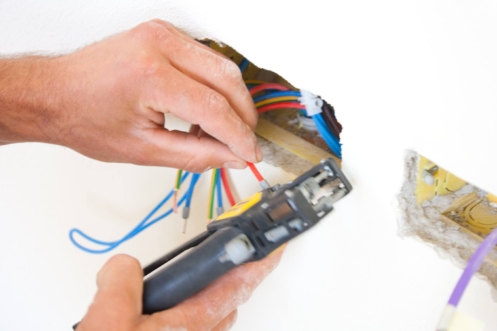
Technician's hands using wire strippers on colored electrical wires for home surge protection installation.

Safety is paramount when it comes to electrical systems. Our lives are intricately interwoven with electricity, which powers our homes, workplaces, and entertainment devices. However, this indispensable energy source can pose significant risks if not handled cautiously. This is where fuses come into play. These unassuming yet indispensable devices are silent guardians of our electrical safety.

Fuse Operating Principle: Overcurrent Protection

Imagine your bustling daily routine, with lights, gadgets, and appliances all working seamlessly in tandem. However, this harmony can swiftly devolve into chaos if the electrical current surpasses safe levels. This is where fuses step in as essential components. Fuses serve as a protective barrier against potential disasters arising from overcurrents.

They function as vigilant monitors, overseeing the flow of electricity. Fuses respond by employing a simple yet effective mechanism when an abrupt surge threatens to breach safety thresholds. An internal element, designed to melt under extreme currents, halts the circuit immediately. This rapid reaction prevents damage. Fuses are reliable safeguards, preserving the efficient and secure energy flow within your living space.

Critical Role in Fire Prevention

The haunting prospect of a fire engulfing your living space is a nightmare we all wish to avoid. And when it comes to electrical fires, the stakes are alarmingly high. In such cases, fuses take center stage symbolically and with tangible effectiveness. Fuses are like vigilant sentinels, standing guard against the danger of overcurrents. By swiftly responding to these abnormal energy flows, fuses ensure that overheating is nipped in the bud, preventing the potential spark that could lead to a catastrophic blaze.

In other words, fuses act as the immune system of your electrical setup, identifying aberrations and containing them before they escalate. A minor power surge could swiftly evolve into an uncontrollable inferno in a world without fuses.

Short Circuit Protection

Visualize your home’s electrical system as a coordinated mechanism, ensuring seamless energy distribution. However, when a short circuit occurs, it’s akin to an unforeseen disruption, rerouting the energy flow unpredictably. This diversion results in a sudden surge of potentially damaging energy, like a river overflowing its banks.

The consequences can be severe, ranging from harm to equipment to fire hazards. A fuse promptly intervenes with a keen awareness of impending danger, acting as a safeguarding checkpoint within the circuit. Its rapid response involves breaking the circuit, expertly diverting the hazardous energy away from vulnerable components. In doing so, fuses avert the looming disaster, ensuring the protection of your devices and your overall safety in the face of electrical disturbances.

Limiting Energy Release: Arc Flash Reduction

Arc flashes, characterized by forceful energy discharges, present substantial hazards in the electrical domain. In response to a fault initiating an arc flash, a fuse promptly engages, mirroring the actions of an experienced firefighter. Fuses effectively diminish the explosion’s intensity by rapidly constraining the energy release. This action prevents severe damage to both individuals and equipment.

Coordination With Circuit Breakers for Enhanced Safety

While fuses excel at addressing minor electrical issues by interrupting the circuit when overcurrents occur, circuit breakers are the heavy-duty counterparts capable of handling more considerable electrical faults. This dynamic duo forms a comprehensive defense strategy that covers a broad spectrum of potential hazards.

Fuses act as frontline protectors, swiftly reacting to abnormal currents to prevent further escalation. On the other hand, circuit breakers step in when more significant faults threaten the system, using advanced technology to isolate the problem area. This cooperative approach ensures that the entire range of potential electrical disturbances is met with an appropriate response, guaranteeing safety from all angles.

Selective Coordination in Safety

In electrical systems, achieving optimal functionality hinges on well-coordinated strategies. Engineered with meticulous precision, fuses respond accurately to predetermined overcurrent levels. This calculated approach ensures that only the specific fault-affected section is isolated, preserving continuous power flow to critical areas.

Consequently, this strategy averts extensive disruptions and bolsters the overall electrical system’s efficiency. Selectivity and selective coordination, with fuses as linchpins, offer a structured and controlled reaction to faults, constituting a robust defense against potential electrical irregularities.

Protection of Sensitive Electronics

In today’s technology-driven world, the universality of sensitive electronics is undeniable, encompassing everything from personal devices like smartphones to complex industrial control systems. However, these advanced components are inherently vulnerable to the havoc caused by overcurrents.

When an overcurrent event looms, the fuse takes swift action, interjecting to prevent irreparable damage to these valuable high-tech investments. By doing so, fuses shield electronics and preserve the efficiency and longevity of these indispensable tools in our modern lives.

Voltage Regulation and Transient Protection

Ensuring the longevity of your electronics hinges on maintaining stable voltage levels. Abrupt voltage spikes have the potential to wreak havoc on sensitive components, causing irreversible damage. Fuses indirectly contribute to a consistent and uninterrupted voltage supply through their ability to curtail overcurrents.

Furthermore, fuses act as guardians against transient disturbances by swiftly responding to voltage spikes and curbing their effects. This dual function shields your electronics from immediate harm and prevents the cumulative toll that voltage fluctuations can take over time.

Precision in Current Limiting

By permitting only essential currents to reach sensitive devices, fuses act as barriers against sudden surges that could harm or degrade electronics. This precision safeguards against potential wear and tear caused by irregular electrical currents over time. Through this meticulous control, fuses reaffirm their role as guardians of your electronic assets, upholding performance standards and prolonging the functional lifespan of these devices.

Inrush Current Management

Starting an electronic device triggers a rapid influx of current, akin to a surge of people entering a venue. This phenomenon, termed “inrush current,” can strain the device’s delicate components significantly. In this capacity, fuses transition into adept regulators. They proficiently oversee this abrupt current surge, alleviating stress on the device’s sensitive elements.

By effectively managing energy flow during startup, fuses avert potential damage that abrupt power surges might otherwise cause. This proactive intervention extends the operational lifespan of your electronics, protecting them from the potential wear and tear associated with uncontrolled inrush currents.

Thermal Protection for Temperature-Sensitive Devices

Fuses are designed to monitor and maintain devices within prescribed temperature thresholds. When the temperature inches perilously high, the fuse becomes an active guardian, stepping in to prevent thermal stress. Fuses effectively shield your electronics from potential overheating damage by promptly interrupting the circuit at elevated temperatures.

The meticulous temperature management not only safeguards the immediate operation of your devices but also contributes to their prolonged functionality, reinforcing fuses’ significance as safeguards against thermal-induced vulnerabilities.

Empowering Electrical Safety and Efficiency

As we traverse the landscape of electrical safety, one company stands as a stalwart protector: [company_name]. Beyond just keeping your home comfortable, our team excels at ensuring the safety of your electrical systems. From preventing overcurrents to shielding sensitive electronics, our expertise is unmatched. Our services extend far beyond fuses, encompassing heating, cooling, and electrical solutions. [company_name] is your go-to partner for a secure and reliable electrical experience in Charlotte, NC. Contact us today for more information, and embark on a journey toward a safer, more comfortable home.

Exploring The Benefits of Whole-House Surge Protection

Technician's hands using wire strippers on colored electrical wires for home surge protection installation.

If you’re looking to prevent damage to your home’s electrical system, appliances, and electronics, whole-house surge protection is your best option. Lightning strikes and other external power surges can easily send thousands of volts of electricity surging into your home resulting in major damage or a fire, and the only effective way to protect against this is with a whole-house surge protector. To understand why whole-house surge protection can be such a great investment, here is an overview of how it works and the benefits it can provide.

External vs. Internal Power Surges

If you’re like most people, you probably already have numerous surge protectors in your home. Surge protector strips are great for protecting sensitive or expensive electronics like TVs, entertainment systems, and computers from damage caused by internal power surges. Power surges occur when there is suddenly much more current flowing through an electrical circuit than it can handle, and internal power surges are those that occur due to an issue within your home. Internal power surges can happen when you plug too many things into one circuit and cause it to be overloaded, and they can also happen due to short circuits caused by damaged electrical wiring in the circuit or in anything plugged into that circuit.

When an internal power surge occurs, it can easily fry the circuit boards in any electronics or severely damage the electrical wiring. Surge protector strips prevent this issue as they will automatically trip whenever the voltage flowing through the circuit rises above a set level. When this happens, the surge strip will send the extra current into the circuit’s ground wire so that it doesn’t flow into whatever you have plugged into the strip.

The only problem is that no surge protector strip is powerful or robust enough to protect against damage caused by external power surges. An external power surge is when there is suddenly much more current flowing out of the municipal electrical grid and into the home, which can happen due to issues like lightning strikes, blown transformers, and downed power lines. External surges can also occur due to changes in electricity usage in the area that lead to a sudden spike in the voltage flowing through the grid.

The power that enters your home is normally 240 volts, but external power surges can suddenly lead to thousands of volts flowing into your home. If your home is ever struck by an external power surge, it will likely destroy everything you currently have plugged in and all of your hardwired appliances as well. This is true even if you use surge protector strips as they simply can’t handle the amount of current that results from an external power surge, which means that the surge strip will almost instantly absorb so much electricity that it fails and the power continues to flow. The high current flowing through your electrical system due to an external power surge can also cause all of your home’s wiring to instantly become red hot and potentially start to melt or even catch fire.

How Whole-House Surge Protection Works

The only way to ever protect your home against an external power surge is with whole-house surge protection. A whole-house surge protector functions in a similar way to surge protector strips by measuring electrical current and automatically tripping whenever the voltage is suddenly much higher. However, whole-house surge protectors are far more powerful and able to withstand much higher voltages without failing or burning out.

Whole-house surge protectors are installed just before the main electrical panel where the power from the grid flows into the home. In the event of a major external power surge, the surge protector will activate so that the spike in current can’t flow into your electrical system. Instead, all of the extra voltage is channeled into your home’s copper grounding rod where it can then safely disperse into the ground. Most whole-home surge protectors will respond and activate within a nanosecond to almost instantly block the flow of electricity into the home to prevent damage to your electrical system and all of your appliances and electronic devices.

Most whole-home surge protectors are rated to withstand 20,000 volts of electricity, which should be sufficient to protect against the vast majority of external power surges. A lightning bolt typically contains around 100 million volts of electricity, but only a small portion of this current would ever flow into your electrical system even if your home was directly struck by lightning. A direct lightning strike could still potentially be powerful enough that it overwhelms the surge protector and causes it to fail, but this type of situation is still quite rare.

The only thing to note is that whole-home surge protection isn’t always effective against more minor external surges as most units will only activate when there is more than 700 volts of electricity flowing into the home. As such, it is still important that you use surge protector strips since most of these will activate if the current rises above 300 to 400 volts.

How Whole-Home Surge Protection Can Save You Money

Whole-home surge protection typically costs around $500 on average, and most devices will usually last for at least five years before needing to be replaced. Depending on how many volts flowed into the surge protector, you will often need to have the device replaced after a major external power surge. While $500 may seem like a lot, it is really nothing compared to what you may have to pay if your home was affected by an external surge and you didn’t have whole-home surge protection.

In this case, you could be looking at spending thousands just to replace your TVs, computers and other electronic devices. A major external power surge will also likely fry the circuit boards in all of your appliances including your refrigerator, microwave, water heater, washing machine, clothes dryer, dishwasher, etc. In most cases, you’ll also be looking at spending hundreds or thousands to repair or replace your air conditioner and various other parts of your HVAC system.

Since an external power surge will also likely seriously damage your entire electrical system, you may also end up needing to replace all of your light fixtures, light switches, and outlets. If the damage is severe, you could even need to have your entire home rewired. In that case, you’re typically looking at spending anywhere from $10,000 to $30,000 or more. All of these factors show why whole-house surge protection can be such a great investment as it could easily end up saving you thousands upon thousands of dollars. External power surges can also lead to your house catching fire and possibly burning down, which you can also prevent with whole-home surge protection.

Charlotte’s Electrical and HVAC Experts

At [company_name], our team specializes in all types of electrical installations and upgrades. We can help if you’re looking to install a whole-house surge protector, a whole-house generator, or an EV charging station. Our expert electricians can also help if you need any electrical repairs, electrical panel upgrades, or rewiring, and we also offer a full range of heating and air conditioning services for both residential and commercial customers in Charlotte and the surrounding areas. For more information on the benefits of whole-home surge protection or to set up a service appointment, contact [company_name] today.