Exploring The Benefits of Whole-House Surge Protection

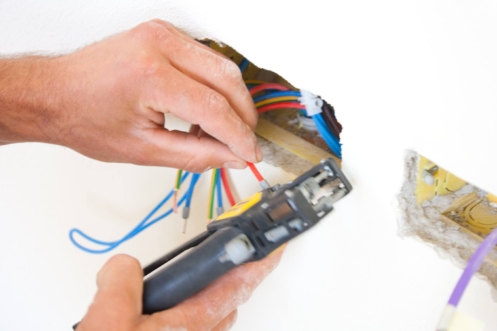
Technician's hands using wire strippers on colored electrical wires for home surge protection installation.

If you’re looking to prevent damage to your home’s electrical system, appliances, and electronics, whole-house surge protection is your best option. Lightning strikes and other external power surges can easily send thousands of volts of electricity surging into your home resulting in major damage or a fire, and the only effective way to protect against this is with a whole-house surge protector. To understand why whole-house surge protection can be such a great investment, here is an overview of how it works and the benefits it can provide.

External vs. Internal Power Surges

If you’re like most people, you probably already have numerous surge protectors in your home. Surge protector strips are great for protecting sensitive or expensive electronics like TVs, entertainment systems, and computers from damage caused by internal power surges. Power surges occur when there is suddenly much more current flowing through an electrical circuit than it can handle, and internal power surges are those that occur due to an issue within your home. Internal power surges can happen when you plug too many things into one circuit and cause it to be overloaded, and they can also happen due to short circuits caused by damaged electrical wiring in the circuit or in anything plugged into that circuit.

When an internal power surge occurs, it can easily fry the circuit boards in any electronics or severely damage the electrical wiring. Surge protector strips prevent this issue as they will automatically trip whenever the voltage flowing through the circuit rises above a set level. When this happens, the surge strip will send the extra current into the circuit’s ground wire so that it doesn’t flow into whatever you have plugged into the strip.

The only problem is that no surge protector strip is powerful or robust enough to protect against damage caused by external power surges. An external power surge is when there is suddenly much more current flowing out of the municipal electrical grid and into the home, which can happen due to issues like lightning strikes, blown transformers, and downed power lines. External surges can also occur due to changes in electricity usage in the area that lead to a sudden spike in the voltage flowing through the grid.

The power that enters your home is normally 240 volts, but external power surges can suddenly lead to thousands of volts flowing into your home. If your home is ever struck by an external power surge, it will likely destroy everything you currently have plugged in and all of your hardwired appliances as well. This is true even if you use surge protector strips as they simply can’t handle the amount of current that results from an external power surge, which means that the surge strip will almost instantly absorb so much electricity that it fails and the power continues to flow. The high current flowing through your electrical system due to an external power surge can also cause all of your home’s wiring to instantly become red hot and potentially start to melt or even catch fire.

How Whole-House Surge Protection Works

The only way to ever protect your home against an external power surge is with whole-house surge protection. A whole-house surge protector functions in a similar way to surge protector strips by measuring electrical current and automatically tripping whenever the voltage is suddenly much higher. However, whole-house surge protectors are far more powerful and able to withstand much higher voltages without failing or burning out.

Whole-house surge protectors are installed just before the main electrical panel where the power from the grid flows into the home. In the event of a major external power surge, the surge protector will activate so that the spike in current can’t flow into your electrical system. Instead, all of the extra voltage is channeled into your home’s copper grounding rod where it can then safely disperse into the ground. Most whole-home surge protectors will respond and activate within a nanosecond to almost instantly block the flow of electricity into the home to prevent damage to your electrical system and all of your appliances and electronic devices.

Most whole-home surge protectors are rated to withstand 20,000 volts of electricity, which should be sufficient to protect against the vast majority of external power surges. A lightning bolt typically contains around 100 million volts of electricity, but only a small portion of this current would ever flow into your electrical system even if your home was directly struck by lightning. A direct lightning strike could still potentially be powerful enough that it overwhelms the surge protector and causes it to fail, but this type of situation is still quite rare.

The only thing to note is that whole-home surge protection isn’t always effective against more minor external surges as most units will only activate when there is more than 700 volts of electricity flowing into the home. As such, it is still important that you use surge protector strips since most of these will activate if the current rises above 300 to 400 volts.

How Whole-Home Surge Protection Can Save You Money

Whole-home surge protection typically costs around $500 on average, and most devices will usually last for at least five years before needing to be replaced. Depending on how many volts flowed into the surge protector, you will often need to have the device replaced after a major external power surge. While $500 may seem like a lot, it is really nothing compared to what you may have to pay if your home was affected by an external surge and you didn’t have whole-home surge protection.

In this case, you could be looking at spending thousands just to replace your TVs, computers and other electronic devices. A major external power surge will also likely fry the circuit boards in all of your appliances including your refrigerator, microwave, water heater, washing machine, clothes dryer, dishwasher, etc. In most cases, you’ll also be looking at spending hundreds or thousands to repair or replace your air conditioner and various other parts of your HVAC system.

Since an external power surge will also likely seriously damage your entire electrical system, you may also end up needing to replace all of your light fixtures, light switches, and outlets. If the damage is severe, you could even need to have your entire home rewired. In that case, you’re typically looking at spending anywhere from $10,000 to $30,000 or more. All of these factors show why whole-house surge protection can be such a great investment as it could easily end up saving you thousands upon thousands of dollars. External power surges can also lead to your house catching fire and possibly burning down, which you can also prevent with whole-home surge protection.

Charlotte’s Electrical and HVAC Experts

At [company_name], our team specializes in all types of electrical installations and upgrades. We can help if you’re looking to install a whole-house surge protector, a whole-house generator, or an EV charging station. Our expert electricians can also help if you need any electrical repairs, electrical panel upgrades, or rewiring, and we also offer a full range of heating and air conditioning services for both residential and commercial customers in Charlotte and the surrounding areas. For more information on the benefits of whole-home surge protection or to set up a service appointment, contact [company_name] today.
Why Install a Generator at Your Lake House

Outages from a natural disaster, grid failure, or deliberate sabotage can leave waterfront homes without power for hours or longer. As recent events in the Charlotte area show, hundreds of thousands of people can be left in the dark due to hurricanes or infrastructure attacks. Whether your Lake Wylie or Lake Norman property is your full-time residence or a vacation home, it pays to be prepared for unexpected electrical outages.

If you’ve ever wondered whether a whole-home generator would benefit your lake house, now’s the time to talk to the pros at Acosta Heating, Cooling & Electrical. We’ll explain how a generator can add value to your home and deliver a sizable return on investment.

Why Lake Houses Might Require Backup Power

Backup generators take up relatively little space but can provide incredible protection to your lake house. Reasons you should invest in a residential generator for your home on Lake Norman or Lake Wylie include:

Powering Critical Home Appliances

Refrigerators, freezers, water heaters, and HVAC systems are critical to keeping your lake home habitable. The right-sized generator protects perishables, keeps the hot water flowing, and ensures the indoor temperature is comfortably warm or cold.

Keep Your Home Office Up & Running

The last few years have seen many more people working from home. If you now commute down your hallway instead of across town, a generator keeps routers operating and equipment charged. A whole-home generator with a manual transfer switch powers critical circuits, including office equipment.

Power Home Medical Devices

Home medical equipment allows people to live at home instead of in an outside care facility. Others rely on breathing equipment like CPAPS or Bi-PAP machines to help them sleep. A home generator ensures life-saving or assistance devices like stair lifts, oxygen concentrators, and nebulizers work as they should when the power goes out.

Uninterrupted Power

A whole-house backup generator comes on as soon as the power turns off. You never need to worry about returning to your lakefront home and finding it without electricity. There’s no need to hook up or run a cord to a portable generator, which can be hazardous near water.

Quiet Operation

Some portable generators can be quite loud. A standby generator operates much more quietly, making them an excellent choice for lakeside locations where sound is easily amplified and dispersed.
[cta_special_button url=”https://www.acostainc.com/contact/” text=”Schedule Service Now”]

Types of Generators

Home standby or backup generators can be portable or permanently installed to provide near-immediate power without you having to leave the comfort of your home. Depending on your needs and budget, you can invest in a generator that runs on natural or LP gas to power your entire home or just select circuits and appliances. Portable generators provide power for furnaces, refrigerators, and device chargers.

Another advantage to whole-house generators is that they don’t need to be vented as portable models do. You don’t need to worry about tripping on cords or having to leave the windows open, which is particularly helpful if your lake house isn’t your primary residence. Either way, you enjoy lakeside life to its fullest with no worries about struggling without power.

Choose Acosta for Generator Services

It’s always a good idea to be prepared for a power outage at your Lake Wylie or Lake Norman property. While some people consider backup generators a luxury, we believe they’re just as vital to keeping a home up and running as other appliances are.

Working with an experienced generator installer at Acosta ensures you choose the right-sized generator for your needs and budget. Our team is trained and equipped to deliver high-quality home improvement services to residents throughout the greater Charlotte, NC, area, including installation, repair, and maintenance of whole-home generators.

Contact Acosta Heating, Cooling & Electrical onlineor call us at [phone] to learn more or schedule services.

Is Air Conditioner Installation on Your Summer To-Do List?

Air Conditioner Summer To-Do List in Charlotte, NC

You’ve switched on your air conditioning system because – let’s face it – the summer heat this year is terrible. Not only is it humid, but the sun just beats down day after day. Without the cold air from your AC unit, your house would be miserable.

As you turn on the thermostat and crank down the temperature, you notice it: the lack of air flow, a weird noise, or maybe a strange smell. No matter what you do, you can’t seem to determine the problem, and you know you can’t live without having quality air conditioning during the hottest summer months in Charlotte.

Whether you’ve had your air conditioning unit serviced annually or not, there are a few tell-tale signs that you’ll need to call in the professionals for repairs or new air conditioner installation at your home.

  1. Poor Air Flow – Your air conditioning unit is working overtime, but isn’t blowing out enough cool air.
  2. No Cold Air – Your AC unit runs and the air blows, but it’s lukewarm.
  3. Thermostat Issues – You adjust the thermostat, but it’s stuck on one temperature setting — hot.
  4. Unwanted Moisture – There is moisture around your AC unit.
  5. Strange Sounds – No, your air conditioning unit isn’t supposed to make that noise.
  6. Foul Odors – Your air conditioner smells like something has burned or is rotten.

Whether you are experiencing one or many of these air conditioner problems, having our team at Acosta Heating and Cooling come out to address the issue will ensure that you get the best results. Not only can we diagnose any AC problems, but we can also recommend new air conditioner installation if your current unit is on its last leg. With air conditioner installation, you will find that your home in Charlotte, North Carolina is more comfortable and energy efficient when you need cool air the most.

If you suspect its time for air conditioner installation or you have questions about our services at Acosta Heating and Cooling, contact us today!

Things to Consider Regarding a Heater Installation

Whether you are building a new home or have reached the decision that it is time to replace your current furnace, you may be wondering what is involved in the heater installation process. There are a number of things that you will need to consider, including type and details. At Acosta Heating, Cooling & Electrical in Charlotte, NC, we are experts at heater installation, including advising you on the best option for your home.

Heater Installation in Charlotte, NC

Regardless of what type of furnace you currently have, we can perform heater installation of any type in most cases. This means you can switch from an inefficient electric heat system to a more efficient gas heating system, for example. We have had a number of residents make this switch to save money on heating costs, and we can go over how much you might save if this is an option for you.

Once you have decided on a type of heater installation, the next step is choosing the actual model. Each model will have a heat output rating, measured in BTUs, which stands for British Thermal Unit. By inspecting your home, we will be able to tell you what BTU rating will be sufficient for your home, offering the right balance between comfort and efficiency. Heaters are also rated for efficiency, which is shown as a percentage number. The more efficient the system is, the lower your utility bills will be.

We will likely give you a number of options that will fit the space and supply the right balance of comfort and efficiency. We will always provide you with a comprehensive quote that outlines the full scope of your heater installation, so there are never any surprises.

Heat Pumps Have Proven to Be the Perfect Solution for Many Homeowners

With so many heating options on the market, it’s little wonder that homeowners are often unsure which are best. Should you consider buying one that has more features and offers higher efficiency, or should you stay with the system you’ve already got?

If you’re considering a heat pump system, you can save a lot of money on installation even if you don’t already have a heat pump in your home. With summer cooling and winter heating ability and the capacity to utilize the existing ductwork in homes, heat pumps are proving to be the perfect solution for many homeowners.

Heat pumps are actually simple pieces of equipment. Heat pumps draw warmth from the air of one environment and deliver it to another environment. When you use your air conditioning with your heat pump, the heat pump removes the warmth of indoor air and pumps it outdoors, leaving your home cool and comfortable. It’s the same technology used by your freezer and refrigerator to keep food cold.

When heat pumps are used as home heating systems, they work in reverse to warm your home. A full system can switch back and forth between cooling and heating modes. In winter, the heat pump draws hidden warmth from the outdoors and pumps it indoors.

Heat pumps can heat and cool a home without the aid of furnaces and air conditioners in moderate climates. In more extreme climates, they work in conjunction with furnaces and air conditioners and decrease the amount of energy needed for heating and cooling.

How to Choose a Reliable, Skilled and Experienced Air Conditioning Contractor

The level of comfort that you and your family enjoy indoors is obviously related to the efficiency of your air conditioning system. Ventilation and insulation are also important factors in keeping your family safe and comfortable. To ensure these needs are met, you should hire a reliable and professional heating, ventilation and air conditioning contractor.

Here are some important things to consider when choosing an HVAC contractor:

  • Ensure that the contractor is licensed to operate by the local and state municipality. Even though this is mandatory in North Carolina, not all companies are licensed.
  • If they have a website, it should be informative and provide evidence of their professionalism, reliability and knowledge. They should be members of associations that have recognized their value and commitment to the HVAC industry and the community.
  • The installers and technicians should be professionally trained and NATE (North American Technician Excellence) certified. NATE is a professional body that examines, qualifies and certifies HVAC technicians in every aspect of heating, ventilation and air conditioning.
  • The prospective contractor and technicians should be familiar with the climate in North Carolina and how weather conditions affect air conditioning systems at different times of the year.
  • Whether you need standard service, emergency service or scheduled air conditioning maintenance, they should be able to provide names of satisfied customers in your area.
  • They should be willing to give you a written guarantee that their products and services will be to your satisfaction – 100%.
  • Customer service, including online and telephone communication, should be professional, polite and friendly at all times.

Air Conditioning Repair, Replacement or Installation: Insist on a NATE Certified Technician

Consumers deserve excellence – and that’s exactly what North American Technician Excellence (NATE) technicians deliver! Professionalism, pride and proficiency count. NATE certified technicians understand every aspect of heating and cooling systems, and can do any type of air conditioning repair, replacement or installation.

The North American Technician Excellence test is tough, and taking it is voluntary. The test involves:

  • All aspects of air conditioning
  • Heat pumps
  • Oil heating
  • Air distribution
  • Gas heating

Contractors, technicians, utilities, manufacturers, wholesalers, leading industry trade associations and educators endorse the test. The tests take place at 400 venues across the country and technicians can sign up for them through local organizations such as the Refrigeration Service Engineers Society, the Plumbing-Heating-Cooling Contractors Association, or Air Conditioning Contractors of America.How else would homeowners measure success and competency? Well, basically, they couldn’t. NATE is the only nationally accredited certification program which is endorsed by all sectors of the heating and cooling industry.

In essence, a NATE certified technician has proven his or her excellence by volunteering to be tested by professionals who are the best in the HVAC/R (heating, ventilation, air conditioning and refrigeration) industry. Therefore, if you’re looking for a contractor to do an air conditioning repair, ask if his/her technicians are NATE-certified. If they are, go ahead. If not, make another call. When the technician does arrive, check that he or she is wearing the NATE certified patch.

You can also save yourself the research time and call Acosta Heating and Cooling. All of our technicians are NATE certified.

Ductless Cooling: An Innovative Option When Your Choices Are Limited

If you have a space in your home that’s a challenge to cool, or if you’re going to add space, consider ductless cooling. These HVAC systems don’t require ducts to distribute the air. They use technology that simply moves the heat from your space outdoors. These systems, also called ductless mini splits, present some major advantages compared to other types of air conditioning systems because they offer energy efficiency, easy installation and flexibility.

Energy efficiency

Ductless mini splits must meet the same energy efficiency standards that air conditioners and heat pumps do. The SEER (seasonal energy efficiency ratio) has to be 13 minimum. Since ductless cooling goes directly into the room, the systems can be as much as 30 percent more efficient than central systems where the air is delivered through ducts. Duct leaks and temperature loss may occur in systems with ducts.

Easy installation

Not having to extend or install ducts makes installation fast. The ductless systems have two primary components: A condenser sits outside and an air handler inside. A conduit connects the two and carries the refrigerant, drainpipe, electrical wiring. The air handler (fan section) can sit on the floor or hang from a wall or even hung from the ceiling.

If you’d like more information about ductless cooling, contact us at Acosta Heating, Cooling & Electrical. We’ve provided HVAC services for the Charlotte area for more than 40 years.

Manual J: Why the Contractor Who Sizes Your Air Conditioner Should Know It Inside Out

The purchase of a new or replacement air conditioner for your home is not simply a matter of choosing a cooling unit and having it installed. Among the more important of the additional considerations is determining what size cooling system you need. The amount of cooling required to keep your home at desired levels is your home’s “load,” and each home has a different one. The air conditioner you choose must be correctly sized—big enough to meet the load, but no so big that it overcools and wastes energy.

If you are in the market for a new air conditioner, you should know your home’s cooling load. Ask your local trusted HVAC contractor to conduct a load calculation on your home using the industry-standard Manual J, “Residential Load Calculation.” This manual, published by the Air Conditioning Contractors of America (ACCA), contains all of the standards, procedures and technical details required to perform heating and cooling load calculations.

A Manual J cooling load calculation will give your contractor two important pieces of information needed to select and size your new air conditioner:

1. Sensible cooling load:

Proper cooling requires effective removal of sensible heat. Sensible heat is the amount of heat that can be felt, or sensed, and measured with a thermometer. The sensible cooling load is the amount of sensible heat that your air conditioner should be able to remove during very hot days. Manufacturers rate their units at 95 degree outdoor the design criteria for your city could be higher which will require additional calculations

2. Latent cooling load:

Latent cooling load refers to how much moisture the cooling system can remove during hot and humid summer days. Latent cooling load determines the amount of energy needed for indoor dehumidification during these hot, muggy conditions.

HVAC equipment recommendations should be based on expert interpretation of sensible and latent cooling load data. The system you buy should be no more than 15 percent oversized based on these load calculations.

Acosta Heating, Cooling & Electrical has provided professional heating and air conditioning services to customers in Charlotte and surrounding areas for four decades. Contact us today for more information on heating and cooling load calculations for your home and why Manual J is the industry’s standard source for these calculations.

You’ve Hired a Nate-Certified Technician – Job Done!

Hiring a NATE-certified technician is a big deal. After all, your home comfort and savings depend on it. That’s why you can trust that the job will be well done, whether it’s a repair, maintenance or replacement job.

You can rest assured that a NATE-certified technician is the best possible designation to utilize when comparing technicians, because:

  • NATE is an independent, non-profit organization – Nationwide, contractors and customers alike value the NATE badge, with manufacturers, utility companies and heating and cooling contractors participating in, developing and approving its testing.
  • NATE covers all the bases – With NATE testing, technicians can attain certification in all areas of HVAC, including service and installation of all types of heating and cooling equipment, including energy-efficiency certification.
  • NATE thoroughly tests the technician prior to certification – The tests cover all factions of the heating, cooling and ventilation industry. That means that NATE tests don’t simply cover one piece of equipment, like other product-specific training organizations.
  • NATE testing covers relevant knowledge – Technicians are grilled on field knowledge, covering day-to-day problems and situations encountered by technicians.
  • NATE certification requires continued education credits – If technicians do not have acquire enough credits technicians must retest every five years to maintain NATE certification.
  • NATE testing is thorough – While the testing is rigorous, the tests are also comprehensive. Technicians must pass a core test and a specialty test. The core test ensures that technicians have a thorough knowledge of general HVAC scenarios and equipment, while the specialty test, selected by the candidate, covers unique and highly specific knowledge in several fields, like gas furnaces, air conditioners, heat pumps, air flow, including installation, service and maintenance.

With the value that NATE-certified technicians offer through NATE’s rigorous, comprehensive testing process, it just doesn’t make sense to use any other certification as a qualifier for selecting a technician.Get the best possible performance by choosing a NATE-certified technician. At Acosta Heating, Cooling & Electrical, we value our NATE-certified technicians, because they allows us to give our Charlotte-area customers top-notch service. If you need help with your HVAC systems, contact us today!