How to Choose a Reliable, Skilled and Experienced Air Conditioning Contractor

The level of comfort that you and your family enjoy indoors is obviously related to the efficiency of your air conditioning system. Ventilation and insulation are also important factors in keeping your family safe and comfortable. To ensure these needs are met, you should hire a reliable and professional heating, ventilation and air conditioning contractor.

Here are some important things to consider when choosing an HVAC contractor:

  • Ensure that the contractor is licensed to operate by the local and state municipality. Even though this is mandatory in North Carolina, not all companies are licensed.
  • If they have a website, it should be informative and provide evidence of their professionalism, reliability and knowledge. They should be members of associations that have recognized their value and commitment to the HVAC industry and the community.
  • The installers and technicians should be professionally trained and NATE (North American Technician Excellence) certified. NATE is a professional body that examines, qualifies and certifies HVAC technicians in every aspect of heating, ventilation and air conditioning.
  • The prospective contractor and technicians should be familiar with the climate in North Carolina and how weather conditions affect air conditioning systems at different times of the year.
  • Whether you need standard service, emergency service or scheduled air conditioning maintenance, they should be able to provide names of satisfied customers in your area.
  • They should be willing to give you a written guarantee that their products and services will be to your satisfaction – 100%.
  • Customer service, including online and telephone communication, should be professional, polite and friendly at all times.
Air Conditioning Repair, Replacement or Installation: Insist on a NATE Certified Technician

Consumers deserve excellence – and that’s exactly what North American Technician Excellence (NATE) technicians deliver! Professionalism, pride and proficiency count. NATE certified technicians understand every aspect of heating and cooling systems, and can do any type of air conditioning repair, replacement or installation.

The North American Technician Excellence test is tough, and taking it is voluntary. The test involves:

  • All aspects of air conditioning
  • Heat pumps
  • Oil heating
  • Air distribution
  • Gas heating

Contractors, technicians, utilities, manufacturers, wholesalers, leading industry trade associations and educators endorse the test. The tests take place at 400 venues across the country and technicians can sign up for them through local organizations such as the Refrigeration Service Engineers Society, the Plumbing-Heating-Cooling Contractors Association, or Air Conditioning Contractors of America.How else would homeowners measure success and competency? Well, basically, they couldn’t. NATE is the only nationally accredited certification program which is endorsed by all sectors of the heating and cooling industry.

In essence, a NATE certified technician has proven his or her excellence by volunteering to be tested by professionals who are the best in the HVAC/R (heating, ventilation, air conditioning and refrigeration) industry. Therefore, if you’re looking for a contractor to do an air conditioning repair, ask if his/her technicians are NATE-certified. If they are, go ahead. If not, make another call. When the technician does arrive, check that he or she is wearing the NATE certified patch.

You can also save yourself the research time and call Acosta Heating and Cooling. All of our technicians are NATE certified.

A Ductless Mini-Split Air Conditioning System Can Do a Mighty Big Job!

Ductless mini-split air conditioning systems offer you a space-saving alternative to large conventional heat pumps, air conditioners and furnaces. If mini-splits are properly sized for your home, they are just as effective and powerful as larger units that involve bulky networks of ducts to deliver air conditioning around homes.

A central outdoor unit is the main controller of a ductless mini-split air conditioning system. You can attach as many as four smaller units to it through a wall conduit. The great thing about mini-splits is that, when deciding where to put them, you’re not hindered by duct arrangements.

This means you can focus on cooling and heating rooms or spaces that are used often, leaving those that are used less frequently with no air conditioning. All four of the air-handling units can operate separately, thereby reducing overall energy use.

Mini-splits are extremely energy-efficient. They reduce the energy that’s often lost with ducted air conditioning. They also help improve the quality of indoor air. No air is circulated through ducts, so there are fewer airborne contaminants and particles in your air. This cuts down on the aggravation of allergies and respiratory problems like asthma.

Small mini-splits give you numerous options for room design and arrangement because they can be positioned almost anywhere, and even incorporated into a room’s design.

The initial expense of a ductless mini-split system is about 30 percent more than central cooling and heating systems – and twice more expensive than window air conditioners. But, the advantages and convenience of mini-split air conditioning easily justify the initial outlay.

Your A/C’s Air Filter: MERV By the Numbers

Taking the mystery out of what MERV ratings are and how they affect the air quality of your home doesn’t have to be a chore. We’ll break it down for you in an easy and comprehensive way. MERV stands for Minimum Efficiency Reporting Value, by which your indoor air filter is measured according to the filter’s ability to arrest airborne particles. Filters are measured on a MERV scale from 1-16.

Choosing the right air filter can greatly improve the indoor air quality of your home and give your family relief from common irritants such as allergens, tobacco smoke, spores, dust mites and odors. Your air filter will vary in efficiency depending on its composition. Let’s break it all down by the numbers.

  • The most common air filter type found in most homes and apartments has a MERV rating of 1-4. These filters capture contaminants 10 microns and larger, such as carpet fibers, pollen, dust mites, sanding and spray paint dust. These types of air filters need to changed very often.
  • Filters with a MERV 5-8 are basic commercial filters and are highly recommended for home use due to their ability remove mold spores, fine cement dust and particles as large as 3 microns in size.
  • Commercial and industrial air filters that are rated between 9 and 12 have the ability to arrest particles that are 1-3 microns in size such as smoke, lead and insecticidal dusts.
  • Hospitals, sterile environments and clean rooms require extra protection and use filters rated MERV 13-16. These air filters will capture particles as small as 0.3 microns in size, such as viruses, bacteria and fumes from cooking. These Merv 16 filters are available for home use and are highly recommended for homes.

It’s also important to note that electrostatic filters are not listed and do not have MERV ratings due to the fact that they use a different method of capturing particles.If you’d like more information or a consultation, our friendly and knowledgeable experts at Acosta Heating and Cooling will be glad to answer any questions you may have. Contact us today!

Uneven Cooling? Air Ducts Could Be the Problem

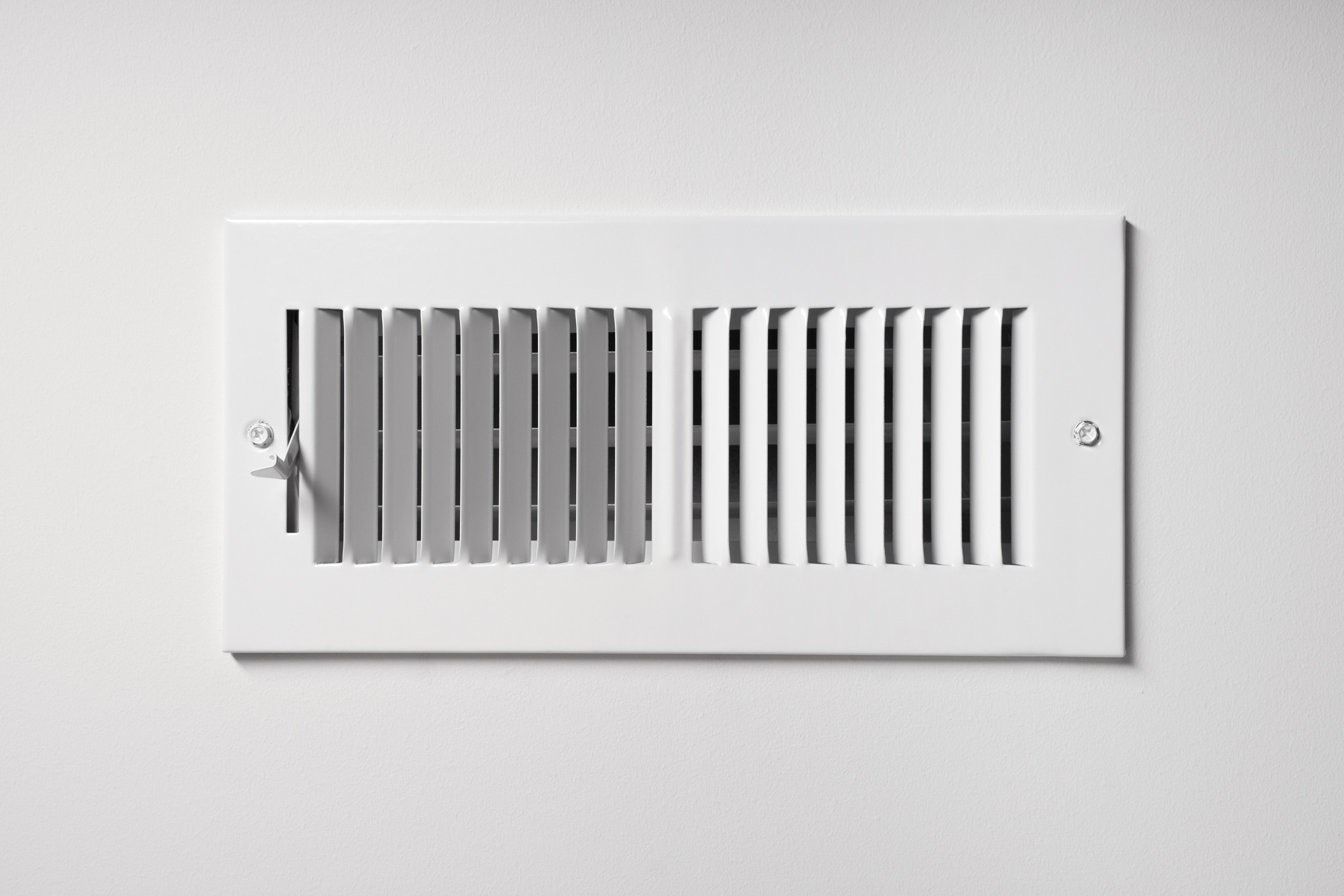
Heating/Cooling Vent

How To Fix Uneven Heating & Cooling in Your House

One way to look at your HVAC installation is as a very large air circulation system, with the ductwork forming a critical pathway for air traveling in and out of your home’s interior. The main unit heats or cools the air and sends the conditioned air into the supply ductwork toward rooms in your home. The air exits the supply ductwork and heats or cools the area, then is drawn back into the HVAC system by return air ducts. The expended air flows back to the main unit, where it’s filtered, reconditioned, and sent out again.

To function properly, your air conditioner, furnace, or heat pump needs adequate amounts of unobstructed airflow at all points in the system. Most homes have plenty of supply ducts to send heating or cooling into their indoor environment, but just as many lack enough return air ducts to bring air back to the HVAC unit to be reused. This can cause a reduction in indoor comfort, creating uneven levels of heating or cooling throughout your home.

[cta_buttons phone=”7046655998″ link_text=”704.665.5998″ link=”/contact/” button_text=”CONTACT US”]

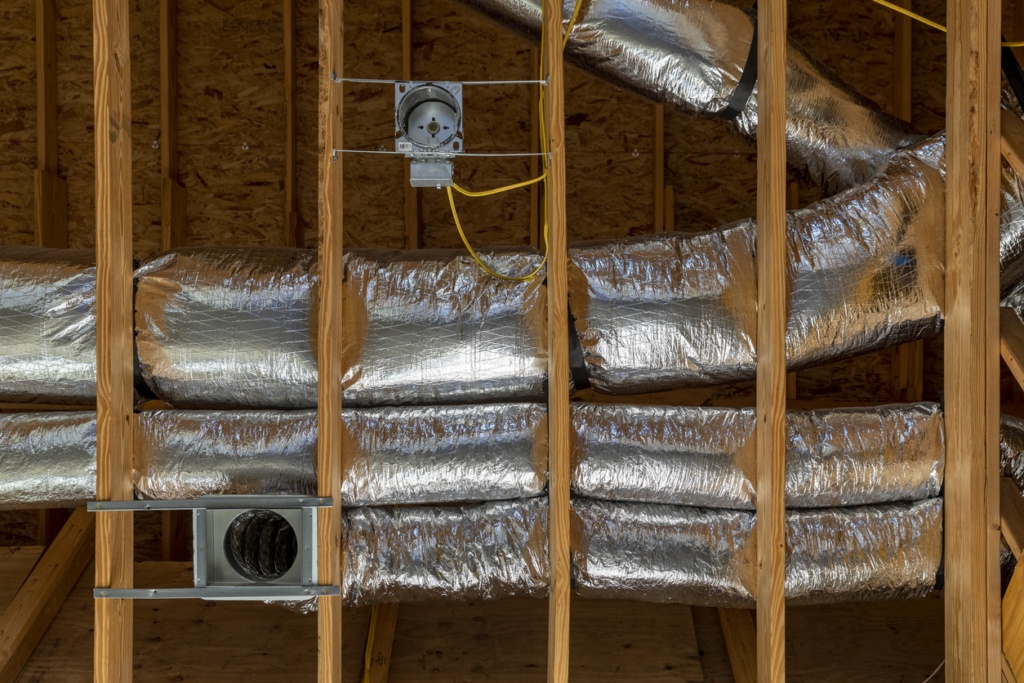
ductwork

Ensure Your HVAC System Has Enough Return Air Ducts

The key step to solving the problem is to make sure there are enough return air ducts for your HVAC system. Your local trusted HVAC contractor can help you determine how many returns you need. Your technician may suggest a multiple-room system in which a return duct is installed in each room that also has a supply duct. These systems are very efficient, but they can be costly.

What Is a Central Return System?

An economical alternative is a central return system. Here, return air ducts are connected to return grilles in central areas of your house, such as hallways, stairwells, ceilings, or main rooms. Each room in the house also has a jumper duct or transfer grille connected to the central return duct. This configuration provides plenty of airflow between rooms and back into the system for recycling.

Get Your Uneven Air Flow Fixed in Charlotte With Acosta

Acosta Heating, Cooling & Electrical has been a trusted source of professional heating and air conditioning services to customers in Charlotte and surrounding areas for over 40 years. Contact us today for more information on return-air duct efficiency, to get an estimate on a return duct expansion, or to schedule a duct renovation appointment.

OK, Your Air Conditioner Does the Job – Now, Do You Know How It Works?

You may be perfectly content with your existing air conditioner, but learning how it works can benefit you. Understanding the refrigeration-cooling process will not only help you select the right unit when it comes time to upgrade, but it will also help you learn to value regular maintenance. Ultimately, in either case, you’ll be able to maximize your investment in your air conditioner just by taking the time to learn how it works.

The refrigerant looping through your air conditioner’s components is able to change forms throughout the cooling process, from a gas to a liquid and then back to a gas. But this chemical refrigerant is special because as it travels through the various cooling stages, it can absorb or expel heat, which is key to cooling a space.

Here’s how it works:

  • Beginning at the outdoor unit, the refrigerant starts at the compressor in a gas form, where it is cool and under low pressure. As the name suggests, the compressor begins to “compress” the gas, pushing all of its molecules together, increasing the energy and raising the temperature of the gas.
  • Then, the compressor sends the refrigerant, which is now very hot and at a much higher pressure, into the condenser. Here, the refrigerant is cooled by the condenser fan and changes back to a liquid form.
  • Once the liquid refrigerant arrives at the evaporator, the refrigerant’s pressure is released, and it is at this point that it changes back to a gas. During the change in form, the refrigerant is able to absorb heat from the surrounding air, thereby cooling the air.
  • The process begins again.

At any point during this process, if dirt exists on the condenser and or evaporator coils, for instance, the system’s efficiency will be compromised, making regular maintenance paramount. Additionally, it’s easy to see why advanced features, like enhanced coil design or a valve that meters refrigerant, are worth considering when upgrading.If you have questions about your air conditioner, or would like to talk to a home-comfort expert in greater Charlotte about upgrading, contact Acosta Heating, Cooling & Electrical today!

Manual J: Why the Contractor Who Sizes Your Air Conditioner Should Know It Inside Out

The purchase of a new or replacement air conditioner for your home is not simply a matter of choosing a cooling unit and having it installed. Among the more important of the additional considerations is determining what size cooling system you need. The amount of cooling required to keep your home at desired levels is your home’s “load,” and each home has a different one. The air conditioner you choose must be correctly sized—big enough to meet the load, but no so big that it overcools and wastes energy.

If you are in the market for a new air conditioner, you should know your home’s cooling load. Ask your local trusted HVAC contractor to conduct a load calculation on your home using the industry-standard Manual J, “Residential Load Calculation.” This manual, published by the Air Conditioning Contractors of America (ACCA), contains all of the standards, procedures and technical details required to perform heating and cooling load calculations.

A Manual J cooling load calculation will give your contractor two important pieces of information needed to select and size your new air conditioner:

1. Sensible cooling load:

Proper cooling requires effective removal of sensible heat. Sensible heat is the amount of heat that can be felt, or sensed, and measured with a thermometer. The sensible cooling load is the amount of sensible heat that your air conditioner should be able to remove during very hot days. Manufacturers rate their units at 95 degree outdoor the design criteria for your city could be higher which will require additional calculations

2. Latent cooling load:

Latent cooling load refers to how much moisture the cooling system can remove during hot and humid summer days. Latent cooling load determines the amount of energy needed for indoor dehumidification during these hot, muggy conditions.

HVAC equipment recommendations should be based on expert interpretation of sensible and latent cooling load data. The system you buy should be no more than 15 percent oversized based on these load calculations.

Acosta Heating, Cooling & Electrical has provided professional heating and air conditioning services to customers in Charlotte and surrounding areas for four decades. Contact us today for more information on heating and cooling load calculations for your home and why Manual J is the industry’s standard source for these calculations.

Are Ductwork Leaks Costing You Money and Comfort? Five Signs to Look For

Ductwork is the network of large pipes, that distribute heated or cooled air throughout your house. Ductwork leaks can cause even the best furnace, heat pump or air conditioner to function poorly and inefficiently.

Since the ductwork carries all of the air that keeps your home comfortable in each season, loose connections, unsealed gaps or other ductwork leaks can cause substantial air and energy loss. Up to 20 percent of the air in the ductwork can be wasted because of these leaks, which quickly adds up to a lot of money spent conditioning air that never gets used. In some cases, leaky ductwork can cause a danger to you and your family if harmful gases such as carbon monoxide are not properly vented to the outdoors.

Watch carefully for any of the following five signs of leaky, damaged or inefficient ductwork:

1. Abnormally high heating or cooling expenses or spikes in your bills that do not correspond to increased usage or outdoor temperatures

2. Problems heating or cooling particular rooms or areas appropriately

3. Noticeable air escaping around the side or edges of the fan section and or ductwork in attics or crawlspaces

4. Noticeable damage to sections of ductwork

5. Ducts installed in unconditioned or poorly conditioned locations, such as garages, unfinished or uninsulated basements or attics, or crawl spaces

By finding and sealing any leaks in your ductwork, you’ll see immediate savings on your monthly heating and cooling expenses. Contact your local trusted HVAC contractor for a professional duct sealing. HVAC experts can mechanically attach ductwork sections to each other for a better seal. They can also test for proper airflow and the presence of any harmful gases or fumes.

Acosta Heating, Cooling & Electrical has been a trusted provider of professional heating and air conditioning services to customers in Charlotte and surrounding areas for 40 years. Contact us today for more information on reducing ductwork leaks and improving indoor comfort through proper sealing.

6 Ways to Minimize Your Risk of Water Damage When You’re Running Your Air Conditioner

One of the benefits provided by your air conditioner is dehumidification of your indoor air. As air circulates through the system, it flows across the evaporator coil. Water is drawn out of the air as condensation forms on this coil. The water is then drained away and the drier air circulates back into your home.

The presence of this water creates a constant possibility of leaks and overflows. Here are six ways you can minimize the risk of water damage from an active air conditioner.

1. Preventive maintenance:

Contact your local trusted HVAC service professional to schedule regular preventive maintenance. This is the best thing you can do to keep your air conditioner running well and without leaks. Your technician should check and clear main and emergency drains. Coils should also be cleaned and contactors inspected for possible damage.

2. Algaecide:

Regular applications of algaecide will keep algae from growing inside the pipes and causing clogs.

3. Adequate airflow:

Your air conditioner must have an unobstructed flow of air to work properly. Change filters regularly to prevent them from getting dirty and clogged. Ensure adequate airflow around the outside unit by trimming back tree limbs and other vegetation.

4. Emergency drainage:

Check the emergency drain outlet frequently. If water is coming out of this pipe, it means your primary drain is clogged and a leak is likely to happen soon. Shut off your air conditioner and call for service.

5. Mechanical media filter:

If your air conditioner uses this type of filter, contact an HVAC technician to replace it at least once a year.

6. Safety float switch:

Have a safety float switch installed in the drain pan. If the water level in the pan rises too much, the switch will shut off the air conditioner. When you notice the air conditioner isn’t running, you’ll know to call for service.

For 40 years, Acosta Heating, Cooling & Electrical has been providing professional heating and air conditioning services to customers in Charlotte and surrounding areas. Contact us today for more information on preventing water damage from your air conditioner or to schedule a preventive maintenance call to ensure clear drains and effective operation.

Your New Air Conditioner: Pay Attention to the Seer Ratings, But Consider These Features, Too

No matter what brand of air conditioner you choose to buy, the unit should be as efficient as possible so that it provides good cooling at a reasonable price. An Energy Star certification will ensure you’re getting a model that has passed government tests for efficiency. The unit should have a Seasonal Energy Efficiency Ratio (SEER) of 15 or higher, with higher SEER numbers indicating better efficiency.

Beyond SEER, however, there are several other features that will improve the performance of your new air conditioner while providing high levels of efficiency and ongoing savings on your monthly cooling bills.

  • Variable-speed air handler: Variable-speed blower motors in your air handling system are designed to operate at lower energy consumption while delivering the right amount of air circulation for your indoor comfort. They produce all the air you need without using excess energy.
  • Automatic delay fan switch: This feature shuts off the fan a few minutes after the unit’s compressor turns off. This ensures that all cooling left on your indoor coil is circulated before the fan is shut off.
  • Fan-only switch: This feature lets you run the fan in your system for ventilation only. It also circulates the air in your home cleaning it as it passes the filter and the air movement makes it feel cooler, keeping air circulating through your house without spending money on unnecessary cooling.
  • Filter reminder: Filter changes keep your air conditioner running efficiently and reliably. A filter reminder will let you know that it’s time to put a new filter in the system to keep it running at its best and without breakdowns.
  • Sound Rating: A noisy air conditioner can be a source of aggravation. Make sure the model air conditioner you choose has a low sound rating to reduce stress-causing background noise in your home.

For 40 years, Acosta Heating, Cooling & Electrical has been a trusted source of professional heating and air conditioning services for customers in Charlotte and surrounding areas. Contact us today for more information and expert advice on air conditioners and the features that will work best for you.