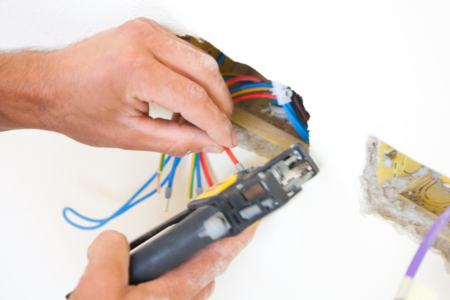
8 Vital Electrical Safety Tips for Halloween

Halloween is meant to be fun and spooky, but it also needs to be safe. Unfortunately, some holiday decorations can be hazardous. Many households use a combination of colored lights, sound systems, and other electrical devices to create an eerie display. While they look fantastic, they can also pose fire risks, especially if not set up properly.

You can enjoy Halloween gadgets and decorations responsibly by taking a few steps to minimize the risks. A little extra effort will ensure a safe and spooky Halloween for everyone.

1. Examine Every Cord

Damaged power cords are one of the most dangerous elements of a Halloween setup. They are more likely to start fires than intact cords, and they increase the risk of electrocution. It’s essential to inspect all cords before setting up your decorations. Look for fraying, damaged insulation, warping, discoloration, or signs of burns. Replace any cords that look suspicious.

To minimize damage, avoid running cords through doorways or using nails or staples to secure them. Halloween can be hard on cords, especially outdoors, so take extra precautions.

2. Use Several Outlets

Halloween displays often require significant power, and using too many devices on one circuit can cause overloads, leading to overheating and potential fires. While your home’s circuit breaker can provide some protection, it’s not foolproof.

Plug your decorations into multiple circuits by using different outlets. If a circuit breaker trips, rearrange your cords to distribute the load evenly.

3. Be Careful With Power Strips

Power strips can help if you lack enough outlets, but they need to be used carefully. Always inspect the strip’s cord before use and keep them indoors unless designed for outdoor use. Ensure the total wattage of your decorations does not exceed the power strip’s capacity. Avoid plugging multiple strips together or using extension cords to prevent overloads.

4. Protect Yourself From Moisture

Bad weather can lead to electrical problems, such as short circuits when rain enters an outlet. Moisture increases the risk of electrocution and can even cause fires. Use weatherproof outlets for all outdoor decorations and GFCI outlets in moist areas, which shut down automatically if a ground fault is detected. Consider unplugging your system during bad weather for maximum safety.

5. Create Clear Pathways

Cords are tripping hazards, especially during Halloween when guests may walk around your property in the dark. Arrange cords to create clear, well-lit paths between your driveway and front door and avoid placing cords near pathways to reduce the risk of accidents.

6. Rely on Batteries

Using batteries for as many devices as possible reduces reliance on outlets and cords, which are common electrical hazards. Consider switching to LED systems that use less energy and can operate on batteries. This approach minimizes the risk of electrical accidents.

7. Unplug Your Decorations

It’s safer to unplug your Halloween decorations when you’re not home or going to bed. Leaving them plugged in for too long can cause overheating, which could melt other decorations or even start a fire. Allow your decorations to cool down periodically to reduce risk.

8. Watch for Warning Signs

Keep an eye on your electrical equipment for signs of trouble. Dim or flickering lights could indicate a loose or overloaded cord, while shocks and sparks signal more serious issues. If you smell smoke or melting plastic, there’s likely an overheating cord. Address any problems immediately and consider seeking professional help for more serious concerns.

Call Our Comfort Consultants

At Acosta Heating, Cooling & Electrical, we have been helping our community enjoy safe Halloweens since 1972. We proudly provide heating, cooling, and electrical services to Charlotte, NC, and support local charities and events. Our technicians are committed to delivering high-quality work without cutting corners. Count on us to prepare your home’s wiring for any Halloween display.

If you need help with your home’s wiring for Halloween, contact Acosta Heating, Cooling & Electrical to schedule an appointment.

Helpful Tips In The Search For A Trustworthy Electrician

Technician from Acosta Heating, Cooling & Electrical shaking hands with a customer in front of a branded service van, emphasizing personalized HVAC service and customer satisfaction.

Whether you need outdoor outlets installed or you’re looking to get your entire house rewired, finding a quality electrician is a must. However, when you first start looking, it can be quite overwhelming to see all the options. By implementing the useful tips we will discuss below, you can set yourself up to find the perfect electrician to meet your needs.

Experience

One of the best ways to find a quality electrician is to look for one with a plethora of experience. When given the option of hiring a professional who has been in the business for 35 years compared to one who just started five years ago, it only makes sense to go with the more experienced electrician. This experience shows a long track record of quality service and can help ensure that they’re capable of handling a wide variety of scenarios that your home may require.

Offer a Variety of Services

Since the process of finding a great electrician can take some time, it only makes sense to ensure you’re hiring one that offers all of the services you’re going to need now and in the foreseeable future. While most electricians will offer basic services, such as exterior outlet and ceiling fan installation, not all will offer more complex services, like EV charging stations and whole-home backup generators.

Get Referrals

Probably one of the most effective ways to find a quality electrician that you can trust is by asking family, friends, and even co-workers for a referral. Those who have a reliable electrician will be more than happy to share their information with you. Even those who have had bad experiences with a particular electrician in the past can give you their insight so you can steer clear. Getting this first-hand word-of-mouth recommendation can provide more weight than simply searching on Google and reading reviews online.

Check for Licensing

It’s important to note that each state has its own requirements for electrician licensing. Some states will even allow local municipalities to determine the requirements for their area. It’s a good idea to check with your local code office to determine what licensing a prospective electrician must have to operate in your area. This way, you can ensure whoever you choose to hire is properly licensed.

Verify Insurance Coverage

Even the best electricians can make mistakes or experience accidents on the job. Having contractor insurance helps to cover the financial repercussions of those mistakes and accidents. You should always verify that any electrician you work with has insurance coverage for an adequate amount, dependent on the job that they’re doing for you.

No Subcontracting

While you can do everything right to find the perfect electrician, none of that matters if they subcontract their work. You can’t verify the quality of work of a potential subcontractor that you don’t know. It’s a good idea to check with any potential electrician to verify if they subcontract their work or not. If they do, steer clear.

Regularly Work in the Residential Sector

Electricians are needed in many different environments ranging from residential settings all the way to industrial settings. When you’re looking for an electrician, you want to opt for one that regularly works in the residential sector. This ensures that they get hands-on experience dealing with home electrical systems, which typically means they’ll be more proficient and swift with their services than an electrician who regularly works in an industrial setting.

Check Online Reviews

In the digital world that we live in, there’s always access to review sites where you can check on what other people are saying about a prospective electrician. You can find these reviews on sites like Google, Yelp, Angi’s List, and so much more. Be mindful when reading through reviews as there are always going to be some outliers. However, if you notice a plethora of negative reviews sharing the same woes with a particular electrician, then it’s highly advisable not to hire that particular professional.

They Offer Free Quotes

When you have a big electrical job, like rewiring your older home, you want to ensure you’re able to get a quote for the job. Most electricians will provide you with a quote for prospective jobs. If you take a look at a potential electrician’s website, they may even state that they provide free estimates.

You should opt for getting quotes from a few different electricians to get an idea of what type of pricing they offer. You want to choose a company that is both affordable and competitive. You don’t want to be stuck with an extremely expensive bill for something that other electricians would’ve done for much less. We offer system quotes online!

They Have Office Staff

One particularly frustrating issue you don’t want to find yourself in is needing electrical services and having an electrician who won’t answer the phone. You want to verify that the electrician you settle on has an office staff who will be available to answer your phone calls and schedule service appointments. This way, you don’t have to waste your time chasing down your electrician to get the services that you need.

Warranty Coverage

Most new electrical products will come with a manufacturer’s warranty to help protect your financial well-being in the event that there is a defective product. However, you want to ensure that your new electrician will offer a warranty on their workmanship. Most electricians will offer a one-year or more warranty on their work to give you peace of mind, learn more about our peace of mind guarantee.

Great Communication

One surefire way to get a feel for how a potential business operates is to give them a call. If their staff is friendly and will thoroughly answer your questions, you know that you can rely on them for great service. However, if a company isn’t friendly, speeds through answering your questions, and makes you feel rushed, it’s an indication that you likely don’t want to hire them. Since you’re going to need an electrician for the life of your home, it only makes sense to hire someone who you feel comfortable being able to ask anything and get a quality answer.

BBB-Accredited Business

The Better Business Bureau (BBB) offers accreditation to fully vetted companies that offer ethical practices. As a consumer, when you see a BBB-accredited logo, you know that the company has undergone rigorous standards and has been proven to be a fair and quality company. The BBB only offers accreditation to companies that have shown integrity, honesty, ethical advertising practices, responsiveness, and protection of the privacy of their customers.

Online Scheduling

With our busy schedules, it can be challenging to find time during the daytime to schedule an appointment. Fortunately, many electrician services offer online appointment scheduling. This will allow you to easily schedule the service to install your outdoor outlets in the evening when the business is closed. Look at our homepage; we have online scheduling options!

Trustworthy Electrician Service

Acosta Heating Cooling & Electrical offers trustworthy electrician services for the entire Charlotte, NC community. Our helpful staff can also assist with all of your heating, cooling, ductless, zoned HVAC, indoor air quality, commercial, heat pump, EV charging, and generator needs. Give us a call today to schedule your next service consultation.

How to Safely Install Outdoor Electrical Outlets

Outdoor electrical outlet with a protective cover and plugged-in device, relevant to home improvement and electrical safety in Charlotte, NC.

One of the best things about owning a home here in Charlotte, NC, is that you can modify it to suit your lifestyle. For example, if you’re a lover of the outdoors, you can transform your yard into a personal oasis. The trouble is, almost every leisure activity you can think of requires electricity. You need lights to use your outdoor spaces after dark. And you need outlets to power or recharge your devices as you use them. Fortunately, most homes come with some sort of exterior lighting installed. However, many don’t have outdoor outlets or they have them in inconvenient places. That drives plenty of homeowners to try and figure out if they can install an outdoor outlet themselves. Here’s the answer to that question and some tips on what to consider when you need a new outdoor outlet.

Can You DIY an Outdoor Outlet Installation?

In Charlotte, it’s legal for homeowners to perform electrical wiring and electrical system modifications themselves. However, some rules exist to govern the process. One is that you can’t do any DIY electrical work if you’re planning to rent out your home. You also can’t do any DIY electrical work if you plan to sell your home within a year.

You should also know that any DIY electrical work you perform still requires permitting and professional inspections. As a result, it’s often better to leave the installation of an outdoor outlet to a licensed electrician. They’ll know how to navigate the permitting process and ensure that you get a safe, code-compliant new outlet.

Things to Consider Before Adding a New Outdoor Outlet

There are multiple things you should consider before adding one or more outdoor outlets to your home. This is true whether you plan to install a new outlet yourself or have an electrician do it. Proper preplanning will help minimize your costs and ensure your new outlet or outlets meet your needs. Here’s what to consider.

Consider How You Plan to Use Your New Outlet

The first thing to consider before adding an outlet to your home’s exterior is how you plan to use the outlet. For example, are you only going to plug in a string of outdoor lights and a USB charger? Or do you need to plug in power tools? That can determine whether you need a 15-amp or a 20-amp outlet outside your home. That, in turn, will determine how hard or easy the job of installing your new outlet will be.

Consider Where You Need the Outlet Installed

The next thing to consider is exactly where you need your new outlet installed. If you need an outlet installed along an exterior wall of your home, its installation should be relatively simple. However, if you want an outlet installed in the middle of your yard, that’s a different matter altogether. Generally speaking, installing an outlet on an exterior wall is something a skilled DIY enthusiast might tackle. Installing an outlet that requires buried cable or conduit isn’t.

Consider if Your Home Needs an Electrical Service Upgrade

Finally, you will need to consider whether your home’s electrical system can accommodate your new outlet. If yours is an older home, you may already be reaching the limits of its electrical service already. In that case, you could need an electrical service upgrade before you can add any additional outlets. This is especially true if you plan to use your new outlet to power high-wattage devices. Unfortunately, this isn’t something you can likely determine on your own. Unless you’ve already had a service upgrade and know where you stand, you’ll need an electrician to tell you. In that case, you should just leave the whole job to the electrician.

How an Electrician Would Install an Exterior Wall Outlet

The most common type of exterior outlet you can have installed is a 15-amp outlet on an exterior wall. To do it, the simplest way is to install the new outdoor outlet directly behind an existing indoor outlet. This minimizes the modifications required to your home’s wiring. It also keeps the number and type of tools needed to a minimum. To give you a rough idea of what the process looks like, here are the steps involved.

Identify the Installation Location

The first step in the process is choosing the installation location for your new outlet. The electrician should plan to install it within approximately 14 inches of an existing interior outlet. This will ensure that they’ll be working within the same stud cavity as the existing outlet. You should know, however, that you can only do this with certain existing outlets. You cannot attach a new outdoor outlet to an existing kitchen, bathroom, or laundry room outlet. You also can’t attach an outlet to any outlet dedicated to powering a large appliance. So, that excludes the outlets powering your refrigerator, washer, dishwasher, microwave, or other large appliances.

Turn Off the Power

Next, the electrician will find and turn off the circuit breaker powering the existing outlet they’ll be working with. They will use a voltage tester to test the outlet to make sure they’ve turned off the right circuit. Once that’s confirmed, they’ll unscrew the existing outlet and disconnect its wires.

Replace the Outlet Box if Necessary

Next, the electrician will assess the outlet box that held your existing outlet. If it’s too small to accommodate additional wiring, they’ll replace it. They will also determine which side of the box is attached to a stud in your wall. This will let them know where to drill through to pass the wiring needed for your new outlet.

Drill Through to Exterior Installation Location

Next, the electrician will use a long drill bit to drill a hole from the location of the existing outlet to the outside. For a recessed exterior outlet, they will also cut a sufficiently sized hole for the new electrical box.

Run Connecting Wires

Next, the electrician will run the connecting wires for your new outlet. They will use appropriate wires for the amperage of the outlet’s circuit. When they’re done, they’ll connect the new wires to the existing wires inside your home. They’ll also create a short pigtail to reconnect the existing outlet.

Install New Outlet and Reinstall Existing Outlet

Finally, the electrician will attach a GFCI outlet to the wires outside your home and install it in its box. They will then reattach the wires to your existing outlet and reinstall it in its box. With the wiring completed, they’ll turn the power back on and test both outlets. If everything checks out, they’ll install appropriate switch plates or coverings for both outlets.

Your Outdoor Outlet Installation Team

If you need a new outdoor outlet installed at your Charlotte home, choose Acosta Heating, Cooling & Electrical. We’ve served local homeowners since 1972, and our team of licensed electricians is the best in the business. We can handle all of your outdoor outlet installation needs, no matter where you need a new outlet. Plus, we also offer HVAC services and complete home electrical services, too. Plus, we’re Better Business Bureau accredited with an A+ rating. That means you can trust us to do a great job at a fair price. So, for all of your outdoor outlet installation needs in Charlotte, call Acosta Heating, Cooling & Electrical today!

The Importance of Surge Protectors for Home Electronics

Lightning striking during a storm over a suburban landscape, illustrating the importance of surge protection for home electronics.

Protect Your Home Electronics with Surge Protectors

The mechanics behind the electrification of homes can be incredibly complex and often taken for granted. All people do is flip a switch, and voila, lights, televisions, computers, and other appliances are powered on. However, you should know that electric current is not constantly flowing as smoothly as it seems. Power fluctuates. At one moment, it can be stable, and the next, a sudden surge could occur, potentially damaging your home electronics. This is where surge protectors come into play.

Understanding Surges

A surge, also known as a voltage spike or transient voltage, is an increase in electrical current that lasts for a brief period of time. They occur due to the following reasons:

Lightning Strikes

When lightning strikes near a power line, it can send an overwhelming amount of electricity into homes. Even if your house isn’t directly hit, a nearby strike can still cause a surge and potentially damage your electronics.

Electrical Overloads

When too many devices are plugged into a single circuit, it can cause a power overload. This can also happen when large appliances like air conditioners or refrigerators turn on and off (particularly if they’re short-cycling), creating a sudden demand for more electricity. As a result, the voltage will increase beyond its normal level and cause a surge.

Faulty Wiring

Loose or exposed wires in your home can create an unstable electrical environment that will surely cause problems. Water, metallic objects, people, or even pests can interfere with the flow of electricity, causing fluctuations and surges.

Power Outages

Comfort consultants often recommend that you unplug your appliances during a power outage. This is because when the power comes back on, the sudden restoration of electricity can create an influx of power into your home that could potentially cause a surge.

The Potential Damage to Electronics

When a power surge occurs, the first thing that happens is the burning out of delicate components inside your gadgets. Your TVs, home theaters, and gaming consoles all have circuit boards and microchips that are sensitive to high voltage. And once these components fail, your electronics will not work properly again.

If, by any chance, you were using your computer or external hard drive at the time of a surge, it could lead to data loss. Sudden power disruptions can cause files to become corrupted or lost, leaving you with no way of retrieving them.

Even if your items were lucky enough to escape immediate destruction, power surges can still cause long-term damage. They are known to reduce the lifespan of your electronics, cause them to run slower or less efficiently, and increase the risk of future failures.

The Benefits of Using Surge Protectors

Protection Against Surges

The primary benefit of surge protectors is, of course, protecting your electronics from power surges. They work by diverting the excess electricity away from your devices, ensuring they receive a stable and safe amount of power.

Preventing Downtime

If you work from home or rely heavily on electronic devices, downtime due to damaged gadgets can be a significant inconvenience. Surge protectors help prevent this downtime by keeping your electronics safe and operational.

Cost Savings

Replacing damaged electronics can be expensive. By investing in surge protectors, you can avoid the high costs associated with repairing or replacing fried devices. It’s a small investment that can save you a lot of money in the long run.

Prevents Devastating Fires

A surge can cause appliances to overheat and catch fire. When an electrical system can’t keep up with the demand for power, the wires become hot. If left unchecked, they can eventually ignite a fire. By using surge protectors, you can prevent this potential hazard and keep your home safe.

Gives You Access to Multiple Plugs

Most surge protectors include power strips, which allow you to safely plug in multiple devices simultaneously. Still, you need to monitor the type of devices you plug into your power strip to prevent overloading.

Types of Surge Protectors

1. Basic Power Strip Surge Protectors

Basic power strip surge protectors are simple devices with multiple outlets and an on-and-off switch to control the flow of electricity. They work by diverting excess energy into a grounding wire, protecting your electronics from surges. They are commonly used in homes and offices.

2. Whole-House Surge Protectors

Whole-house surge protectors are installed at the electrical panel to protect all devices and appliances in the home from power irregularities. They cost more than the basic surge protectors and require professional installation, but they offer a higher level of protection. In fact, if you have a central HVAC system, a whole-house surge protector is highly recommended.

3. UPS (Uninterruptible Power Supply) Surge Protectors

UPS systems come with a built-in battery that provides backup power to your electronics in the event of a power outage. They protect against surges and power fluctuations without needing to switch to a battery backup. They are commonly used for computers, servers, medical equipment, and other critical devices because they ensure uninterrupted power. If you work from home and want a simple solution for power surges, then a UPS surge protector is an ideal choice.

4. Point-of-Use Surge Protectors

Point-of-use surge protectors are installed directly at the device they protect. They are usually built into power cords, wall outlets, or plug adapters. These protectors are commonly used for small electronic devices such as laptops, TVs, refrigerators, and gaming consoles.

How to Choose the Right Surge Protector

Consider the Device Type

Determine what you need to safeguard (e.g., the entire house, electronics, or your gardening power tools) and the level of protection required. This will help you choose the appropriate surge protector for your needs.

Joule Rating

The joule rating measures how much energy a surge protector can absorb before failing. The higher the joule rating, the more protection it can provide to your devices. A good rule of thumb is to look for a surge protector with a rating of at least 600 joules.

Clamping Voltage

The clamping voltage determines the amount of voltage that triggers the surge protection mechanism. For instance, if a surge protector has a clamping voltage of 400V, it will activate its protection when the voltage exceeds 400V. A lower clamping voltage is better, as it offers more protection to your devices.

Number of Outlets

Consider how many outlets you need to accommodate your devices. Remember that it’s always better to have extra outlets than not enough.

Warranty and Equipment Coverage

When selecting surge protectors, prioritize those that include a warranty and provide equipment coverage against damage. This precaution can save you from incurring the expense of replacing your surge protector shortly after purchase.

Additional Features

Look for features such as USB ports, network protection, and indicator lights. These features can enhance the functionality and convenience of your surge protector, ensuring you get the most out of your investment.

What to Expect During the Installation Process

When a comfort consultant comes to your home, they will first inspect your home’s electrical system. This helps them determine the best placement for the surge protector.

Next, they will install the surge protector at the main panel or near specific devices, depending on which type of protector you choose. They will then test it to ensure it is functioning properly and provide instructions on how to maintain and monitor it in the future.

The general time it takes to install a surge protector varies depending on the type and size of your home, as well as any specific installation requirements. In most cases, it can be done within a few hours.

Call Us Today for Expert Help

If you live in Charlotte, NC, call Acosta Heating, Cooling & Electrical today for expert installation, maintenance, and repair services for your surge protectors. Our team of experienced electricians will help you select the right type of surge protector and ensure it is installed properly to safeguard your home and electronics. Moreover, we have you covered if you need other services like HVAC and indoor air quality solutions.

Ask us about our electrical solutions today!

What To Know about Electrical Wiring in Older Homes

Hands working on electrical wiring in a wall, showcasing various colored wires and tools, relevant to understanding older home wiring and electrical safety standards.

Older homes can be affordable for first-time buyers or appeal to those wanting a vintage house. However, it’s important to remember that the code and building requirements enforced today weren’t the same as when many older homes were built. As a homeowner, it helps to understand how older electrical wiring varies from what you’ll find in homes constructed today.

Types of Wiring Over the Years

Over the years, the electrical industry has used many different types of wiring. Unfortunately, some types have been deemed dangerous and potential fire hazards. If you already own an older home or are in the market for one, it is critical to understand the different types of wiring used in the past.

Knob and Tube

Probably one of the most prominent older style wiring that homeowners learn about is knob and tube. Knob and tube was most popularly used between the late 1800s and the mid-1900s, as it was the first style of electrical wiring used in homes. The knob and tube consisted of two main wires, a black live wire and a white neutral wire. Both of these wires were covered in a rubberized fabric and were connected to porcelain knobs. The main problem with knob and tube wiring is that it lacks any ground wire, which is necessary to meet current electrical codes.

NMC

NMC started being used in the 1920s. It’s considered the first generation of sheathed wiring introduced into the electrical marketplace. It consists of both a hot and neutral wire covered with fabric sheathing. Fabric sheathing is a protective layer for the wiring to prevent unwanted arcing and other related issues. In later years, NMC wiring began to include a grounding wire, which improved safety by providing a path for electrical current to dissipate in case of a fault. This type of wiring is still commonly used today, though modern versions have improved materials and insulation standards to meet current electrical codes and safety requirements.

Romex

Also known as non-metallic cable, Romex hit the marketplace in the 1950s and has become the most popular wire installed in homes. It consists of a plastic sheathing instead of a cloth one. Cloth has been shown to deteriorate over the years and lead to unwanted electrical hazards, like household fires. Romex also comes with a ground wire for household safety.

Aluminum Wiring

Aluminum wiring made its short debut back in the 1960s to 1970s. It was promoted as an alternative to traditional copper wiring inside the standard Romex. Despite its initial popularity due to its lower cost and lighter weight, aluminum wiring has been phased out due to its high potential for creating an electrical fire. Aluminum wire connections tend to loosen over time, leading to increased electrical resistance and overheating. Additionally, aluminum is more susceptible to corrosion and oxidation, further increasing the fire risk. As a result, many building codes now require copper or other safer alternatives for electrical wiring.

Household Amperage

When the electrical company introduces power into a home, they give a set amount of amperage. In homes before 1970, the typical household was given 60 to 100 amps. This was adequate for that day and age, as homeowners had few electrical demands. Fast-forward to modern-day homes, and the standard is 200 amps. This is because the average household uses many more electronics and appliances.

Understanding the amount of amps coming into your older home is essential. If you only have 60 or 100-amp service, then you’ll likely experience an inadequacy when running your electronics. Common problems with insufficient amperage include flickering lights and constantly tripping circuit breakers. You can typically tell how much amperage you have by looking at your main panel box. Where the main switch is located, there is generally a marking indicating how much amperage there is, such as 100 or 200. Upgrading to a higher amperage service may be necessary to meet modern appliances’ electrical demands and ensure the safety and efficiency of your home’s electrical system.

Fuse Boxes Versus Circuit Breakers

In the early days of electricity, the main power box for a home was referred to as a fuse box. It consists of various fuses associated with the different circuits throughout your home. Whenever a circuit experienced a problem, it would blow out the fuse for that circuit. Blown fuses stopped power, which prevented issues like electrical fires. While fuse boxes were popular until the late 1950s, they had one big inconvenience.

Every time you blew a circuit fuse, you physically had to remove the fuse and replace it with a fresh one. Homeowners had to keep multiple new fuses on hand for an immediate fix or wait until they could get to their hardware store to get a new one. Additionally, the fuse had to be rated for the specific amperage that the circuit required. For example, a 15-amp fuse must replace a 15-amp circuit. If you had a 30-amp fuse blow, you couldn’t replace it with a 15-amp fuse.

In the 1960s, a new invention, the circuit breaker, emerged. These were installed in panel boxes, like those you’ll see in modern homes. Each circuit breaker controls an individual circuit for your home. Depending on usage, the circuit is marked with its amperage rating, such as 15-amp or 30-amp. The main advantage of circuit breaker boxes over fuse boxes is that you can simply flip the circuit breaker back to the on position and continue like usual.

Difficulty Identifying Old Wiring

When dealing with old household wiring, you can expect it to be challenging. Old wiring tends to be worn out and deteriorated. In older knob and tube wiring setups, it can be quite tricky to determine the difference between the hot black and white neutral wire. As dirt and grime get over the wires as they deteriorate, both wires can appear to have a black cloth surrounding them. This makes it hard to distinguish visually between the hot and neutral wires. It will take an electrician to use a multimeter to determine what wire is hot and which is neutral.

DIY Tampering

In the past, it was common for homeowners to try and do DIY repairs or hire a handyman to save money. Unfortunately, this has left many older homes with unsafe wiring and potential hazards.

For example, the wiring code requires different sheathing colors for other wires. The live wire should always be black. The neutral wire will always be white. If there is a second live wire, it will be red. The ground wire is always the bare wire. In older homes, you may find that these colors don’t always align with the actual wire. This is because homeowners or unlicensed individuals used whatever wire was on hand to complete the task.

Reliable Electrical Service

Acosta Heating, Cooling & Electrical has been serving the residents of Charlotte, NC, since 1972. Over the years, we have developed our business to become your one-stop shop for all your home service needs. We install, maintain, and repair heating and cooling systems. Additionally, we are expert electricians who can rewire your home, upgrade your electric panel, or install modern necessities like surge protection and EV stations. Contact us today to schedule an appointment with one of our experienced team members.

The Basics of Electrical Panel Upgrades

Technician upgrading an electrical panel with wire cutters for Acosta Heating, Cooling & Electrical.

Electricity powers the modern home in Charlotte, NC, yet few people truly understand the complex network that keeps the lights on and devices running. At the core of your electricity distribution is the electrical panel. This is a vital component that regulates and distributes power throughout your home. There will come a time when you have to upgrade your electrical panel whether to modernize your home or accommodate increased energy needs. Here’s what you need to know before embarking on this venture.

Understanding Electrical Panels

The electrical panel, also referred to as the breaker panel or distribution board, serves as the central hub for distributing electricity within your home. It contains either circuit breakers or fuses and connects to the primary power source from the utility company.

The primary function of your electrical panel is to monitor the flow of electricity and automatically shut off power in case of an overload or short circuit. It also allows you to control which areas of your home receive power, making it a crucial safety feature.

Types of Electrical Panels

1. Main Breaker Panel

A main breaker panel controls the power coming from the utility company into your home. It acts as a switch to turn power on and off for the entire house. It also has separate circuit breakers for each area of your home, allowing for individual control and protection.

2. Main Lug Panels

Main lug panels are like main breaker panels, with the only difference being that they do not have a main breaker switch. Instead, they connect to a larger main breaker panel, making them ideal for subpanels or smaller service panels.

3. Subpanel

Subpanels are additional electrical service panels that are fed from your main electrical panel. They are used when you need to add circuits and can help distribute the load across multiple panels for larger homes or when you have a high amp need, such as for a workshop.

4. Fuse Box

Before the prevalence of breaker panels, fuse boxes were common. They contain fuses instead of breakers, which must be replaced when they blow. While many fuse boxes have been replaced with breaker panels in modern homes, some remain, necessitating careful maintenance and, sometimes, an upgrade.

Signs It’s Time for an Upgrade

1. Flickering Lights

Flickering lights can be a symptom of an overtaxed electrical system. If turning on an appliance causes the lights to dim or flicker, it’s a clear sign that the circuit is drawing too much power.

2. Tripping Breakers

Breakers that trip frequently are not only an annoyance but also a safety feature that should not be ignored. If a breaker is tripping often, it’s a signal that it is trying to protect the circuit from drawing too much power and overheating.

3. Outdated Panel

If your panel is old, it may not meet the electrical demands of modern technology. Panels older than 20 years may have outdated wiring and connections that are not equipped to handle the increased power demands of modern appliances, electronics, and lighting.

4. Melting or Burnt Wires or Breakers

Melting or burning wires or breakers is a serious sign of overheating and a potential fire hazard. This can be caused by loose connections, overloading, or a failing panel.

5. Odd Sounds From the Panel

Circuit breakers shouldn’t make any noise. A buzzing sound might indicate a failing breaker while crackling or popping sounds could indicate an overloaded circuit.

6. Inadequate Surge Protection

If your panel lacks built-in surge protection, your valuable electronics are more vulnerable to damage from power surges. A panel upgrade can address this.

7. Planning Major Renovations or Adding Appliances

Upgrading your electrical service might be necessary before renovations that involve adding features with high power demand, like hot tubs or new kitchen appliances. Your home will be safe, and you’ll avoid the inconvenience of tripping breakers.

The Upgrade Process

Upgrading your electrical panel is not a DIY job. It’s complex, and it requires professional expertise.

Step 1. Hiring a Professional Electrician

Find comfort consultants who are certified and experienced in panel upgrades. Our experts at Acosta Heating, Cooling & Electrical will help you with the entire process and ensure your home is powered safely and reliably.

Step 2. Determining the Size of the Electrical Panel You Need

The comfort consultant you’ll be working with will help you decide on the size of the new panel that’s right for your home. They often come in four different magnitudes: 100, 150, 200, and 400 AMPs. 100 AMP is good for homes that don’t have many appliances and electronics while 400 AMP is ideal for larger homes with high power demands. Your comfort consultant will also provide you with a detailed report covering elements, such as the best location for the panel, meter height, conduit size, and other essentials. If there’s anything that might take some time to get, the consultant will recommend that you order it beforehand.

Step 3. Getting Necessary Permits

Before the upgrade work can begin, you’ll need to obtain permits from the local authorities. If the city discovers unpermitted work, it’ll impose fines and fees, which can be very expensive. Insurance companies may also deny any claims related to unpermitted electrical work, and future potential homebuyers might request a Certificate of Compliance. However, most importantly, permitted work guarantees that all safety measures have been taken, ensuring the well-being of you and your family.

Step 4. Deciding on Overhead or Underground Electrical Services

There are two types of electrical service connections: overhead and underground. In an overhead connection, power lines are strung up high above ground level and connected to a utility pole. On the other hand, in an underground connection, power lines are buried underground and run through conduits to connect with the main panel.

Your comfort consultant will help you choose the best option based on your home’s location, budget, and other factors. For example, if you live in an area prone to power outages or extreme weather conditions, an underground connection may be a better choice as it is less susceptible to damage.

However, overhead connections are generally cheaper and easier to install. Another factor to consider is the aesthetic appeal of your home. Overhead connections can be unsightly and may not fit well with certain architectural styles. On the other hand, underground connections are hidden from view and can provide a clean and seamless look.

Step 5. Scheduling a Disconnect

Before work can begin, the power to your home must be shut off. This will be scheduled with your utility company and is typically timed to coincide with the start of work.

Step 6. Electrical Panel Removal and Installation

Your comfort consultant will finally remove your old panel and install the new one. This process typically involves cutting off power, disconnecting the old panel, and mounting the new one in its place.

Step 7. Inspection and Final Connection

Once the new panel is installed, it needs to be inspected by a certified inspector before it can be connected to your home’s electrical system. They’ll have to approve the work and ensure that everything is up to code before allowing your comfort consultant to make the final connection. Once connected, they will test the panel to make sure it’s functioning properly.

Contact Us Today

Now that you understand the critical role of your electrical panel and the process involved in upgrading it, it’s time to act. Call Acosta Heating, Cooling & Electrical in Charlotte today to set you on the path to a safer, more efficient home. We also specialize in air conditioning and heating, providing a comprehensive solution for all your home comfort needs. Give us a call to schedule an appointment today.

How to Prepare Your Home for Severe Weather

Stormy weather comes with a lot of damage and expenses to all homeowners. However, you can reduce the impact you experience through proper preparation of your home. Our pros at Acosta Heating, Cooling, & Electrical in Charlotte, NC recommend getting the necessary assistance early enough. We can help you analyze the condition of your systems and guide you on the required action.

Calling the experts for help early enough is essential for your peace of mind. As the weather worsens, more people schedule last-minute appointments, making it hard to secure an appointment. However, when you reach out in good time, you will have time to prepare and make the necessary changes. We have explained some things you should do to prepare for Mother Nature’s hit.

Surge Protection

During stormy weather, you can expect fluctuations in the power supply system, leading to frequent surges. This can also arise due to lightning since the rush of charge from the sky can hit your house, causing a surge in electricity. If you do not have an appropriate surge protection system, you risk damage to your wiring, electronics, and even the entire property.

The sudden power increase can cause a fire or electrocute anyone operating an electronic at that moment. Therefore, you need to invest in a whole-house surge protection system. This will help absorb and redirect the excess current, thus protecting your home. This way, you can have peace of mind regardless of the power fluctuations.

Backup Generators

We also recommend getting a backup generator that can support your entire home. Severe weather always comes with power outages due to fallen power poles, disconnected lines, or other electrical issues. In most cases, these situations cannot get fixed until the weather clears. Therefore, you need an alternative power source to keep your house systems running while you wait.

With a generator, you can keep your lights, heating, and other essential electronics running during the blackout. Our Acosta Heating, Cooling & Electrical pros recommend getting an automatic generator that immediately takes over the power supply. The system connects to the home’s wiring and immediately switches on when the power supply cuts. This way, you can keep your fridge running and enjoy comfort despite the storm outside.

HVAC Maintenance and Repairs

Do not wait for a storm if you do not know the condition of your HVAC system. You need your heating to be in top-notch shape so you and your loved ones can remain comfortable even during the downpour. Therefore, you should contact our comfort consultants to check your system for faults. A maintenance check reveals any potential issues that may impact the system’s operation. We arrest the problem, thus preventing it from worsening. However, when you already have a problematic system, we recommend prompt repairs to avoid breakdowns during a stormy night. Do not ignore the signs of trouble since they may cost you comfort and peace of mind. Professional repairs can save you from incurring expensive future costs. Your system will also not strain to heat your home throughout the day since you may stay indoors for most of the storm.

Contact expert comfort consultants to fix the following issues:

  • Uneven heating
  • Reduced airflow
  • Unusual noises from the system
  • Slow heating
  • Noisy ducts
  • Flickering thermostat

Indoor Air Improvement

Since you will most likely stay indoors during a storm, ensuring you breathe quality air is essential. Check with our Acosta Heating, Cooling, & Electrical specialists to know what you can improve in your home. We recommend investing in a dehumidifier to help get rid of the excess moisture, especially if it is raining heavily. We also check the HVAC system for leakage in the ducts, which may be the cause of allergens in your house. By sealing the gaps and cleaning the ducts, you can have clean air that will not result in frequent allergies.

Roof Inspection

Another crucial step in preparing for severe weather is getting a roof inspection. Your roofing structure is the contact point for the weather elements, and you need to ensure that it is in top-notch shape. You need to schedule an inspection appointment with a professional roofer to identify any causes of alarm. This appointment is to check the shingles or covering material and every part of the structure. The roofer must inspect even the gutters, flashing, and roof interior.

This way, you can get detailed information on how well the structure can withstand the coming season. If you have a damaged roof, ensure you schedule immediate repairs to fix the weak areas. Seal all leaking points to avoid water damage in the attic or ceiling. It is also crucial to ensure that the gutters function optimally.

Remove all debris and secure the water channels so the excess water from the roof can drain efficiently. A damaged roof also affects your HVAC efficiency. The air seeping through the cracks interferes with the filtered and heated air, reducing the speed of temperature regulation. Consequently, indoor air quality drops, and heating units consume more energy. Therefore, when you fix your roof, you improve the heating capacity for your HVAC system, allowing everyone to stay warm and comfortable.

Pack the Essentials

Since you do not know how long you may stay indoors, it is crucial to have enough supplies to last your family. Ensure you shop for these things early enough and check the expiry dates. Going for the last-minute rush will lead to disappointments since you may forget essential items. Sometimes, they may go out of stock, especially when people start buying items in panic mode.

These are the things you should ensure you have:

  • First-aid kit
  • Non-perishable food
  • Water
  • Extra phone
  • Flashlights and extra batteries
  • blankets
  • Fuel for the generator
  • Emergency money

Secure the House

As you approach the season for severe weather, ensure you protect the outside of your home from damage. The first step is removing all debris, branches, and unwanted items in your compound. These can cause extensive damage when carried by strong winds. You should also trim all trees around your house, ensuring no branches hang over your structure.

Cut off all loose branches, which can easily break off when blown by strong winds. You should also ensure no branches or debris obstruct your vents to increase airflow into the house. Afterward, invest in boards or metal plates to protect your windows from getting hit by stray items. Seal all gaps in the windows and doors with caulk so no cold draft will penetrate your home.

Cold air usually reduces the indoor temperature, making it hard to maintain your set temperature. This strains your heating system, causing it to overwork and consume more energy.

Choose Our Comfort Consultants

Our team in Charlotte provides quality HVAC and electrical services so you can enjoy comfort and peace of mind. We install, replace, repair, and maintain heating and cooling systems in homes and businesses. Our technicians have decades of experience and can help you attain indoor comfort throughout the year. We also provide top-quality electrical services for residential and business premises.

You can count on us for wiring, panel upgrades, ceiling fan installation, installing EV charging stations, and fixing lights and outlets. We attend to each call with the same urgency and work hard to attain customer satisfaction. Don’t hesitate to call us for more information or to book an appointment.

Electric Shock and the Role of Ground Fault Circuit Interrupters

Ground fault circuit interrupters have been around for several decades. They first came on the scene in 1955 when Henri Rubin invented one to detect ground faults in South African mines. The idea was expanded by Charles Dalziel six years later, and the concept of a ground fault circuit interrupter was born. Their widespread use began in the 1970s as a necessary safety measure for most homes.

The idea behind a ground fault circuit interrupter is protection from electric shock. This happens whenever you come into physical contact with a high-voltage source. Some common ways of getting an electric shock include faulty appliances, extension leads, frayed or damaged electric cords, or any appliances or cords that come into direct contact with water. You can also get it from bad wiring, lightning, or downed power lines.

Another way to get an electric shock is through indirect contact with an electric conductor and ground or grounded equipment frame, where a faulty current runs through. Ground faults are usually the result of worn insulation. This makes it easier for water and other conductors to help create hazardous conditions that result in shock.

You can minimize your chances of shock by not coming into contact with water when touching an outlet or plugging in a cord. But sometimes electric shock is unavoidable, and that’s where ground fault circuit interrupters (GFCIs) come in handy.

GFCIs act by detecting changes in the amount of electricity that’s flowing in and out of a circuit. The amount can be as miniscule as 4 or 5 milliamps in most cases. Although this may seem insignificant, it is important because even the tiniest electric shock can be dangerous to humans.

What Are Ground Fault Circuit Interrupters?

Ground fault circuit interrupters are fast-acting devices designed to protect you from shock. They act by shutting off the power in as little as 1/40th of a second. GFCIs recognize and compare the amount of electric current that comes and goes from appliances and electronics along the circuit conductors. GFCIs can be installed as part of an electricity system or within a power cord. There are three types of GFCIs: circuit breaker, wall receptacle, and portable plug-in.

Circuit Breaker

Circuit breakers are electrical safety devices that protect your circuits from any damage that’s caused by an overcurrent or a surge. Unlike fuses, circuit breakers do not need to be replaced. All you have to do is reset them by flipping each switch to the “off” position, wait for a couple of minutes, and then flip them back into the “on” position to reset your power.

Circuit breakers come in many sizes from small breakers designed to handle low currents or appliances to larger boxes, also known as switchgear. The latter is designed to handle larger loads. Low-voltage switchgear is used in several industrial settings and is good for power distribution transformers that use a maximum voltage of 1kV. Medium-voltage switchgear handles loads that range between 1kV and 35kV and is best for generators, feeder circuits, and motors. It can also be used in transmission and distribution lines. High-voltage switchgear can handle up to 1,100kV of voltage and is best for handling power in several buildings. The most common uses for high-voltage switchgear are on major campuses or large apartment complexes with multiple buildings. Other situations include power transformers for cities or towns.

Wall Receptacle

A wall receptacle, also known as a standard wall receptacle, is a device that’s installed inside a regular outlet to protect against shock. These devices are popular because of their reasonable prices and will protect from portable electrical device malfunctions. These devices are most commonly used in bathrooms, kitchens, laundry rooms, and outdoor spaces. Their primary function is to protect you from the impact of a power surge by automatically shutting off power to prevent shock. They typically have two buttons, test and reset. You can use the test button to see if the device works properly by plugging something in and clicking it. If the appliance doesn’t work, your receptacle is doing just fine. Pressing the reset button will help you restore power after water exposure.

Portable Plug-In

There are ground fault circuit interrupters that are mobile because they don’t need to be connected to your home electrical system. Known as portable plug-ins, these devices are equipped to be used with power cords to provide protection against electric shock, burns, and electrocution. They possess integrated circuit breaker technology that can sense a ground fault and instantly cut off power supply to your device. 

Portable plug-ins are more commonly used with garden equipment such as lawn mowers and hedge trimmers. You can also use them with a variety of power tools like electric saws and drills. These plug-ins are deemed portable because you can plug them right into an outlet and remove them when you’re done using them. They are characterized by several receptacles at one end and one outlet plug that goes directly into a wall receptacle.

Should You Install and Test a Ground Fault Circuit Interrupter?

The question of whether or not you should install and test ground fault circuit interrupters depends on the type of equipment you’re using. Portable GFCIs are easy to install because there is no wiring involved. But installing a wall receptacle or a circuit breaker is more complex because you’re dealing with wiring and other complex issues. In these cases, it’s best to hire a professional electrician or comfort consultant to do the work.

There are other reasons to hire an electrician to install and test new GFCI equipment. Homes with small children or adults with developmental disabilities may require tamper-proof GFCI equipment. If you live in an older home, chances are your outlets are missing vital protection against surges and shocks. Having your outlets upgraded to include GFCIs requires a trained professional.

Installation and testing require working with complex wiring, and this requires the expertise of a professional electrician or a comfort consultant. If you feel your home wiring is iffy or you aren’t sure if your outlets are safe, it may be time to schedule an inspection.

Another issue is outlets that leak cold or hot air from the outside. This usually happens when there are holes or cracks around the outlet’s frame. These leaks have an unfortunate impact on your home’s indoor climate during extreme weather and can cause your utility costs to rise. Gaskets can be installed as a temporary measure, but they can’t provide complete immunity from air leaks. 

A comfort consultant can provide a better solution by replacing your outlets with airtight junction boxes, which can help seal those holes. They’re great for safeguarding against shocks by keeping the electricity inside. Junction boxes provide adequate coverage for your wires by guarding against corrosion.

Call the Pros!

At [company_name], we know the value of quality work and expertise. Our team of comfort consultants provides services in many areas, including heating, air conditioning, and electrical service. We offer electrical panel installation and upgrades, repair, and surge protection services. Our comfort consultants work with generators, ceiling fans, and wiring. We can install or upgrade outlets, light switches, and GFCI outlets. We even work with electric car charging stations for your home or business in Charlotte, NC. Our expertise extends to smart devices because we know the right switches and outlets for them. Call today to learn more.

6 Key Things to Understand About Commercial Electrical Wiring

Hands using a wire stripper on electrical wires inside a wall, illustrating electrical maintenance and installation relevant to HVAC and indoor air quality services.

Modern businesses rely on electrical components to function, ranging from digital sales systems and telephones to lights and heating systems. That is why business owners should try to understand the basics of commercial electrical systems, just like they should try to understand every other system that keeps their business afloat. The good news is that the main practical factors are straightforward and easy to understand. There are just a few things that you need to keep in mind when deciding if you need to get some electrical help for your business.

1. Electrical Work Is Dangerous

Safety should always come first, which is why you need to remember that working with electricity can be dangerous. The simple truth is that electrocution can kill, and working with an electrical system without the appropriate knowledge or protective gear can lead to an accident. The only way to stay safe is to leave the job to professionals. Our trained comfort consultants have the training, experience, and equipment to keep themselves safe while working with electricity. 

Electrocution is not the only hazard that comes from amateur electrical projects. Shoddy work can lead to fires in the long run. That can cause serious injuries or even kill you, but the risks do not end there. A major fire can destroy your business in an instant even if you make it out in one piece. It is best to minimize the risk to your business and your health by getting help from people who can do things right the first time.

2. It Starts With a Consultation

Electrical systems may sound complicated and intimidating, but the good news is that you do not need to understand the technical details. When it comes to electrical work for your business, you only need to understand your goals and your budget. You can even think about your goals in broad terms. For example, you may know that you want to install some fans to make your store more comfortable, or you may want to get a generator to keep the freezers going when the power goes out. You do not need to know anything about specific models or any other technical aspects.

Your project should start with a consultation with a trained comfort consultant who knows about those technical details. They will listen to your goals and help you figure out which parts and processes will be necessary to meet those goals. They can also give you a good idea of how much the project will cost and how long it will take to complete. That will give you the information you need to make a final decision. 

3. Modern Systems Save Money

Electrical costs add up over time. While the cost of running a single light bulb is negligible, the cost of powering many lights, heating and cooling systems, computers, and other vital tools can be huge. This is especially true for businesses that depend on careful climate control to keep their products in good condition or that need to power large buildings. One of the keys to success in the modern market is finding ways to reduce those costs without sacrificing quality.

Many business owners find that they can save money by upgrading their electrical infrastructure. Newer systems tend to be much more efficient than older ones, both because the fundamental technologies have improved and because modern manufacturers have started to emphasize energy efficiency. While the initial cost of installing a large system may seem high, it can last for many years. The reduction in energy costs can turn a profit in the long term, especially during periods where energy costs are high.

New systems are also more reliable than older ones. In some businesses, an electrical failure can lead to a huge loss of materials due to spoilage. In others, it will simply disrupt the business and lead to lost sales. Reducing that risk helps to ensure that your business can keep operating at peak efficiency at all times.

4. Quality of Life Improvements Require Fresh Wiring

While most commercial electrical projects involve setting up basic infrastructure, it also plays a major role in employee and customer comfort. A bright, cheerful building is more appealing to both workers and potential clients than a dark, dingy structure. People are simply more likely to trust a business that can maintain an attractive storefront. It is easy to overlook that type of aesthetic concern, but it can have a major impact on sales. 

Even relatively simple climate control systems, such as electric fans, can make clients more comfortable and more likely to do business with you. These projects are relatively quick and easy, which makes them good options for businesses that want to make small investments in their property, but they still require electrical wiring. The key to making the biggest impact possible with the smallest investment is consulting with a skilled comfort consultant. They can balance practical and cosmetic concerns to design a system that will work for your business.

5. Most Businesses Need Maintenance

We have found that people often overlook electrical maintenance in their businesses. The wires are usually hidden behind walls, so people rarely think about them until something goes wrong. Unfortunately, that means that many businesses suffer avoidable losses when their systems break down. That is a tragedy because it is so easy to prevent problems with a regular maintenance plan.

You can call in a comfort consultant to inspect all of the electrical wiring on your property to catch problems before they escalate. If there are any problems, the consultant will be able to explain what you need to do to get things back in good working order. This is especially important if you are looking at a new property; the only way to be sure the wiring actually works is to have an expert examine it. 

6. Good Systems Include Backup Plans

While regular maintenance can prevent most problems, there are some risks that are completely outside your control. There will be times when bad weather or a simple accident will cause your business to lose power. You may not be able to stop that from happening, but you can get the tools that you need to keep your business going while the power is out.

A generator is the most convenient backup plan for most businesses. A small generator can usually power your most vital systems to keep the business running, even if you do not invest in one that can power everything. Your comfort consultant can help you figure out just how much emergency power your business needs to stay secure.

At the most basic level, commercial electrical wiring is a set of tools that keeps a business comfortable, appealing, and operational. Good electrical systems can make your business more profitable and stable, which is why it is so important for business owners to understand the basics. If you are ready to apply your new knowledge and upgrade your business’ electrical systems, give [company_name] a call. We can look at your property and help you make your electrical system work for you. In addition to electrical services, our team provides HVAC and indoor air quality solutions for clients throughout Charlotte, NC and the surrounding area. Contact us today to schedule an appointment or learn more about our commercial electrical services.

How to Safely Use Extension Cords

Power strip with connected cords, featuring a green eco-friendly cord for electrical safety.

Extension cords can be a huge help when performing certain tasks in your Charlotte, NC, home. The problem is that they can also be a major safety hazard if damaged or used incorrectly. Improper use of extension cords is one of the most common causes of both electrical fires and electrocution. As such, it is important that you always follow these safety tips any time you need to use an extension cord. 

Inspect and Unplug Cords

Using a damaged extension cord can be extremely dangerous and carries a risk of electrocution. A damaged cord can short circuit, damage, or destroy whatever you have plugged into it. If the wires are frayed or the cord is otherwise damaged, the electrical current could also spark and catch any nearby combustible materials on fire. The next time you need to use the cord, you should then make sure to fully inspect it to make sure it is safe to use. Things to check for are frayed wires at the plug end or if the plug end seems loose. You should also make sure there are no splits or cracks in the shielding or insulation around the wire. If you notice any of these issues or see any other damage to the cord, you should throw it away and use a different one. 

Any time you’re using an extension cord, you should always unplug it after you’re done. Roll it up and store it somewhere safe. This will help protect it from damage and also prevent it from getting wet. 

Use Certified Cords and Appliances

It is required by law that any electrical product sold in the U.S. must be certified, listed, and labeled by a third-party testing laboratory. This includes the Underwriter’s Laboratory (UL) or Electrical Testing Laboratory (ETL). This certification ensures that the product meets certain quality and safety standards. 

Despite this requirement, there has been an influx of products from China and other countries that haven’t been tested or certified. Using an uncertified extension cord or electrical device can be extremely hazardous and pose a major fire risk. 

Never Use Indoor Cords Outside

Extension cords are rated for either indoor or outdoor use. You can use a cord that is rated for outdoor use inside with no issue. However, you should never use an indoor cord outside. Outdoor cords are thicker and better insulated to protect them against damage. This also ensures they can withstand exposure to moisture, the sun, extreme temperatures, etc. 

Outdoor cords typically have higher amperage ratings since outdoor equipment and tools usually draw more power. The packaging on a new outdoor extension cord will be labeled with a “W” to show that it is rated for outdoor use. This label may also be stamped or printed at various points on the cord itself. 

Check the Wattage on Your Equipment and Electrical Cords

An extension cord can only safely carry so many total amps or watts of power. The number of watts and amps a cord can supply depends on both its gauge and length. Any time you need to use an extension cord, it is essential that you don’t exceed the total watts or amps it is rated for. If you use an undersized cord and it gets overloaded, it could overheat and catch fire. 

All new extension cords will have a UL or ETL tag near one of the ends that shows the cord’s wattage, voltage, and amperage. Electronic devices should also have a UL or ETL label that shows their wattage and amperage. Before plugging any device or equipment into an extension cord, you should check both the tag and label. If the wattage or amperage exceeds what the cord is rated for, you need to use a larger, higher-gauge cord. 

There are four primary gauges of outdoor extension cords. This includes the 16-gauge light duty, 14-gauge medium duty, 12-gauge heavy duty, and 10-gauge extra-heavy duty. Extra-heavy-duty extension cords that are between 25 and 100 feet long are rated to supply up to 20 amps or 2,400 watts of 120-volt power. Heavy-duty cords of the same size are rated for 15 amps, or 1,800 watts. A 25- or 50-foot medium-duty cord can also supply 15 amps, but a 100-foot medium-duty cord can only supply 13 amps, or 1,560. A light-duty cord can supply 13 amps up to 50 feet, but a light-duty cord that is longer than 50 feet can only safely supply 10 amps, or 1,200 watts. 

These wattages we listed are the maximum. To avoid overheating the cord or overloading the circuit, you should never exceed 80% of this maximum wattage. 

Every 120-volt circuit in a house is rated for either 15 or 20 amps. You can use a light-, medium-, or heavy-duty cord in either a 15- or 20-amp circuit as long as you make sure not to overload either the cord or the circuit. However, if you’re using an extra-heavy-duty cord, you need to make sure that the outlet you’re plugging it into is on a 20-amp circuit. If you try to use a heavy-duty cord on a 15-amp circuit, you could easily overload the circuit and trip the breaker. 

Use GFCI Protection in Wet Environments

Water and electricity don’t go together. Using an extension cord that is sitting in water can result in electrocution. This is why it is important that you never plug in a cord that has a wet end. You should also ensure you have GFCI (ground fault circuit interrupter) protection when working around water or in a damp environment. 

A GFCI is designed to cut off the flow of electricity if the current takes an unintended path to the ground. Electricity tries to take the easiest path to the ground, where it will meet the least resistance. If the outlet, plug, or equipment you’re using gets wet, the water can conduct the current to the ground through your body. This is because there is no resistance. A GFCI will prevent this, as it can detect when even a tiny amount of current leaks out. If water did conduct the current, the GFCI would trip and shut the flow of electricity off before electrocution takes place. 

The National Electric Code requires GFCI outlets or GFCI circuit breakers to be used on all electrical circuits that may be exposed to moisture. This includes all outdoor outlets and fixtures. However, this requirement is only for new homes or when performing renovations. This means that the outdoor outlets in many older homes aren’t GFCI receptacles. If you need to use an extension cord in a non-GFCI outlet, you need to make sure that the cord itself has a GFCI. 

Electrical Cords Should Have Slack

If an extension cord is stretched too tight and doesn’t have any slack, it can put extra tension on the outlet. This tension can damage the outlet and cause a connection to come loose. If the outlet has a loose connection, the current can spark and cause it to catch fire. You should unplug cords by pulling directly on the plug instead of just yanking on the cord itself. 

[company_name] has been providing expert home services in the Charlotte area since 1972. Our licensed electricians specialize in residential electrical repairs, inspections, and installations. We also have a team of comfort consultants ready to handle your heating and cooling needs. For more information or to set up a service appointment, give our team at [company_name] a call today.