Should I Keep My AC on “Auto” or “On”?

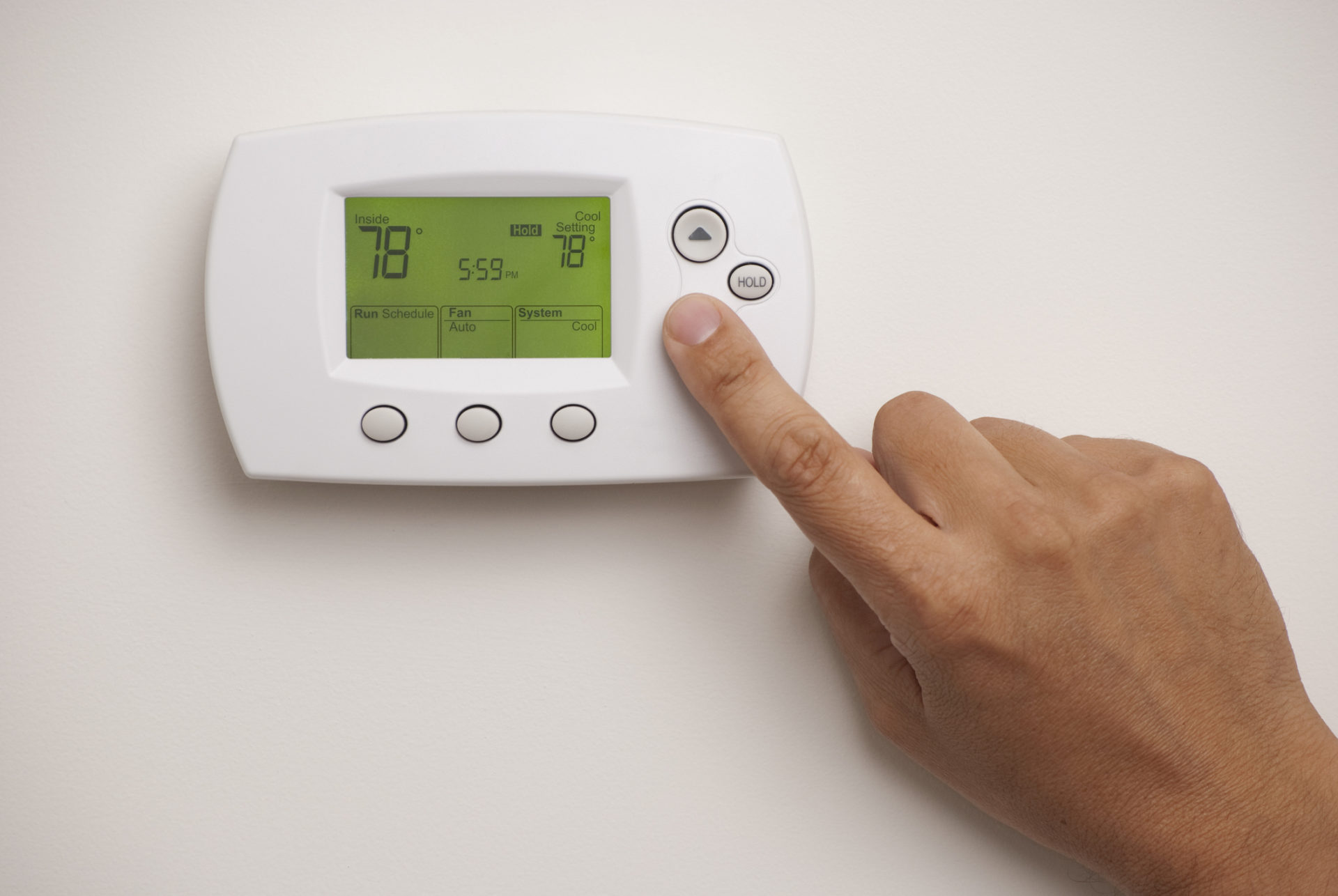
Hand adjusting a digital thermostat displaying indoor and cooling temperatures, relevant to HVAC system settings and energy efficiency discussions.

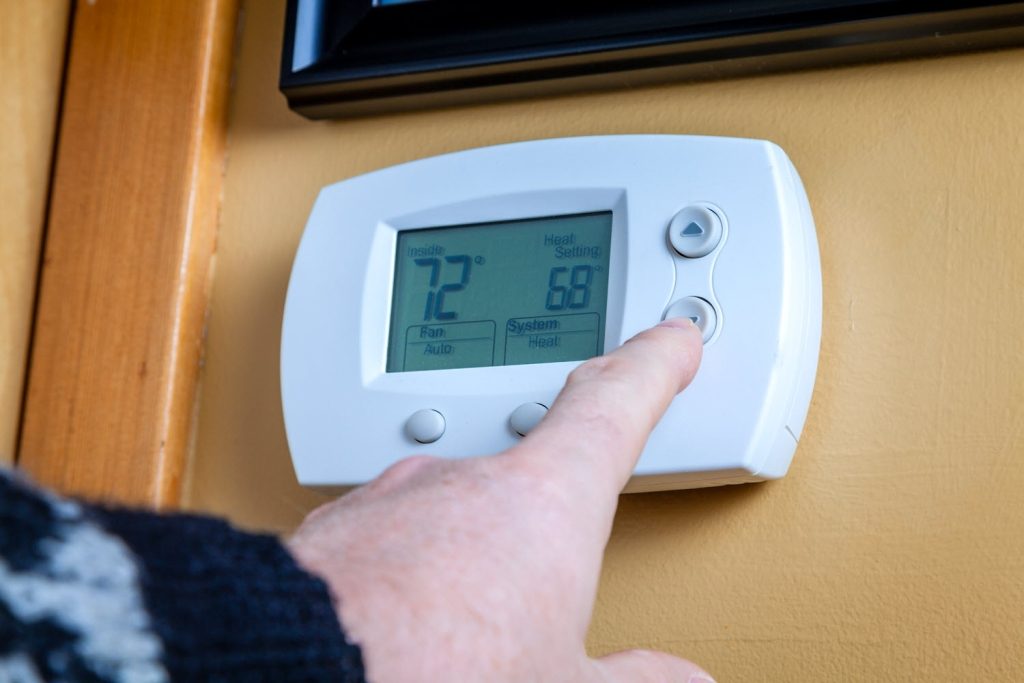
Hand adjusting a digital thermostat displaying 72°F inside temperature and 68°F heat setting, relevant to HVAC system settings and energy efficiency.

In the battle for how you should set up the air conditioning in your Charlotte-area home, a new twist comes into play. With newer models of residential air conditioning systems, thermostats have become more advanced. Now, there are many different features you can have for your air conditioner, and they’re all programmed from your thermostat.

While some features may rely on personal preference, setting your thermostat to “auto” or “on” can be more structured. Read on to understand which option is suitable for your home — and why!

What’s the Difference Between “Auto” and “On”?

Before deciding if you should set your air conditioner to “auto” or “on,” it’s essential to understand the difference between the two settings. Both settings control the air conditioner fan but differ in when the fan operates.

When you set your air conditioner to “auto,” you restrict the fan to only run at certain times. The air conditioner thermostat evaluates the temperature in your home. When the temperature goes above the set temperature, the air conditioner starts a cooling cycle, and the fan automatically turns on, so it can help cool your home. Once your home reaches the desired temperature, the fan and the cycle stop.

On the other hand, when you set your air conditioner to “on,” you are telling your air conditioner always to run the fan, even when your air conditioner is not working to cool your home.

What Are the Benefits of “Auto” and “On”?

There are benefits to having your air conditioner set to “auto” and “on.” The benefits of the “auto” setting include higher efficiency, lower energy bills, better humidity control, less wear and tear on some components, and quieter running.

The “on” setting includes more even cooling, better air circulation and filtration, and less wear and tear from stopping and starting.

While there are many advantages to both “auto” and “on” settings, they also have disadvantages.

What Are the Disadvantages of “Auto” and “On”?

Sometimes, the disadvantages can give you a more straightforward choice between choosing the “auto” or “on” setting on your air conditioner. The drawbacks to the “auto” setting include hot and cool spots in your home, less air filtration, and the blower motor may wear out from the regular stopping and starting.

The disadvantages to the “on” setting include increased cooling costs, filter replacements needed more frequently, and may blow more regularly during summer to cool the air in ducts near attics or warmer areas.

Understanding if you should choose the “auto” setting or the “on” setting for your air conditioner comes down to the Charlotte climate.

The Setting You Should Choose

When choosing between setting your air conditioner to “auto” or “on,” our warm, humid climate should be the determining factor. The evaporator coils are what create the cool air in your home. They cool the air around them, and the fan blows that cool air through your ducts and into your home.

The high levels of moisture in our air can cause condensation to build up on the evaporator coils. Then, when the fan blows air across the coils and into your home, that condensation also blows into your home. This adds humidity to your home.

In a climate that is as humid as Charlotte, the added humidity can make your home more uncomfortable.

When you set your air conditioner to the “auto” setting, you reduce the amount of moisture your system blows back into your home. You’ll have a lower humidity level in your home, which will make your home feel cooler and more comfortable.

So, in the Charlotte area, choose the “auto” setting for your air conditioner to reduce the humidity and make your home as comfortable as possible during our hot summers!

Why Choosing a Programmable or Smart Thermostat Is a Good Idea

A programmable thermostat or smart thermostat gives you the flexibility you need to customize your air conditioning system and make your home comfortable for you. Since you’re setting your thermostat to “auto” to eliminate as much humidity from your home as possible, using a programmable thermostat or smart thermostat simply takes your air conditioner to the next level.

Programmable thermostats allow you to set your air conditioner based on time of day, day of the week, year’s season, and so much more. By customizing when your air conditioner will run, you can keep your home at a more consistent temperature.

Smart thermostats also let you change your air conditioner settings with your phone or other devices from anywhere in the world.

Now you can have precisely the settings you want on your air conditioner with the touch of a button!

[cta_buttons phone=”7046655998″ link_text=”704.665.5998″ link=”/contact/” button_text=”CONTACT-US”]


Choose Acosta Heating, Cooling & Electrical

If you want to upgrade to a smart thermostat or have other air conditioning system needs, choose Acosta Heating, Cooling & Electrical. We have over 45 years of professional experience helping Charlotte-area homeowners stay cool and comfortable all year long.

For the best air conditioning installation, repair, and maintenance services, trust your home to Acosta’s team of experts. Our friendly and courteous professionals will do the job quickly and efficiently, delivering superior customer service.

Call 704.665.5998 or contact us online to schedule your HVAC appointment in Mecklenburg or Union County today!

More Air Conditioning & HVAC Resources

Is It Okay Run Your Air Conditioner All the Time?

Why You Should Schedule Routine AC Maintenance

The Possible Reason Your Home Has Uneven Cooling

Saving Money On Heating With Programmable Thermostats

Heating your home is a constant game. It is hard to save money, remain comfortable and be responsible to the environment at the same time. With rising energy costs and a green movement that is bringing everyone more in touch with their footprint on the Earth, homeowners are looking for reasonable solutions in heating and air conditioning their home.

Most heating options that are environmentally friendly are very costly to homeowners and can take weeks to install. One improvement you can make that is fairly cheap and very quick to install is programmable thermostats.

Programmable thermostats only range from $50 to $200, which is hardly anything considering the costs of replacing furnaces, installing new windows, or buying more efficient appliances. This small cost yields big savings, savings of about 15% a year.

Other than significantly lowering your energy bills, programmable thermostats are much more convenient to have in your home, and can save energy without you even remembering to turn the thermostat down. Most programmable thermostats can save more than six temperature settings for every single day, and you can override them without messing up the daily or weekly program that the thermostat is set to.

This can do wonders to save you money on heating during cold winter months. For example, your house can be a nippy 60 degrees while you are at work, and then–while you are in traffic on your commute back home–it can automatically move up to a toasty 68 degrees or 70 degrees. When you step in the door, the temperature is right where you want it.

If Space Is a Priority in Your Home, Mini-Split Air Conditioning May Be the Way to Go

Having the correct air conditioning system in your home greatly improves your quality of life. However, when you’re in the market to buy one, there are many variables to be taken into account. Because buying an air conditioner isn’t something you do every day, the procedure can be quite daunting.

You might think that one air conditioning system is exactly like the next, but there are significant differences between the various systems. When making a choice, you’ll want to be sure that the system you buy is large enough for your home, but not so large that it inflates your energy costs unnecessarily.

If space in your home is at a premium, or if you have a fairly small area to cool, a ductless split air conditioning system may be the best choice. Known as mini-splits, they comprise an indoor unit that can be placed on the wall of an individual room, and an outdoor compressor.

The indoor unit is linked to the compressor by a refrigerant line that supplies it with coolant. Installation is a lot less invasive than the ducted systems utilized by other larger types of air conditioning set-ups. This means that mini-splits can fit into smaller spaces than a lot of traditional air conditioners.

In addition, the indoor units of mini-split air conditioners each have their own thermostat, so the temperature can be controlled in each individual room. The different people in your household can choose the temperature they prefer. Mini-split air conditioning is also cost-effective because you do not have to cool the entire home.

A Solar Heating System That Breaks New Ground in Home Comfort

The SunSource solar heating energy system from Lennox brings a new dimension to home comfort that goes way beyond obtaining power from the sun. Helped by roof-mounted modules, it converts sunlight into actual electricity, which can be used to run your air conditioner or heat pump while reducing your cooling and heating costs by up to half.

This solar heating system uses abundant, free solar energy to not only generate electricity to heat and cool your home, but it can even provide sufficient electricity to power your appliances, lights and more. The system is affordable, expandable and incredibly uncomplicated. This illustration shows how it works:

Innovative features of the SunSource solar heating system:

  • Select heat pumps and air conditioners from the Lennox collection can be modified with simple upgrades to act as platforms.
  • The condensing units meet or surpass the Environmental Protection Agency guidelines for energy efficiency. When used in conjunction with just 4 solar panels in a whole-home energy system, they can lower cooling and heating bills by up to 82% percent.
  • Up to 15 solar heating modules can be added in the future or at the time of installation.
  • You can use your broadband connection to send online performance information for each module to a 3rd party website where you can see how the system is working.
  • You get 24/7 access to real time data that shows the system’s status, environmental benefits, energy production, and carbon offsets. This monitoring system is free for five yearsVisit our Solar Solutions page for in-depth information about the SunSource system. If you live in the Charlotte area of North Carolina and would like to find out more, contact us to speak with a solar specialist today.

Tips Versus Myths of Household Heating

Heating your household (and the money it costs to do so) is a topic of much discussion between all sorts of people; as such, it is expected that some myths will arise through all the conversation. We know how myths work: what one person hears will be relayed to another, possibly even changing slightly, so on and so forth. So then how do we know which little tips to trust? Which are misleading?

One very common myth is that leaving the thermometer set at a constant, modest temperature will save money and energy. The reasoning is it takes more energy to heat or cool an area to a temperature than it does to maintain the temperature. This is generally not true; it is indeed better to set back your thermostat a few degrees when no one is home, for example.

A tip is to actually install a programmable thermostat, so it can regulate the activity of the heating and cooling systems depending on the time of day and whether someone is home or not.

Another myth (misconception may be a better word) is that using an electric heating system is more energy efficient than a fuel powered furnace and would save you money. Homes using electric heating are getting their power from fuel-burning power plants, which because of the size and distance are likely even less efficient than a household furnace.

If you are dissatisfied with the energy consumption of your home heating system, a tip would be either to convert to solar energy panels, or to a more modern, high-efficiency furnace, which can be up to 98% efficient. Call Acosta Heating, Cooling & Electrical today to learn how we can help with your home comfort needs.

Your Energy Bills: Six Easy Ways to Take Charge and Stay Cool

With summer comes unavoidable increases in our home energy bills as we add the air conditioner to the assortment of electronics and appliances we already use every day. Here are a few ways you can save substantial amounts of money while still keeping your home at the temperature you prefer.

1. Cooling efficiency: Home cooling accounts for about half of what we spend each month on energy. You can get much better results and impressive savings by installing a high-efficiency cooling system with a Seasonal Energy Efficiency Ratio (SEER) of 15 or higher. Consider a solar assisted air conditioning unit.

2. Seal air and energy leaks: Locate and close up any holes, gaps or openings where conditioned air can escape your home. Line edges of doors and windows with weatherstripping and seal glass panes with silicone caulking. Check the ductwork in your air conditioning system; all segments should connect snugly together and be sealed with metal tape or mastic.

3. Shut off and unplug: Turn off energy-consuming devices when not in use, including lights, computers, televisions and appliances. Unplug computers and other electronics if you don’t expect to be using them soon. They will consume a small amount of electricity even if they’re not turned on.

4. Install a programmable thermostat: Use a programmable thermostat to control when and at what level your air conditioning system runs. For example, they let you set the air conditioner to run at a lower energy-saving level when everyone is out of the house during the day.

5. Install energy-efficient windows: Install Energy Star-certified windows with energy-saving features such as low-emittance (low-E) coatings and double-pane construction. These types of windows can reduce home energy bills by up to 25 percent.

6. Reduce hot water usage: Cut back on hot water consumption by using low-flow fixtures, cleaning only full loads of clothing or dishes and fixing hot-water leaks.

For 40 years, Acosta Heating, Cooling & Electrical has offered expert heating and air conditioning services to customers in Charlotte and surrounding areas. Contact us today for more information on reducing summer energy consumption while still keeping your home cool and comfortable.

Programmable Thermostats: How to Make the Smart Decision

Investing in a programmable thermostat will quickly pay you back, as the average energy savings you can expect from using these devices approaches 10 percent. By selecting a model with “smart” capabilities, you can lock in the highest savings possible while providing the ultimate in convenience.

Programming options

Standard and smart programmable thermostats generally allow homeowners to set their devices for up to four daily schedules. But weekly scheduling options differ from one model thermostat to another.

You can choose:

  • 7-day programming, with a separate schedule for every day of the week
  • 5-1-1 settings, with one schedule for Monday through Friday, and one schedule for each weekend day
  • 5-2 programming, with one schedule for the weekdays and one for weekends
  • 1-week settings, with programming that extends the entirety of the seven-day week

Programmable thermostat features

You can also select various features for added convenience, including:

  • Touch screen capabilities
  • Backlighting
  • Reminders to change your HVAC air filters and the thermostat’s batteries
  • Vacation override button

Smart capabilities

A standard programmable thermostat will give you all of the features listed above, but a smart device offers an additional perk: web-based access. Remote access to a programmable thermostat can give a homeowner a multitude of options, including the ability to:

  • Change temperature settings from another location using a phone or computer
  • Adjust temperatures remotely when your schedule changes, so that by the time you return home the temperature will be comfortable
  • Change the time period of an existing setting, allowing you to adjust any of the four daily settings
  • Set a 365-day schedule, a feature available on some smart programmable thermostats
  • Lock out manual adjustments, ideal when you don’t want home occupants, like children, to manipulate the thermostat and make changes to the temperature or time settings
  • Receive a text or email when your smart thermostat senses that the home’s temperature is above or below the setting, allowing you to remotely respond
  • Receive alerts when humidity sensors read levels that are too high or too low

Use the power of “smart” programmable thermostat technology, and boost your overall energy savings and convenience. For help, contact Acosta Heating, Cooling & Electrical — serving the Greater Charlotte area as a local, family-owned company since 1972.

Increase Whole-House Energy Savings in 5 Quick and Easy Steps

When you approach energy savings in your house, there are a couple different paths you can take. You can focus on small tasks in each room that add up to energy savings, or you can think big. Consider these five quick and easy steps to maximize energy savings throughout your home.

1. Change your air filters.

Filters get clogged and dirty as they remove dust and other particles from the air. When this happens, your heating and cooling equipment has to work harder to blow air through, which eats up energy and drives up your utility bills. Changing your filters every one to three months eliminates this unnecessary expense. Filters may need to be changed more frequently during the peaks of the heating and cooling seasons.

2. Boost your insulation.

Insulation seals in heat in winter and helps keep your house cool in summer. Your whole house should be well insulated, but the attic is the most important area, since heat rises. Also consider insulating your ductwork to minimize heating and cooling losses.

3. Invest in preventative maintenance.

Stopping problems before they develop is much less expensive than trying to fix them later, and annual service is the best way to keep your heating and cooling appliances running efficiently.

4. Update your lighting.

If you still have old incandescent light bulbs in your house, they are wasting money and should be replaced. Fluorescent bulbs are much more energy efficient, and they also last longer. Of course, it goes without saying that turning off the lights when you leave a room is also essential to energy savings.

5. Install a programmable thermostat.

A programmable thermostat allows you to program a heating or cooling schedule that varies by time of day and from one day to the next, allowing you to save energy by using your furnace and air conditioner less when you don’t need them, like at night or when nobody’s home.

For more information on ways you can save energy in the Charlotte area, contact Acosta Heating, Cooling & Electrical. We’ve been locally owned and operated since 1972.

Uneven Heating? A Zoning System Can Address That Problem

It’s common for homes to experience uneven levels of heating and cooling for a variety of reasons, including poor installation of HVAC equipment, or home design elements. But a zoning system can help to improve home comfort, and provide consistent, comprehensive heating throughout the winter, while maximizing energy savings, too.

A factor that contributes to uneven heating is the single thermostat. Most homes have just one thermostat, located generally on the first floor in a central area, and that lone thermostat “reads” the temperature in its immediate vicinity, and then adjusts the heat as necessary. This type of system is extremely limiting, particularly for homes with multiple levels, or homes that have rooms that call for more or less conditioned air than other spaces. For instance, if your home has a large room with high ceilings and huge window expanses, it will require more heat to create a comfortable space.

Zoning systems help to solve these comfort problems. Here’s how they work:

  • First, the home is divided up into zones, depending on heating needs, or how you use the spaces.
  • Next, the contractor will install motorized dampers in the ductwork system in the main conduit that leads to each zone.
  • Finally, a thermostat will be installed in each zone.

Once the system is in place, you will be able to set a specific temperature in each zone, and once that space has reached the desired level, the dampers to that zone will close. In that way, your furnace system doesn’t send heat to a space that doesn’t need it, or to a space that’s not in use.

Energy savings and improved comfort is possible with a zoning system. For HVAC help in the Greater Charlotte area, contact Acosta Heating, Cooling & Electrical – a local family-owned company since 1972.

The Energy Star Yardstick: Pull It Out to See How Your Home Measures Up

Energy Star is a government-sponsored website that helps homeowners reduce energy consumption. It features the Home Energy Yardstick, a program designed to compare your home to similar homes in your area in terms of energy efficiency, and then offer tailored suggestions to bring energy consumption down.

Here’s how it works:

On the homepage, you will need to enter information about your home, including its square footage, annual energy use, and fuel sources, along with your zip code and number of home occupants.

Once you enter that information, the program will formulate your score, and you can set a goal to reduce energy use by a specific percentage. In order to find out just how you can improve results, you’ll need to input the type of home systems (furnace, heat pump, central A/C, etc.) you use for the program to fine-tune the results.

Suggestions for improvement will include low-cost ideas, and projects that require a more significant investment, including:

  • Sealing air leaks and ductwork. These two factors can decrease the efficiency of a home by up to 30 percent, because leaks in the home’s exterior and the ducts allow conditioned air to escape through them.
  • Upgrading insulation throughout the home. The attic is usually a good location to begin with, as homes tend to lose the most energy through this space. Insulation is designed to prevent the movement of heat, so upgrading your home’s insulation to maximum efficiency levels will keep conditioned air inside your house.
  • Using a programmable thermostat. This allows you to program regular temperature setbacks to help avoid wasting energy by unnecessarily heating and cooling spaces when they are not in use.
  • Installing Energy Star-qualified HVAC systems. Though a larger investment initially, it’s an investment that will maximize energy savings and comfort over the long term.

The Energy Star Yardstick program includes detailed information and guides to go about upgrading your home’s efficiency. You can solicit the help of an HVAC professional to confirm the program’s results, or to conduct an independent energy evaluation of your home.
In the Greater Charlotte area, contact the area’s leading HVAC contractor, Acosta Heating, Cooling & Electrical – a local family-owned company since 1972.